
Give this exciting dancing corn experiment a try! All you need are corn kernels, baking soda, water and vinegar! With a little science, you can make the corn kernels appear to dance!
RELATED: Oil and Water Experiment
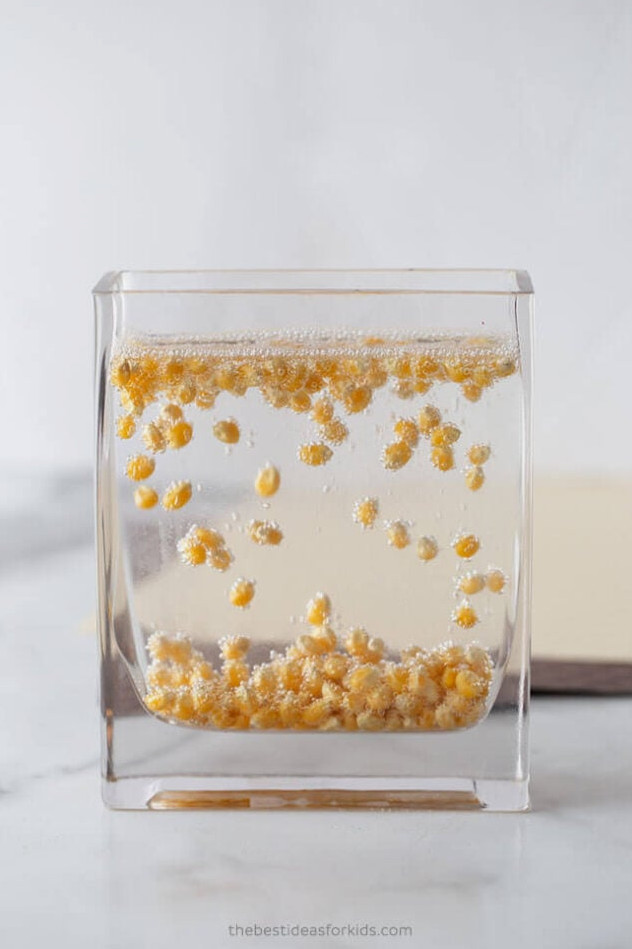
Dancing Corn Science Experiment
In this activity, science will make the popcorn seem to dance! You can also try this exact experiment with raisins.
Materials for the Dancing Corn Experiment
- Corn kernels
- Baking Soda – we prefer this large bag for science projects
- Water
- Vinegar
- Transparent vase or mason jar
What is Happening Scientifically?
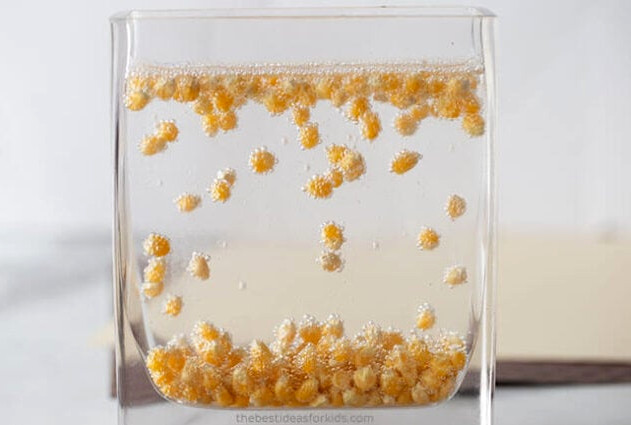
You can observe bubbling and foam inside the jar, but what is producing this reaction?
Baking soda (sodium bicarbonate) acts as a base, whereas vinegar (acetic acid) is an acid, so the reaction you observe is an acid/base reaction. At first, the reaction forms carbonic acid, which is unstable and decomposes into carbon dioxide (CO2) and water. As the gas escapes the water, it produces all the fizzing and bubbles.
Why Does the Popcorn Dance?
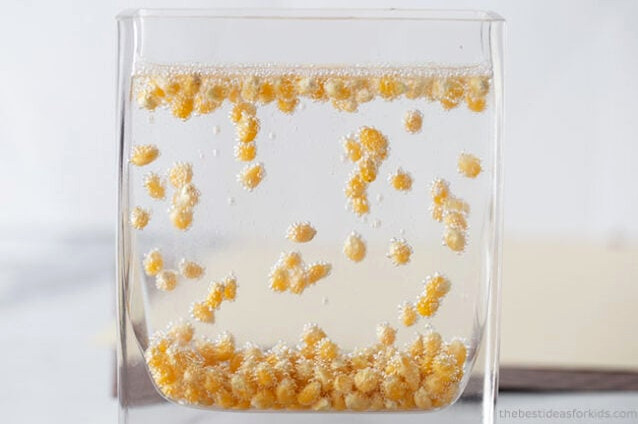
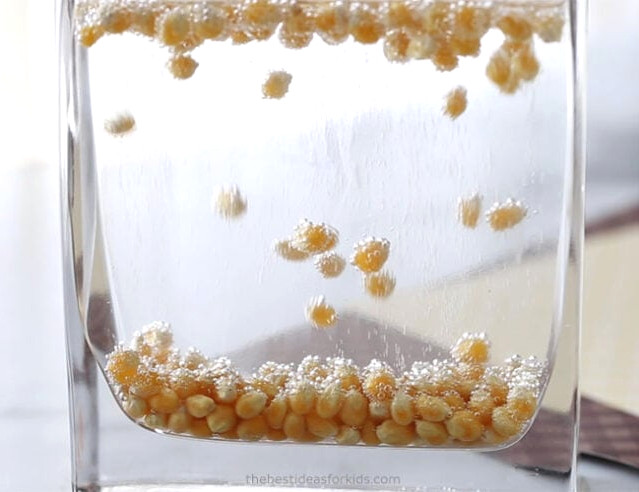
When the bubbles form, carbon dioxide bubbles cling to the corn kernels and lift them toward the water’s surface. After reaching the surface, the bubbles burst, causing the popcorn kernels to sink to the bottom of the jar again. Once they reach the bottom, they gather more carbon dioxide bubbles and the cycle begins anew. This repeated motion makes the popcorn kernels appear to be “dancing”.
Watch the Video Guide Here!
Steps for the Dancing Corn Experiment
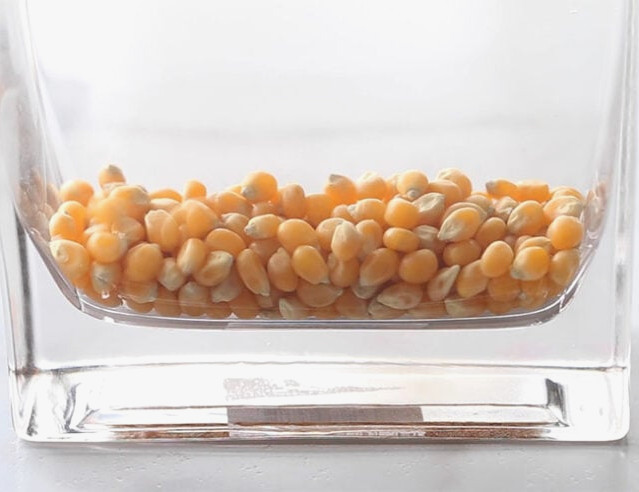
1. Place 1/4 cup of corn kernels in the jar.
For a smaller jar, simply use fewer kernels.
2. Pour in enough water to fill the jar roughly 3/4 full.
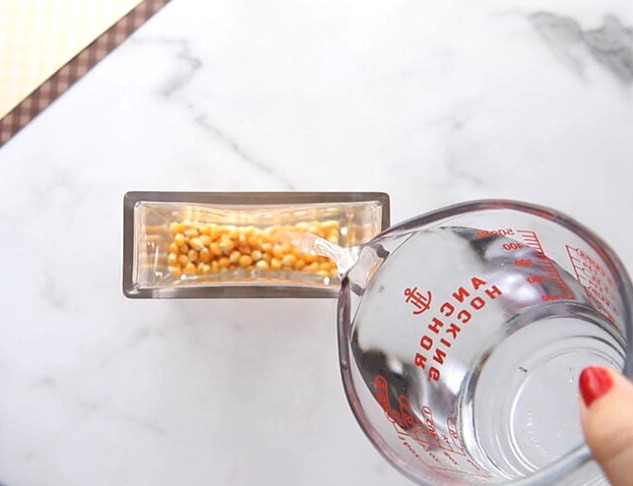
3. Stir in 1 tablespoon of baking soda until it is nearly completely dissolved.
Be certain that the baking soda is distributed evenly over all the corn kernels.
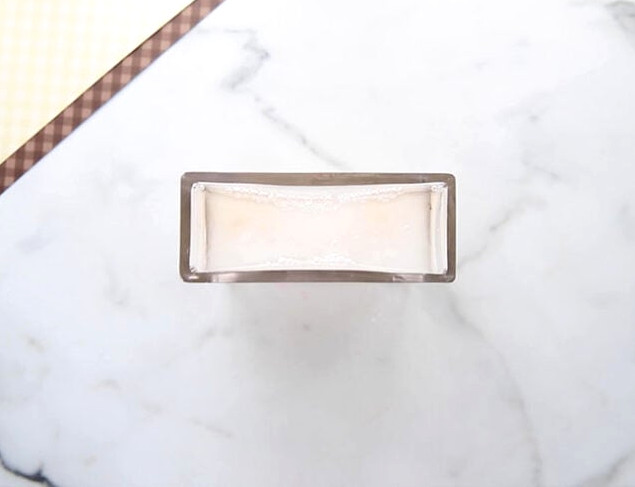
4. Pour in 1/4 cup of vinegar.
The vinegar and baking soda will react right away. This could cause some of the mixture to spill over the jar, so safeguard your work surface. Placing the jar inside a tray is recommended in case it overflows.
Should an overflow occur, the mixture will settle and turn clear. After it clears, you can begin observing the corn “dance”.
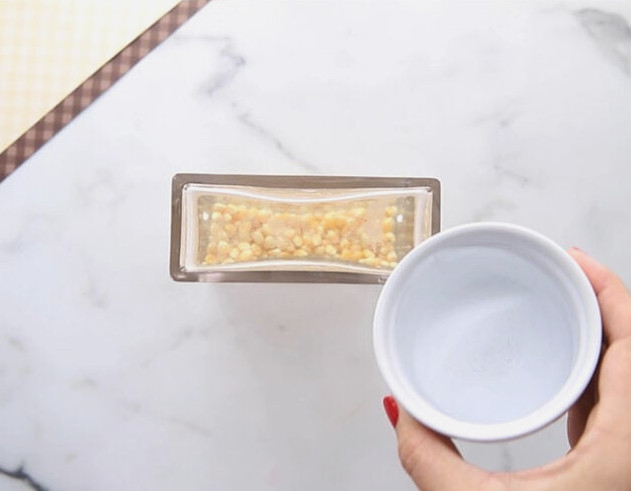
Now watch the corn “dance”!
The reaction between the vinegar and baking soda creates bubbles that lift the corn kernels to the water’s surface. When those bubbles burst, the kernels sink again, and the cycle repeats, making them seem as though they are dancing!
For additional enjoyable activities, explore all of our science experiments.