
Here’s an entertaining blend of science and art for you… today, we’re exploring Magnet Pendulum Painting! This enjoyable sample project comes from the wonderful Science Art & Drawing Games for Kids book! You can easily do this activity indoors or outside, although I personally think it would be especially exciting during the summer – and out in the garden. It’s a fantastic “large-scale” art project for children and would create incredible DIY Gift Wrap!
Meet today’s Guest Writer:

Karyn Tripp is the creative mind behind Teach Beside Me, a well-loved website packed with imaginative science, art, and hands-on educational activities for children. She loves encouraging kids to investigate scientific ideas through creativity, testing, and play.
She wrote Science Art and Drawing Games for Kids, a book full of captivating projects that blend science and art to make learning active and unforgettable.
Magnet Pendulum Art Science Activity
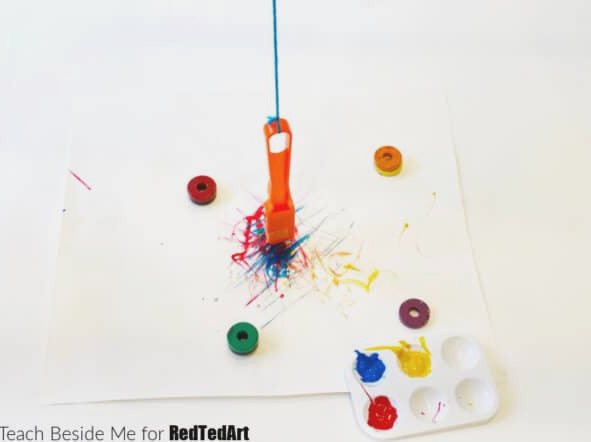
Magnet pendulum painting offers an exciting opportunity to merge art with science while producing striking abstract artwork. Through this hands-on STEAM project, children investigate movement, gravity, and magnetism in an imaginative and enjoyable way.
When a magnet attached to a paintbrush is suspended and other magnets are used to guide its movement, children can produce original designs while discovering how forces influence motion. Every painting becomes both a unique experiment and an individual piece of art.
This imaginative science art project is featured in Science Art and Drawing Games for Kids by Karyn Tripp from Teach Beside Me. The book is filled with practical projects that encourage children to learn scientific ideas through drawing and artistic exploration.
What is a Pendulum?
A pendulum is something that moves back and forth after being hung from a stationary point. Gravity draws it downward, while its momentum carries it onward, producing flowing and consistent patterns.
Adding magnets changes the pendulum’s route by affecting its movement. This gives children the chance to experiment and see how unseen forces can influence motion.
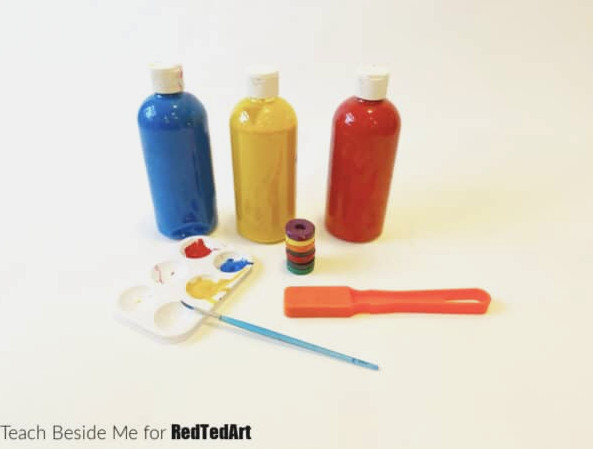
Supplies Needed for your Pendulum Art Project
How to Create Magnet Pendulum Art
Step 1: Build the pendulum
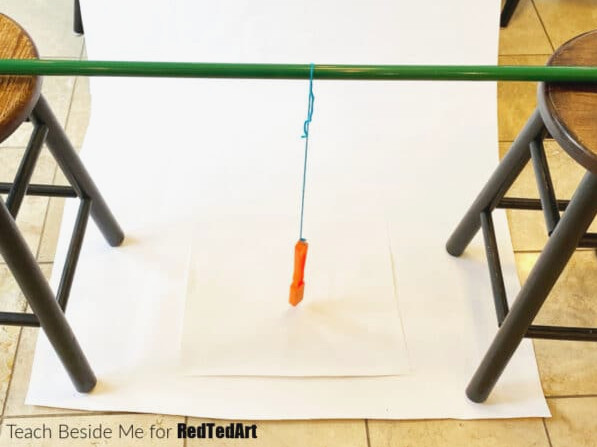
Rest a broomstick between two chairs or stools. Secure a length of string to the broomstick’s center. Fasten a magnet wand or powerful magnet to the string’s lower end, allowing it to hang freely.
Ensure that there is plenty of room underneath for the pendulum to swing.
Step 2: Secure the paintbrush
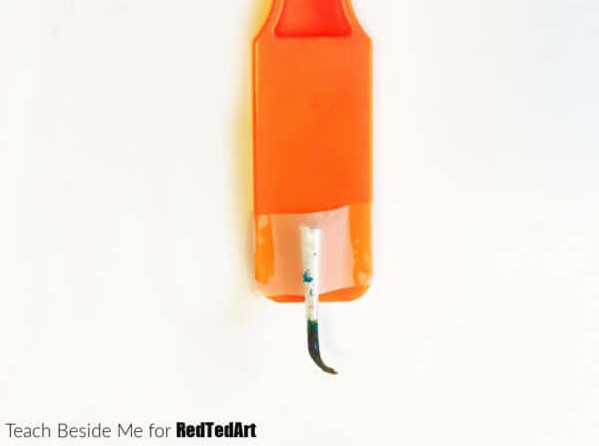
Use tape to fasten a small, lightweight paintbrush to the magnet’s base. A lighter brush will swing more easily and travel with greater smoothness.
Step 3: Set out the paper and magnets
Put a large piece of paper underneath the pendulum. Position extra magnets either on top of or below the paper. These magnets will affect the pendulum’s motion.
Test various magnet positions and observe how each arrangement changes the movement.
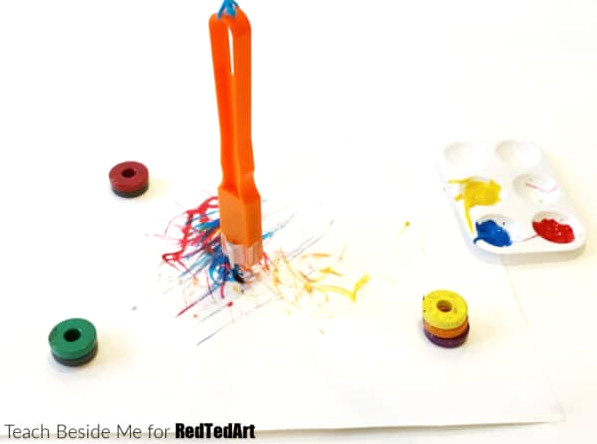
Step 4: Start creating
Coat the paintbrush with paint, then gently start the pendulum moving. Observe it swinging and forming intriguing designs over the paper.
Explore various colors, launch points, and magnet locations to produce different results.
The Science Behind the Art
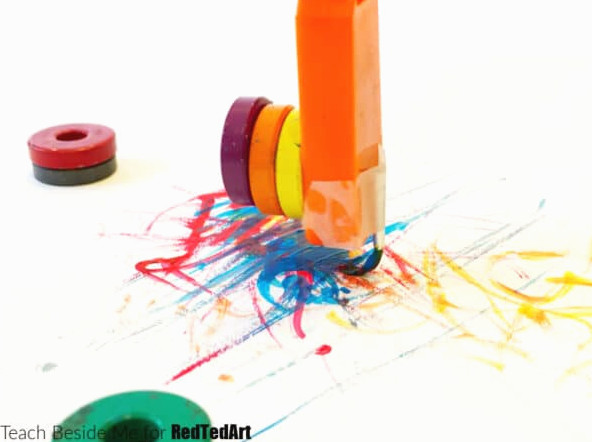
This project gives children an introduction to several essential scientific ideas, such as:
- gravity
- kinetic and potential energy
- magnetism
- motion and force
By watching how adjustments to different variables change the pendulum’s movement, children build curiosity and strengthen their scientific-thinking abilities.
Ideas for Additional Exploration
Experiment with:
- varied string lengths
- an assortment of paint colors
- alternative magnet layouts
- beginning the pendulum from different starting points
Every change can lead to fresh designs and new discoveries.
If you enjoyed this activity and feel inspired to explore more hands-on Science Art projects, why not take a look at Karyn’s beautiful book here: