If you’ve followed along for some time, you probably know that I’m fascinated by history and the ways it shapes design. Several of my favorite projects, including the white oak Gustavian nightstands I constructed a few years back, grew out of that interest. Since our home is French Colonial, I devoted countless hours to studying the period surrounding the French Revolution so I could better understand why furniture was designed as it was, what was unfolding in the world then, and how those circumstances shaped both appearance and usefulness.
Studying the past helps me design rooms that feel rooted, deliberate, and full of meaning. My process generally starts by looking backward to guide the present, bringing greater depth and intention to every space.
The Highland Study follows that same approach. Rather than filling it with pieces that merely appear “old,” I’ve been exploring the history behind the furnishings that genuinely belonged in rooms like these and the original reasons they were created.
This brings us to British military campaign furniture.
What Exactly Is Campaign Furniture?
With its brass corners, inset pulls, and solid construction, campaign furniture looks immediately recognizable, though the story behind its signature style is not as widely understood. While developing The Highland Study, I keep finding myself drawn back to campaign furniture. Before getting into finishes and design choices, it seems worthwhile to explain its history, since it so often influences my decisions.
Campaign furniture emerged during the 18th and 19th centuries for British military officers who were regularly stationed around the globe. Their lives involved almost constant relocation, whether by ship, horseback, or carriage, making movable furnishings essential from one post to another. Each piece was created to be portable and hard-wearing, while also allowing for straightforward assembly and disassembly during transit. Usually crafted from hardwoods like mahogany and teak, these furnishings were valued for their durability as well as the distinction they represented.
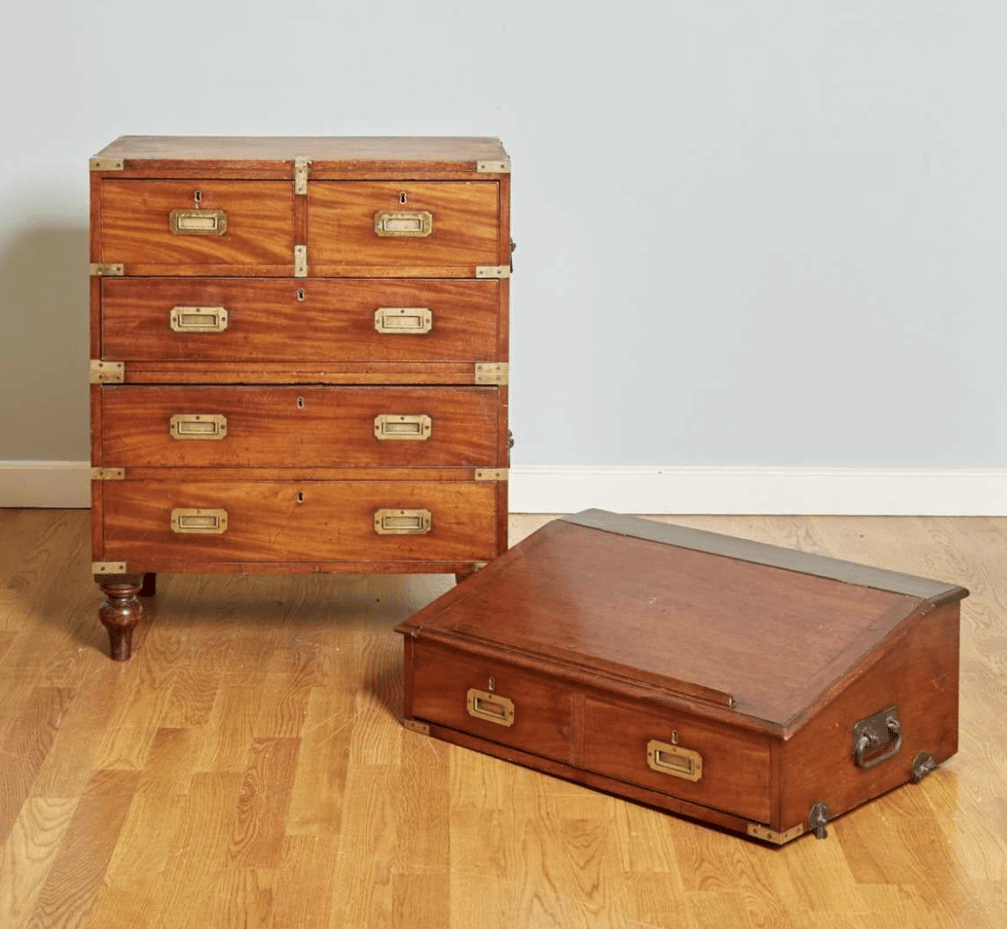
In contrast to conventional domestic furniture, campaign pieces included:
- Strengthened brass hardware designed to guard against damage
- Sectional construction that made packing and rebuilding simple
- Understated, refined styling appropriate for both field quarters and formal rooms
Campaign furniture was useful, but it also expressed its owners’ social position and personal taste, functioning as both an essential possession and a quiet indication of rank in the field. That combination of practicality and appearance feels particularly appropriate for The Highland Study. After serving in the military for more than twenty years, Adam’s life has reflected many of those same qualities: discipline, flexibility, and a deep sense of purpose. Bringing campaign furniture into the room offers a thoughtful way to recognize that legacy through design and historical meaning.
Design Question: Preserving History or Reimagining Tradition
Although I would love to find an antique campaign chest, genuine examples frequently sell for $8,000 or more, well beyond what I can spend on this renovation. So, as Jen typically does, I’m choosing the DIY approach and will build one myself, giving me even greater freedom with the finish and overall style.
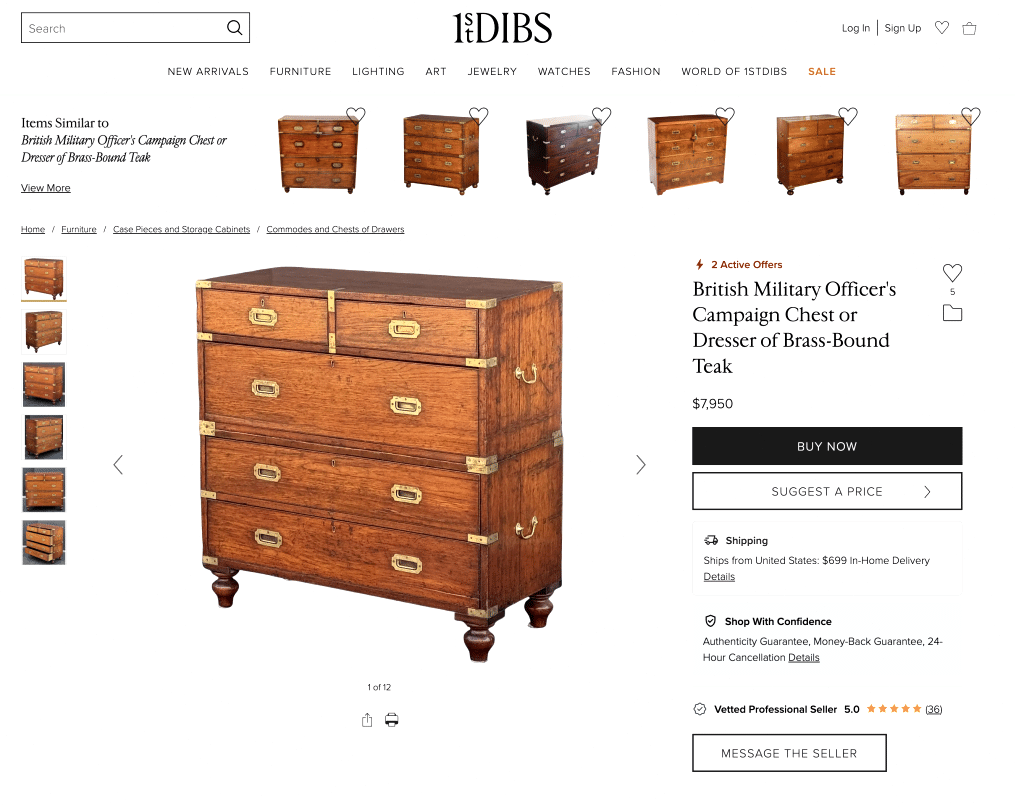
This is the design challenge I’m considering. The room will already contain plenty of walnut woodwork along with Adam’s vintage wooden desk, so introducing another substantial case piece in wood needs to be carefully considered. While I intend to build one for the Highland Study, history can offer direction without determining every aspect of the final design.
I’m considering three finishes for the campaign chest:
- Mahogany: the classic and historically prevalent option
- Oxblood: a richly painted finish with a tailored feel that suits heritage-inspired interiors
- Military green: understated, utilitarian finishes that reference service and function
Each choice connects with history in its own way and would create a different atmosphere in the room. Should the chest remain entirely traditional, or would contrast and visual breathing room serve the space better? I’d love to know what you think and why—please share your ideas in the comments below.