Come along as I share my favorite autumn custom: making a wreath gathered completely from my garden. This season, I designed a contemporary, unbalanced style wreath. In this step-by-step tutorial, discover how grapevine, amaranth, and strawflowers can create a naturally beautiful display for your front entrance.
The changing seasons at the cottage bring a special cadence, and one of my most cherished fall traditions is creating each year’s wreath from materials I grow, collect, and forage in my own garden. It’s a meaningful personal challenge, and every wreath offers a one-of-a-kind glimpse of the garden during that particular Fall.
This year, I wanted to try something more delicate and contemporary. Rather than relying on a thick, purchased grapevine foundation, I fashioned an open framework of my own, allowing the garden’s gorgeous, tactile flowers to become the focus in a fresh, asymmetrical arrangement.
The Asymmetrical Harvest Wreath: A Garden-Grown Fall Tradition
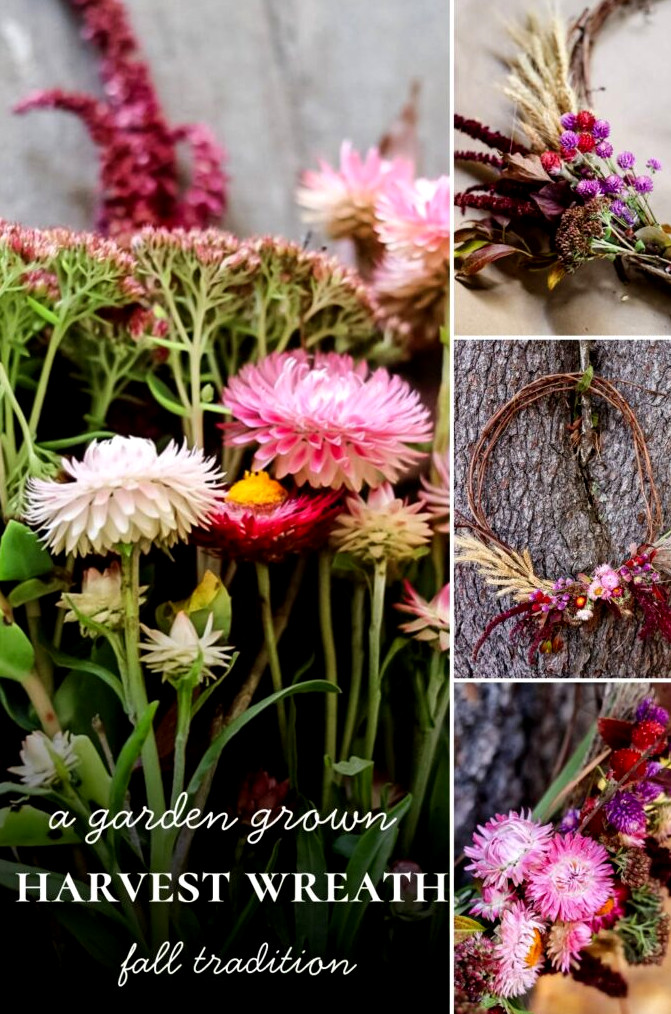
Supplies for This Project
- Grapevine Wreath Foundation
- Various Garden Blooms in Pink & Red
- Dry Wheat Stems
- Decorative Grass Plumes
- Branches with Red Leaves
- Hot-Glue Gun
Collecting Your Garden’s Treasures
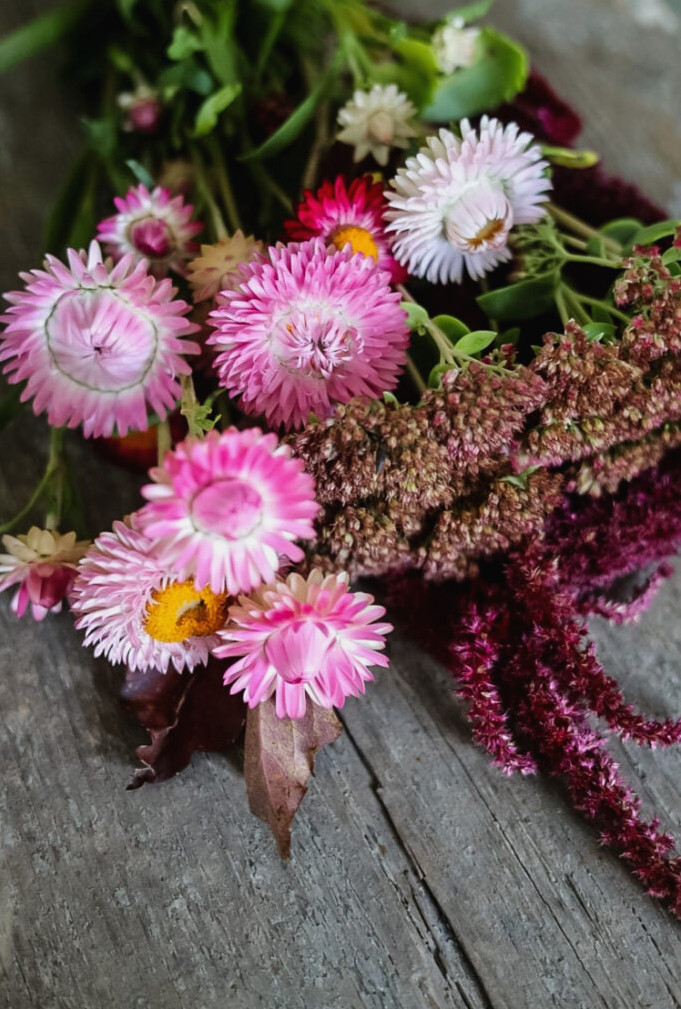
Searching for supplies is the most enjoyable part! I collected an assortment of colors and textures, giving priority to pieces that dry particularly well. This is what my garden offered me this year:
- The Foundation:Long, flexible grapevine cuttings
- The Standout Elements:Bold, cascading Amaranth, burgundy leaves,and lively Strawflowers
- The Subtle Fillers:Globe Amaranth (Gomphrena) and Autumn Joy Sedum blossomsfor bright touches of color and texture
- The Light Texture:Wispy sprays of Ornamental Grass
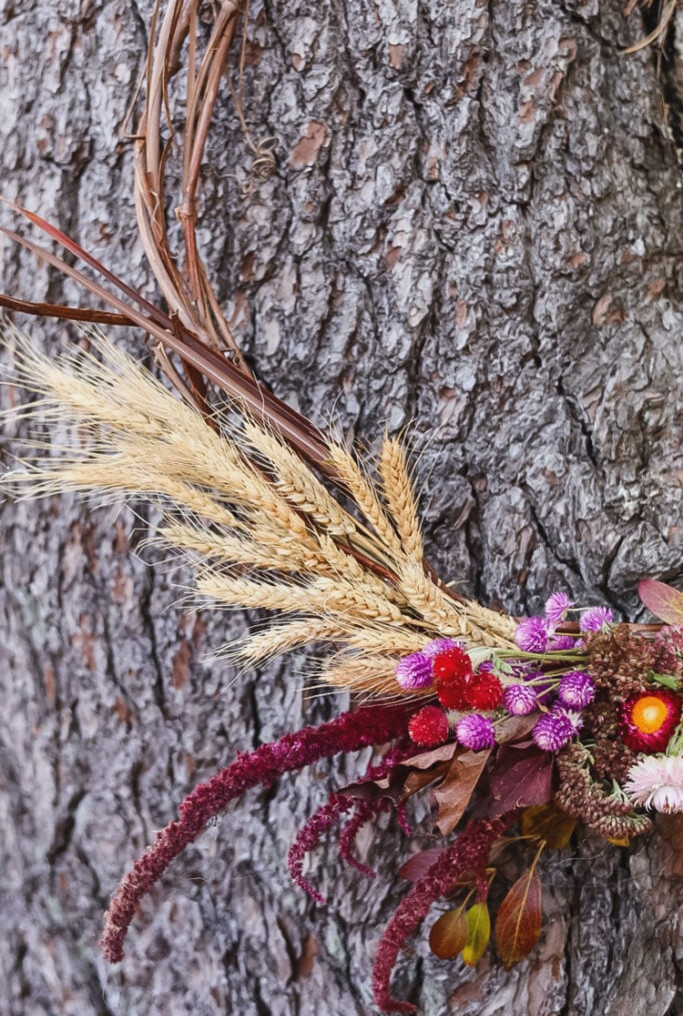
- The Golden Accent:A handful of Dried Wheat Stalksfor a traditional, warm finish
Now It’s Your Turn:Choose pieces with sturdy stems, appealing forms, and different heights. Feel free to add seed heads or distinctive foliage!
The Process, Step by Step
This approach is beautifully natural-there isn’t one correct method, so simply work with the organic forms of your materials.
Form the Open Foundation:
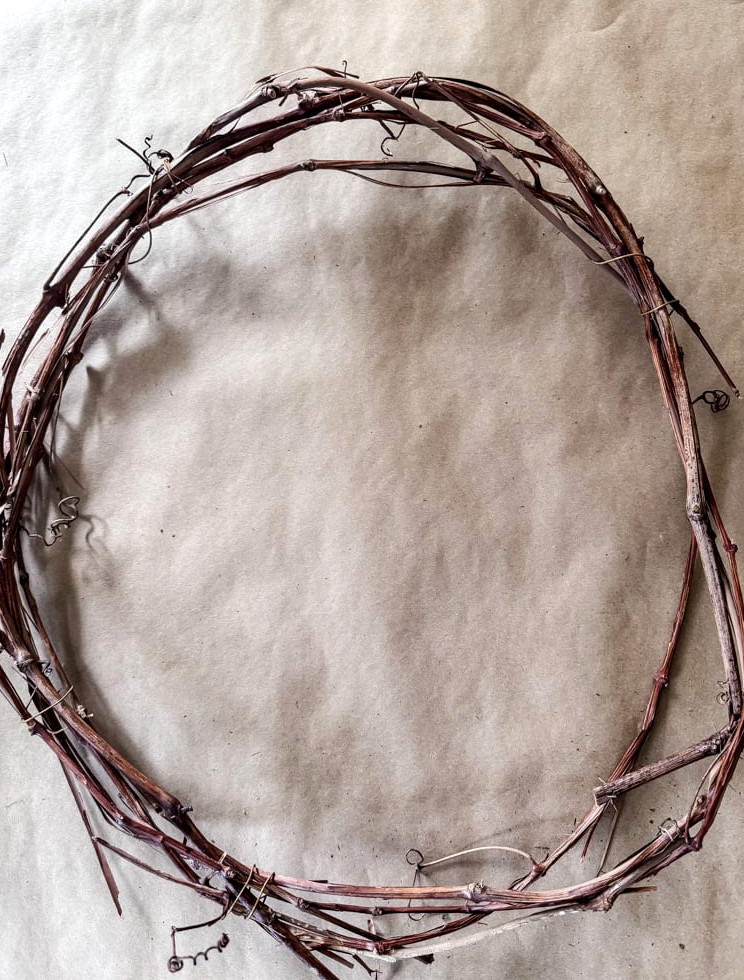
Bend and intertwine long grapevine cuttings to create a round shape. It does not need to be entirely even; those small imperfections add personality. Tuck the loose ends into the woven sections to hold everything in place. Aim for a base that feels more spacious and lightweight than a classic wreath.
Don’t have fresh grapevine?That’s perfectly fine!Take a commercially made grapevine wreath and carefully loosen and separate the vines. Reform it into a somewhat more open, natural shape for the same airy, modern appearance as a handmade foundation.
Define the Main Focal Area:
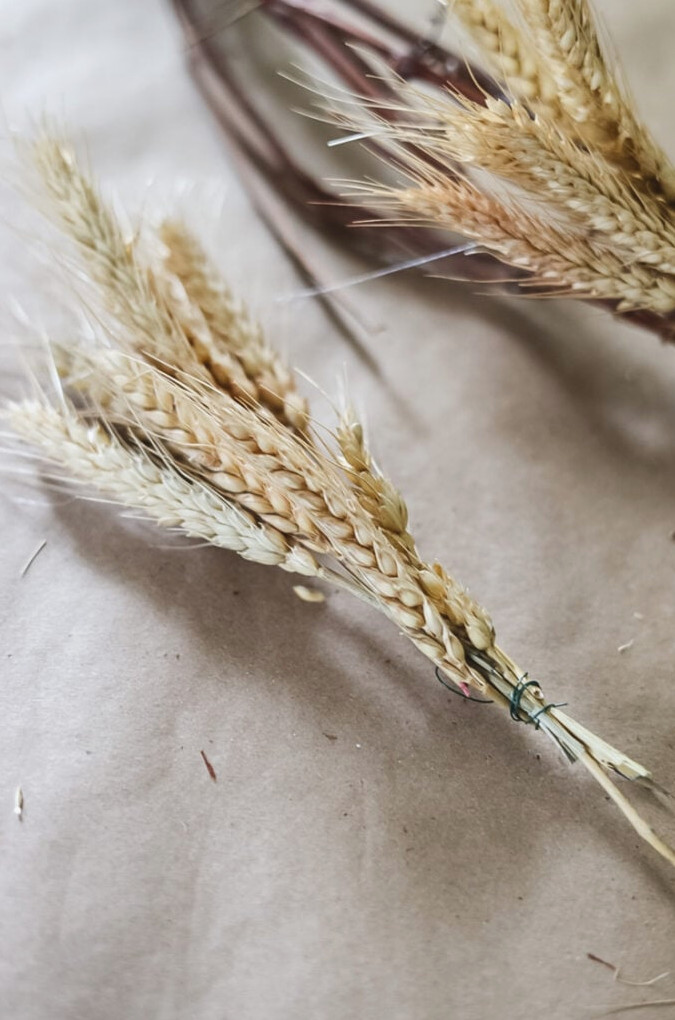
Choose the spot where you’d like the flowers to sit (I selected the lower right). Attach the largest structural pieces first. I started with the wheat stalks, cutting their stems down to only a few inches. After forming several small, compact bundles, I fastened each with a little floral wire.
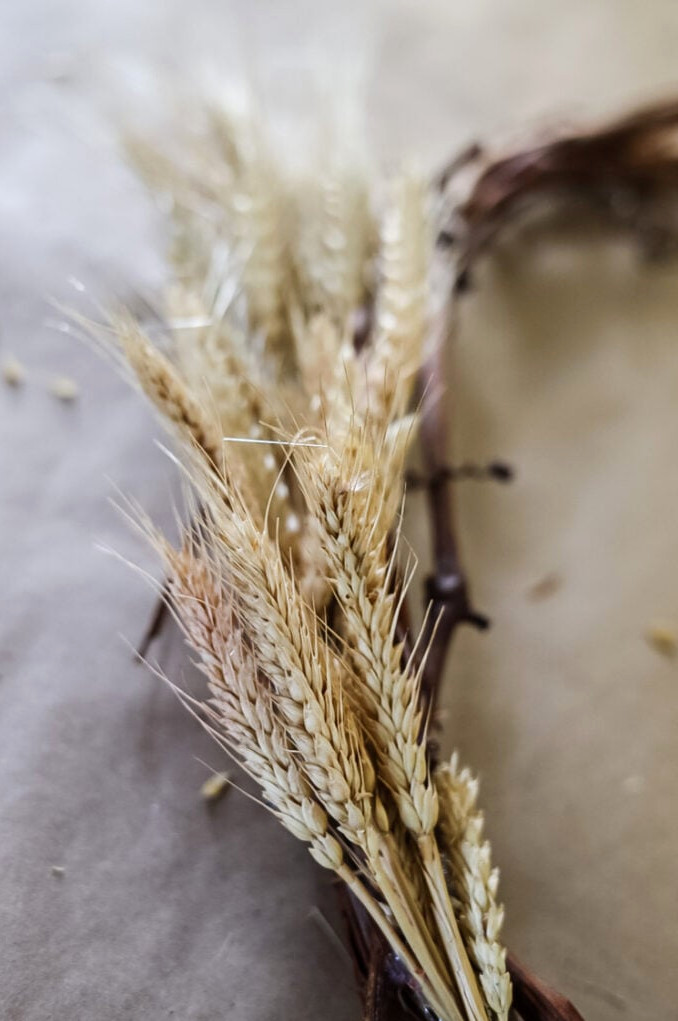
Using hot glue, I attached the wheat bundles to the wreath base, establishing the arrangement’s main shape and direction.
A Little Flower Drama
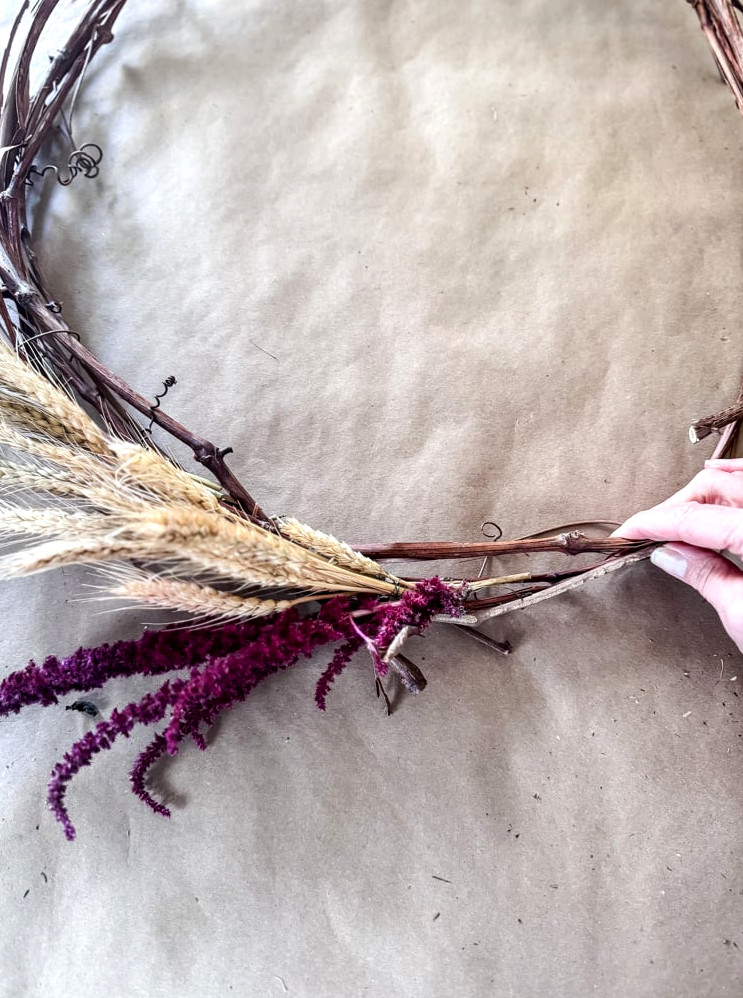
Next, I added several graceful amaranth flowers, allowing their bold, cascading shapes to extend beneath the wheat and bring immediate movement and visual appeal.
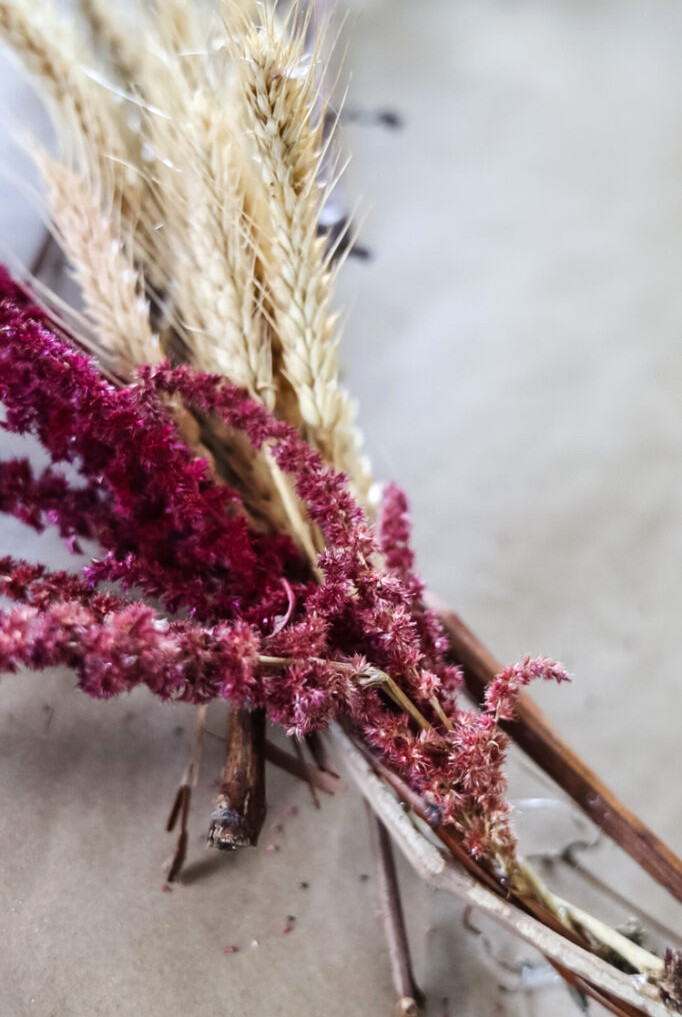
The garden’s ultimate drama queen, amaranth offered trailing, vibrant plumes that gave this understated wreath the energy it needed.
Colorful Fall Branches
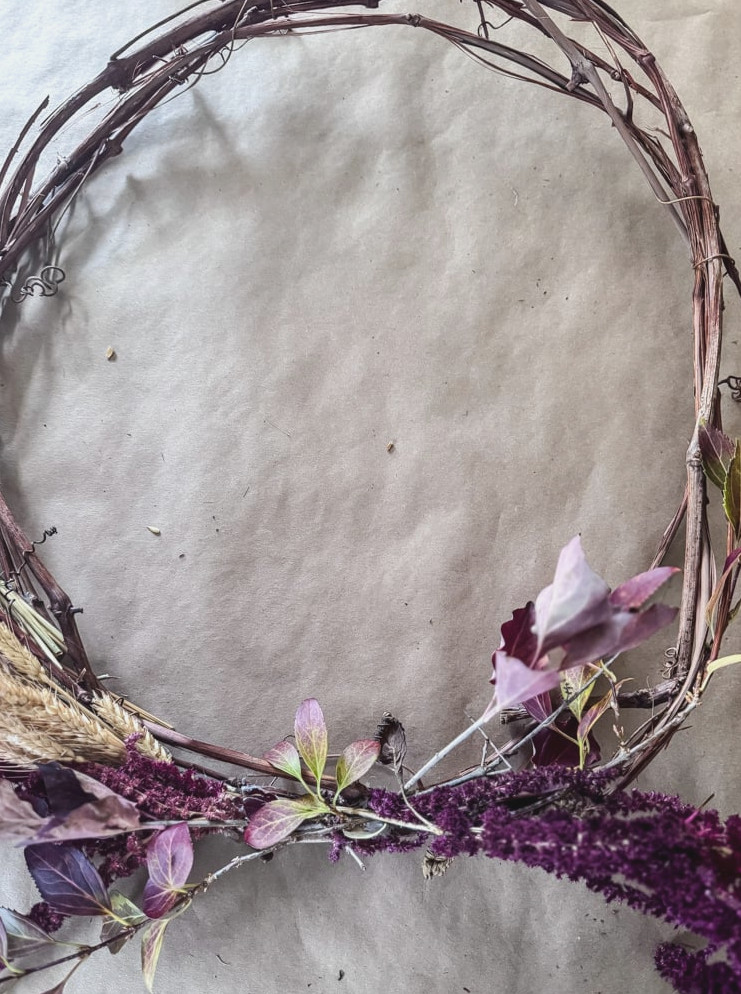
To introduce additional autumn hues, I tucked a few petite branches covered in delicate reddish leaves near the amaranth and glued them firmly in place. I clipped the branches from a forsythia shrub and a small lilac growing in my garden.
Layer in Texture and Color
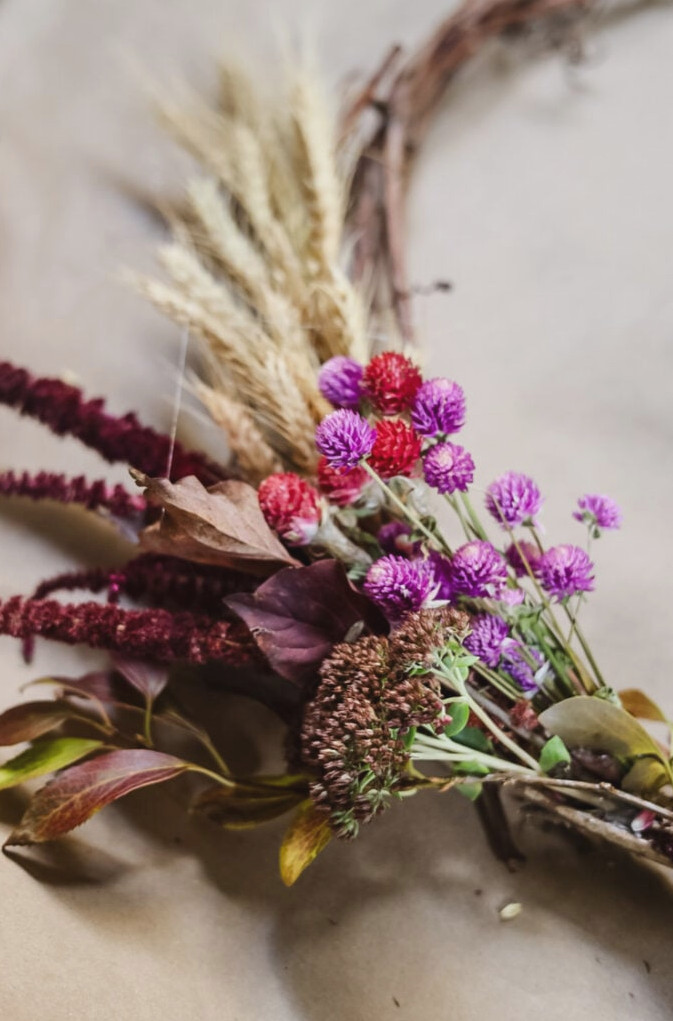
Now comes the process of adding dimension and fullness. I gathered small bunches of purple and red gomphrena and secured them to the wreath with hot glue, positioning two bundles so they pointed away from one another. This arrangement gives the design a naturally organic reach.
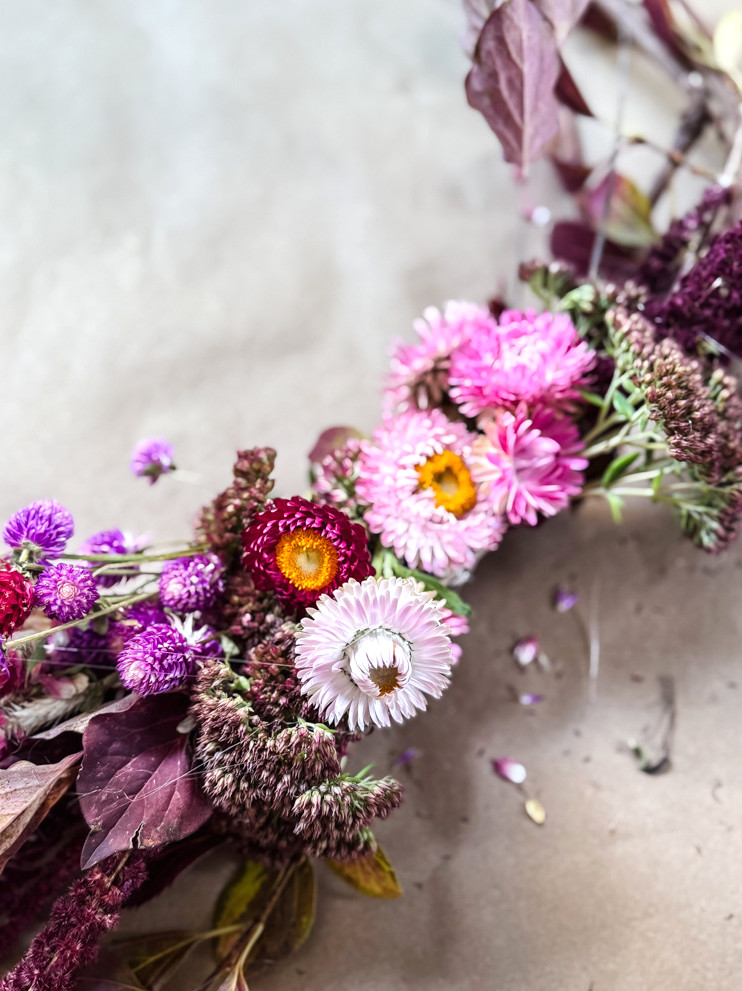
I placed a few pink and red strawflowers at the apparent visual heart of the asymmetrical grouping, attaching them with hot glue. Their bright, textured blooms served as charming focal points within the design. To complete the textural layers, I carefully nestled several Autumn Joy sedum flower heads among the gomphrenaand strawflowers, whose understated, broccoli-like forms seamlessly connect the other elements.
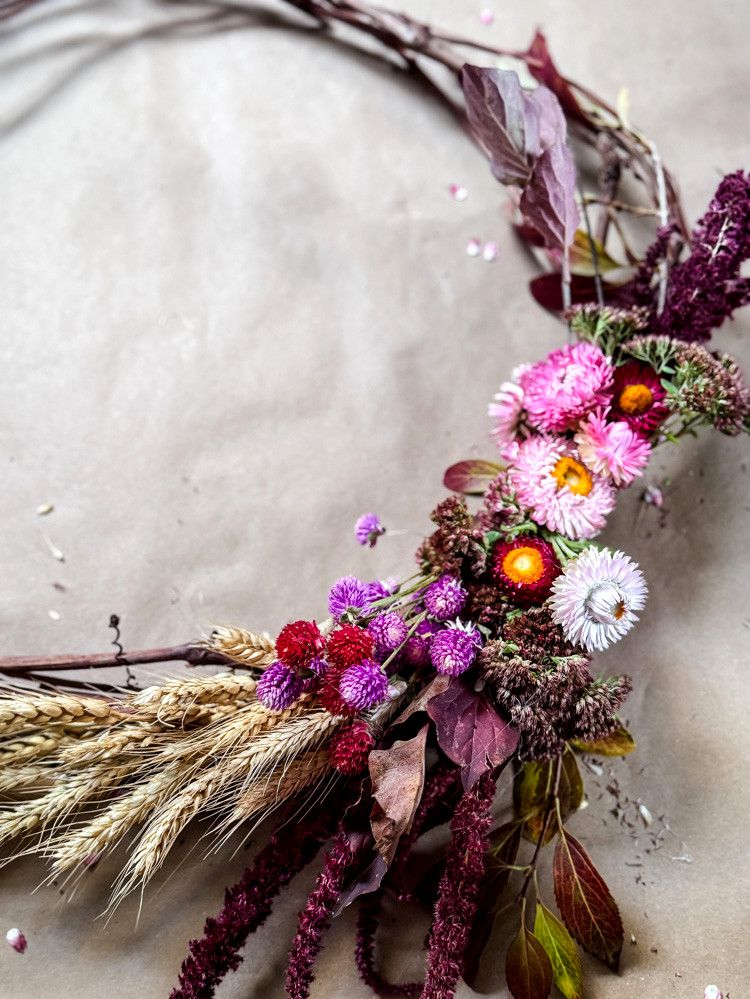
Bring Lightness and Texture with Grasses
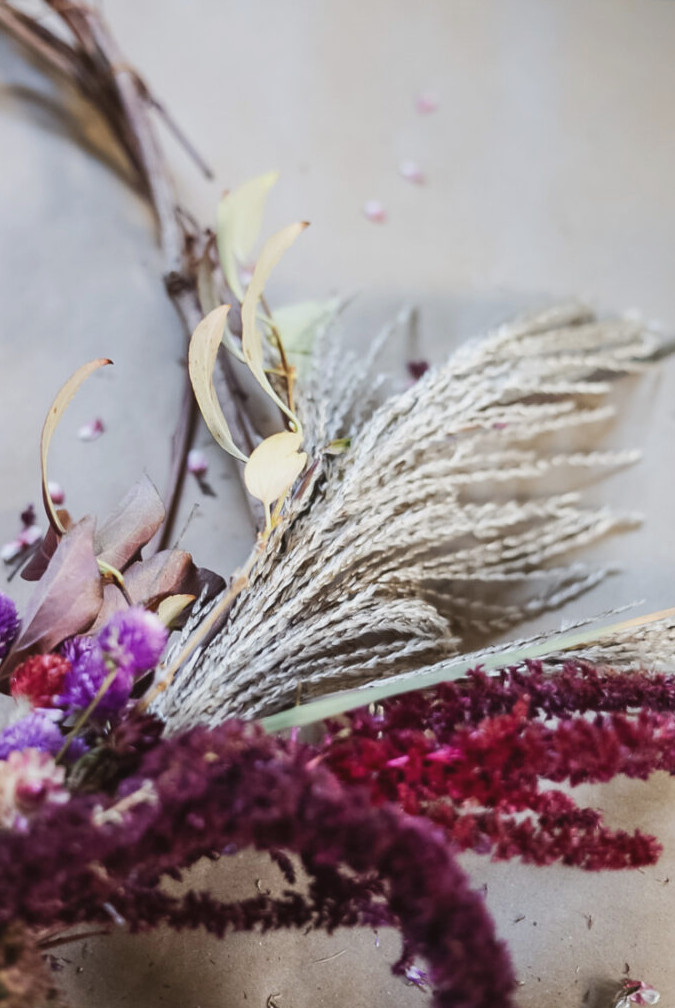
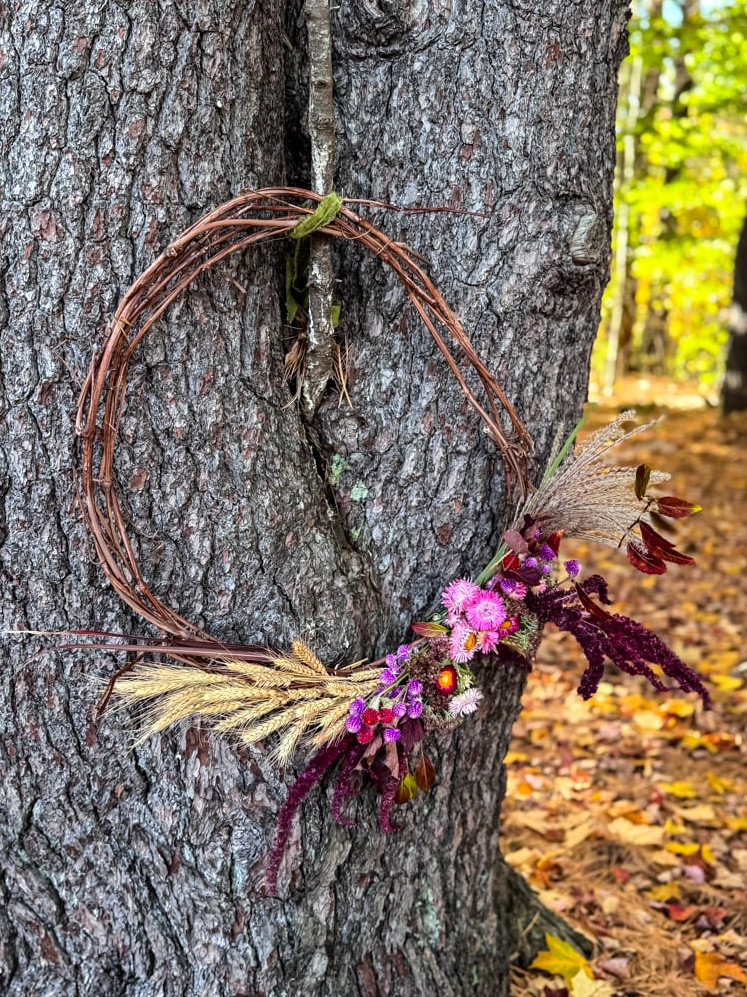
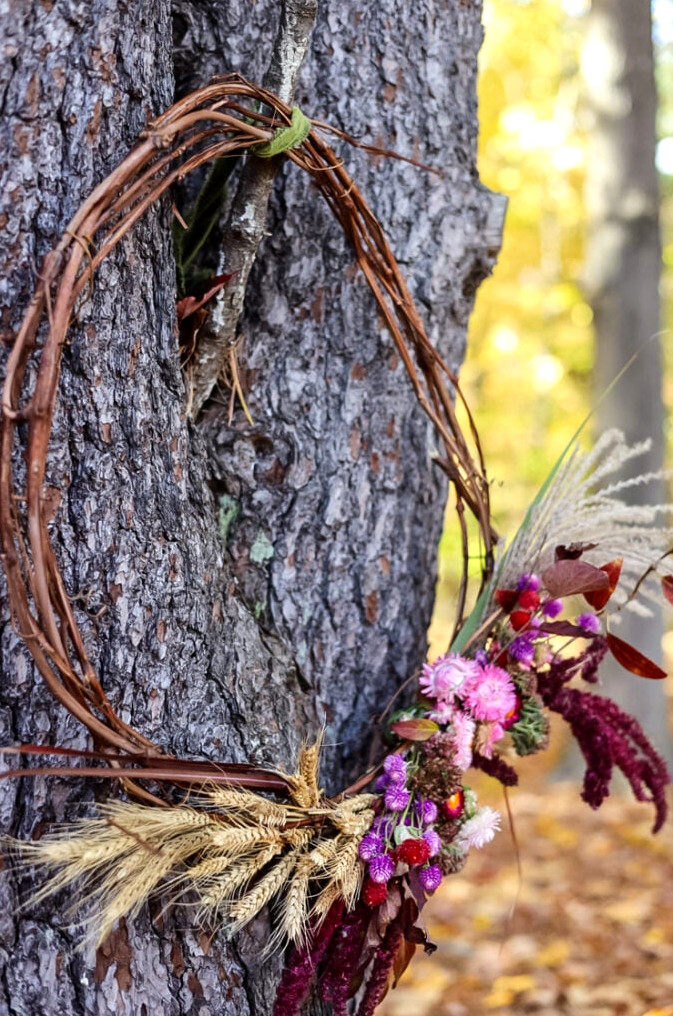
To offset the rich, lively shades and introduce a gentle neutral accent, I added several plumes of ornamental grass. These went along the right side of the design, balancing the wheat stalks positioned on the left. Together, they outline the flower grouping and lend the whole wreath a breezy, weightless appearance.
Final Review & Refinements
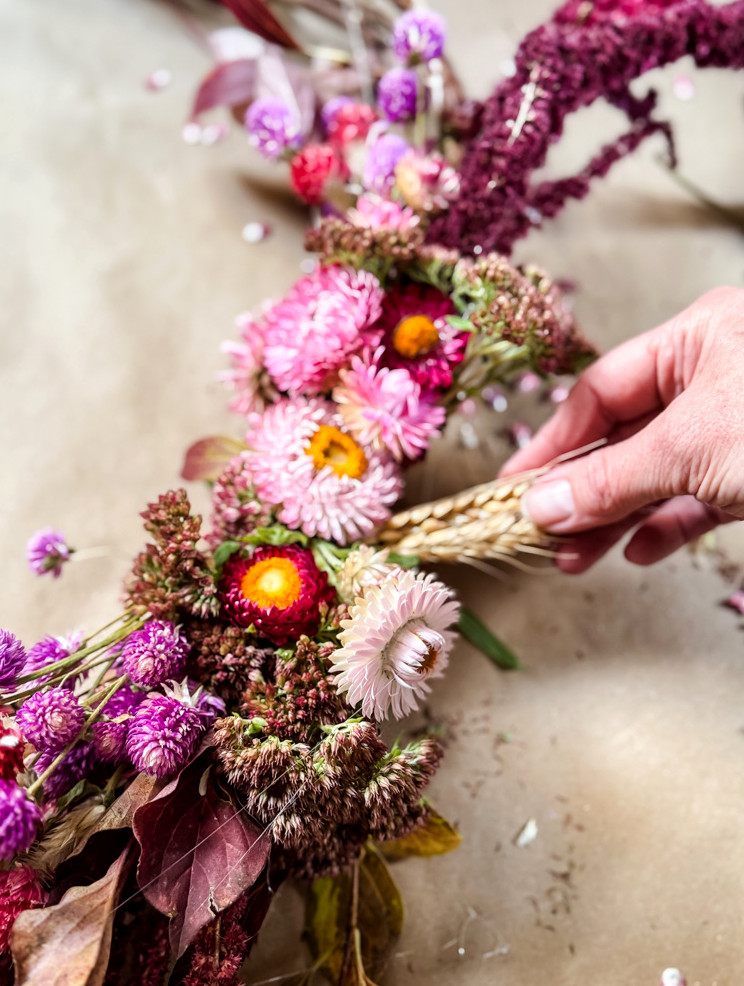
Helpful Tip:When you’re almost finished,place your wreath on a door or stand it uprightso you can assess it from across the room. This makes uneven areas much easier to notice! I followed this step and added several more wheat stems, gomphrena, and a few strawflowers to fill the thinner sections until the arrangement felt balanced.
Why This Contemporary, Asymmetrical Style Works
This design moves away from the traditional, completely filled wreath, and there are several reasons I enjoy it:
- It Looks Modern and Thoughtful:The asymmetrical arrangement is central to contemporary floral design. It introduces motion and guides the gaze around the piece, giving it more energy than a standard round wreath.
- It Showcases Each Flower:Since the blooms are gathered on one section of the wreath, every variety, from the dramatic amaranth and bright strawflowers to the dainty gomphrena, has a chance to stand out.
- It Suits the “Cottage” Aesthetic:The open grapevine foundation and gathered materials prevent it from appearing overly plain or severe. It offers an ideal combination of rustic charm and polished style.
A Seasonal Tradition Full of Stories
This wreath serves as more than an entryway ornament; it preserves a snapshot of this particular season. The amaranth that reached unusual heights this year and the strawflowers that endured an early frost-each carries its own story. That is the special beauty of working with what you cultivate.
This yearly practice keeps me connected to the season and reminds me that the loveliest creations often emerge simply by paying attention to what is already nearby.
Earlier Fall Garden Wreaths
I hope this encourages you to takeexplore your own yard or take a stroll through the neighborhood. What might you gather to craft your very own seasonal work of art?
Want to see your projects showcased! If this project or any of my other DIY creations sparks your imagination, I’d be delighted to feature your work in the Reader’s Spotlight gallery. Email a photo to jennifer@cottageonbunkerhill.com
xo, Jennifer
my essential crafting supplies
visit my amazon shop
Enjoy projects like this?Stay in the loop! Become part of my newsletter communityfor more warm, affordable DIY inspiration sent straight to your inbox. You’ll receive special tips, advance tutorial access, and plenty of ideas to help your home feel personal, welcoming, and made with love.