Your month-by-month handbook for the New England garden
If May is the most hectic month in a New England garden, June is when the rewards finally begin to appear. Everything you planted, from the seedlings raised beneath grow lights to the flowers I winter-sowed and the seeds I planted directly, is growing. Truly growing!
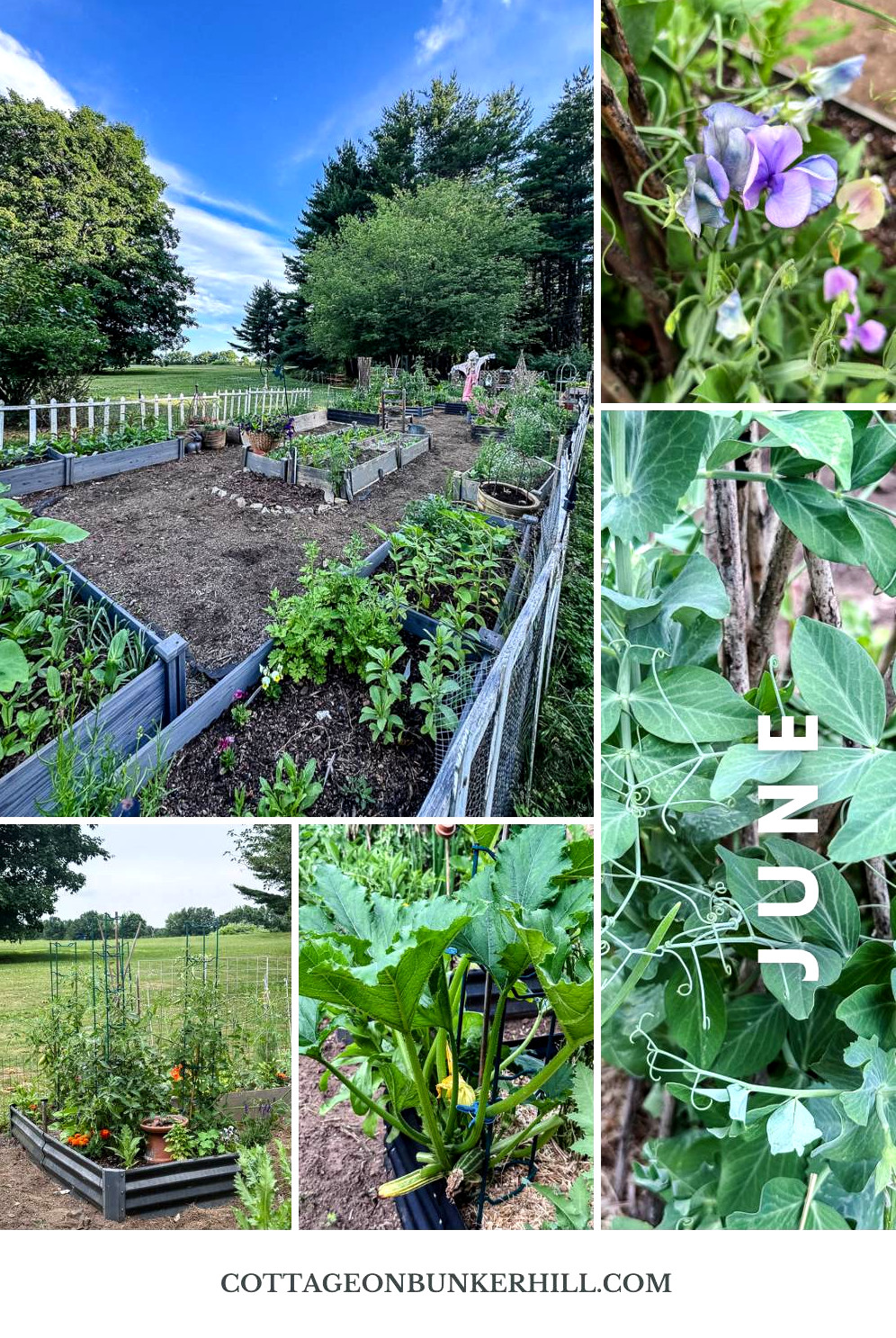
Late May and early June felt a little like a rollercoaster here. We had several cool nights in the upper 30s just as I was putting warm-weather plants into the soil, so I spent plenty of time checking the forecast and hoping for the best. Thankfully, we got through it, and over the last couple of weeks, everything has really flourished. The vegetable garden is looking wonderful, the cut-flower section is filling out nicely, and sweet peas are blooming on their willow trellises. June is a lovely month.
Here’s a glimpse at what has been going on in the garden and what has my attention this month.
Welcome! I’m Jennifer from Cottage on Bunker Hill. I’ve been a home gardener for more than 20 years, and for the past 5, I’ve focused on our cut-flower garden. Through trial, mistakes, and plenty of muddy knees, I’ve learned what truly works. My goal is to grow flowers with intention, whether they’re destined for a vase on the kitchen table or for long-lasting projects, using straightforward, repeatable techniques that work within a genuinely busy life.
What’s Flowering Right Now
The cut-flower garden is beginning to flourish. My winter-sown sweet peas are blooming heavily on their willow trellises, and I could happily stand outside admiring them all day. This season, I tested a new variety called Turquoise Lagoon, and it looks completely different from anything I’ve grown before: the closed buds are a rich denim blue, while the opening flowers become nearly iridescent. Sweet peas are growing in several beds, and their fragrance is remarkable. Whenever a breeze passes through while I’m working, the scent drifts across the entire garden.
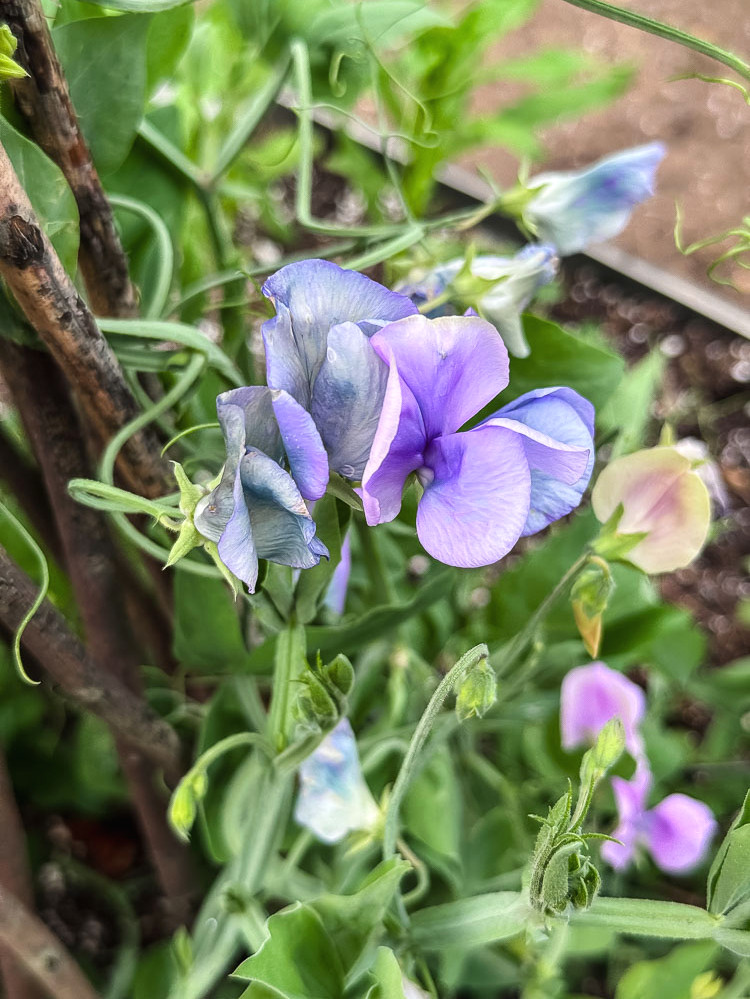
Among the other early flowers, many of the varieties I winter-sowed are now blooming abundantly, including statice, sweet sultan, nigella, and baby’s breath. That means I’ve already begun gathering stems and carrying bouquets indoors.
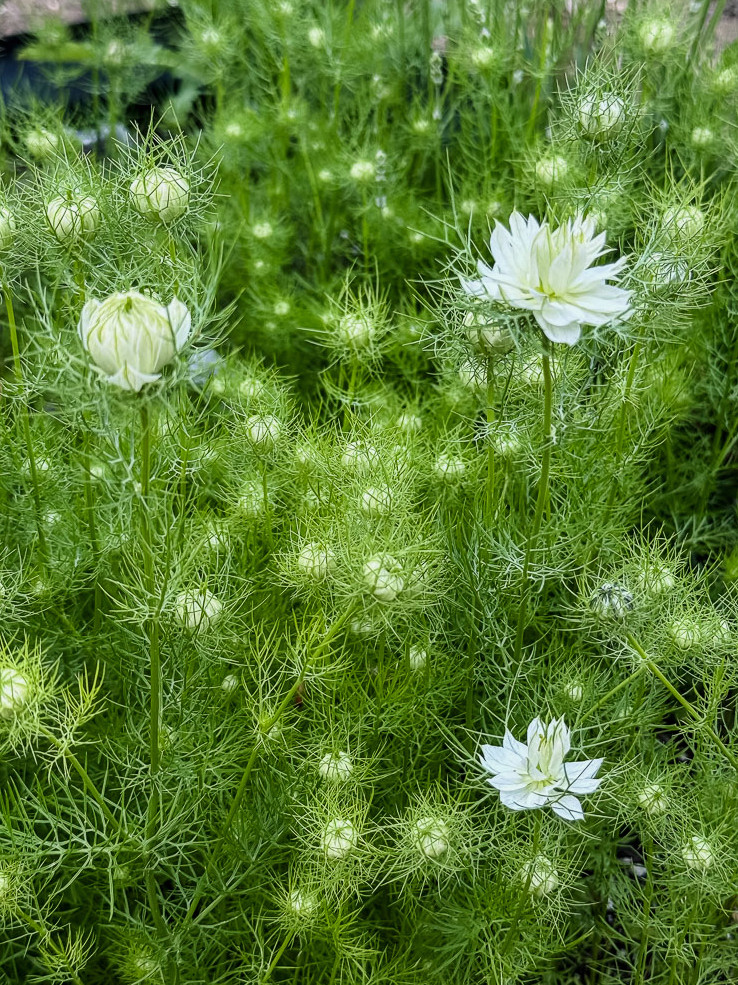
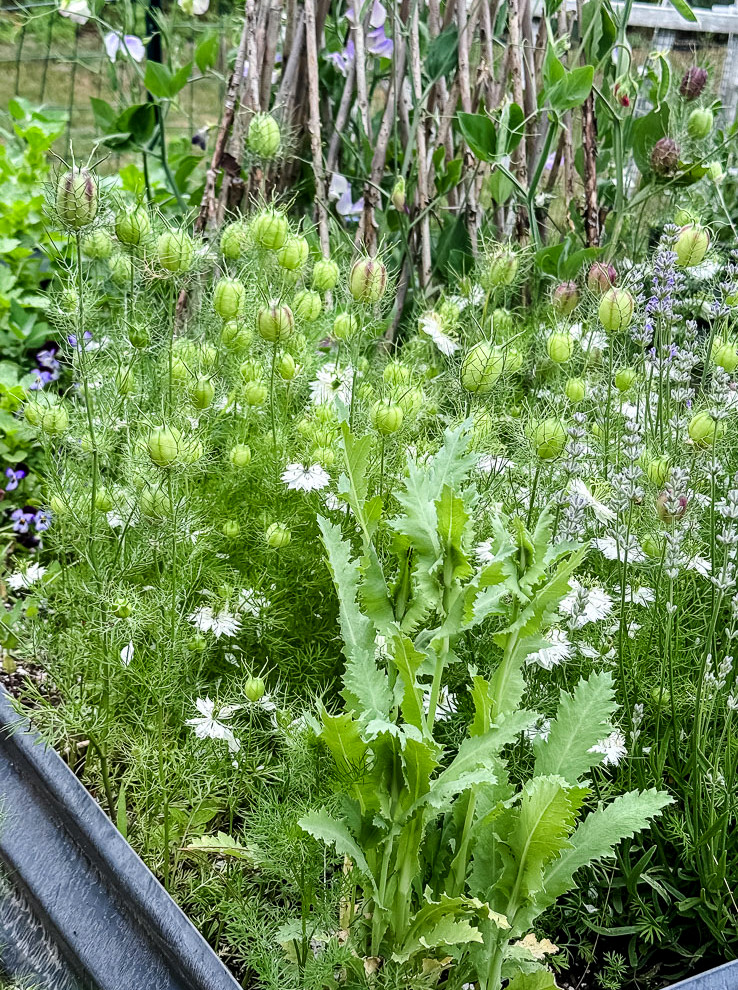
Nigella, also known as Love-in-a-Mist, was one of those flowers I needed time to understand. My first two tries failed completely, but in the third year, it finally bloomed. Every plant you see in that area now has grown from seed produced by that initial success. This year, I also winter-sowed another batch in a separate section of the garden, so nigella is now growing in two locations.
Although the dainty white flowers are beautiful, I’ll admit that I mainly grow nigella for what follows. After the blossoms disappear, they develop into wonderfully sculptural seed pods, and those are the part I truly look forward to. The flowers have finished blooming and are already beginning to form pods this month, which has me incredibly excited.
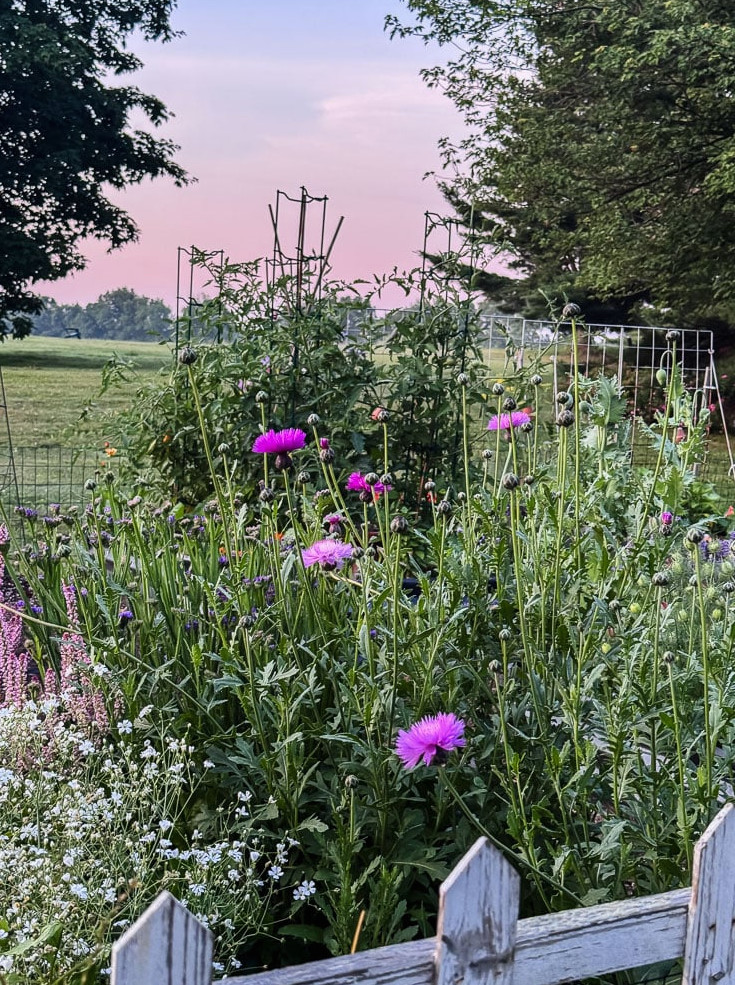
The remaining cut-flower beds are developing at their own speed. The warm-season annuals I planted outdoors in late May and early June are settling in, while the zinnias I sowed directly have emerged and are growing. They still need several more weeks before flowering, but they’re progressing well!
Growing Dahlias From Seed (A New Experiment for Me)
This year, I chose to take a pause from dahlia tubers. The last two years have been somewhat disastrous for dahlias! They began flowering, but just as September arrived and they were reaching their peak, voles moved in and began feasting on the tubers. After putting in so much effort, it was incredibly disheartening. So, this year I decided to skip the tuber expense, take a step back, and try a new approach: raising dahlias from seed.
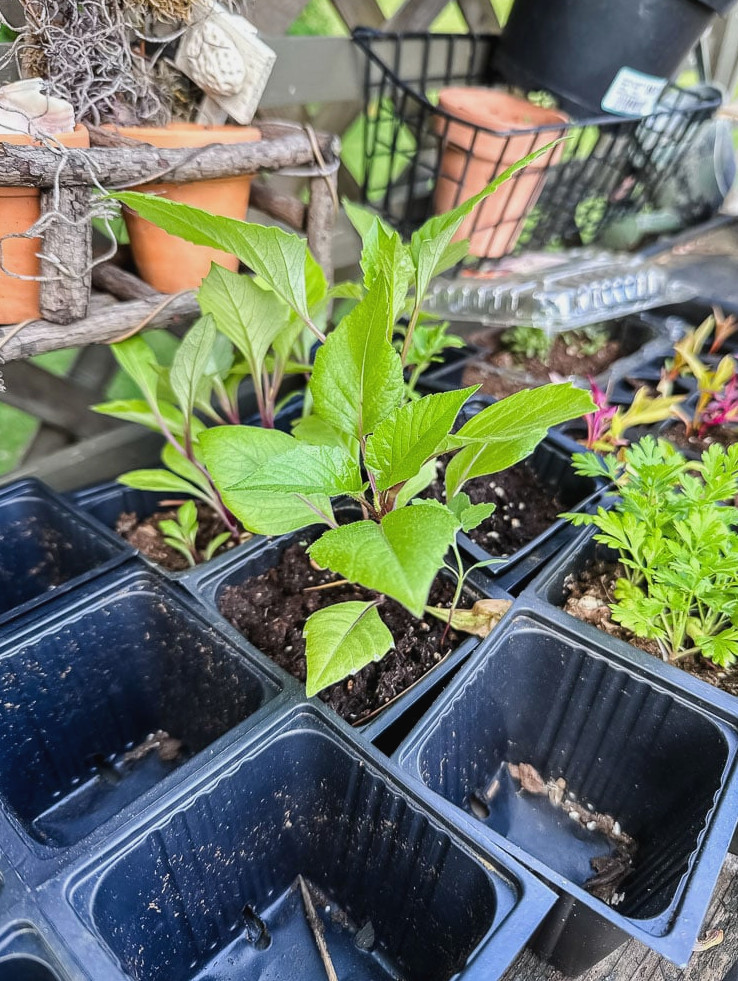
I bought a packet of quality dahlia seeds, sowed them indoors, and every seed sprouted. Every single one! The seedlings developed into sturdy, healthy plants, and I’ve distributed them across the garden beds, where they’re looking wonderful at the moment. Of course, dahlias grown from seed are more variable than those started from tubers. There’s no way to know precisely which colors or shapes will appear, but when a complete packet of seeds costs only a few dollars compared with purchasing individual tubers, it seemed like an ideal experiment for this season. I’m truly eager to discover what flowers appear. I’ll share an update!
The Vegetable Garden
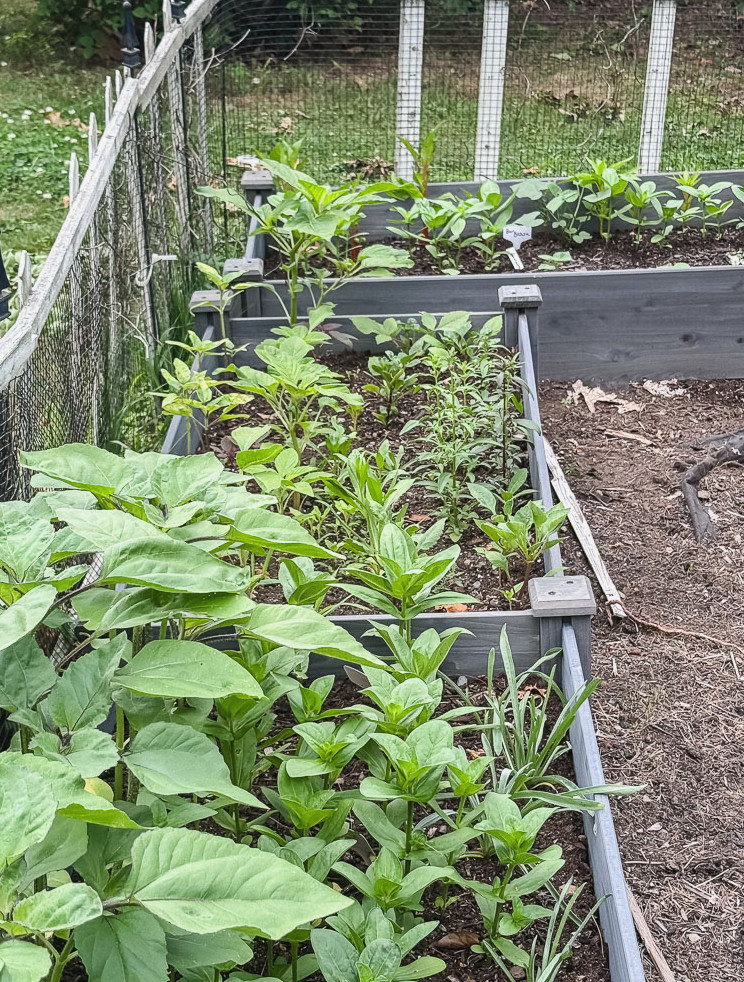
At the moment, the vegetable garden is looking excellent. Everything has taken root and is developing, which feels like a minor miracle after May ended with such chilly weather.
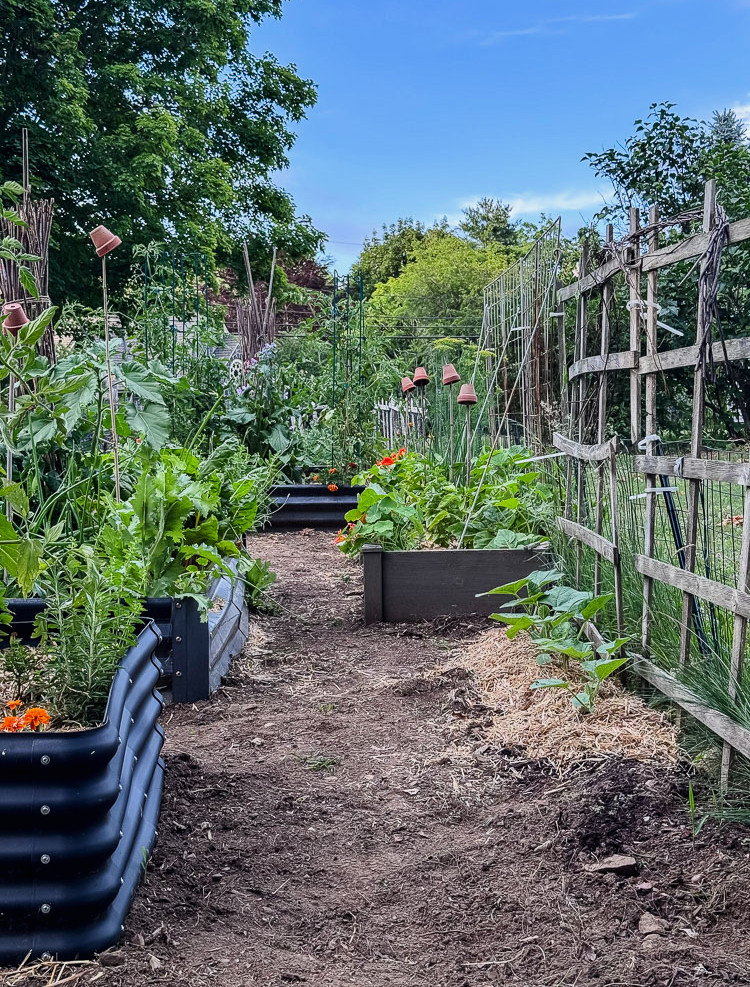
I’ve spread hay over the raised beds to use as mulch, and it has made a noticeable improvement. It should retain moisture during New England’s hot July & August weather, suppress weeds, and give the beds a neater appearance. If your vegetable beds still need mulch, June is the ideal month to add it before summer temperatures arrive.
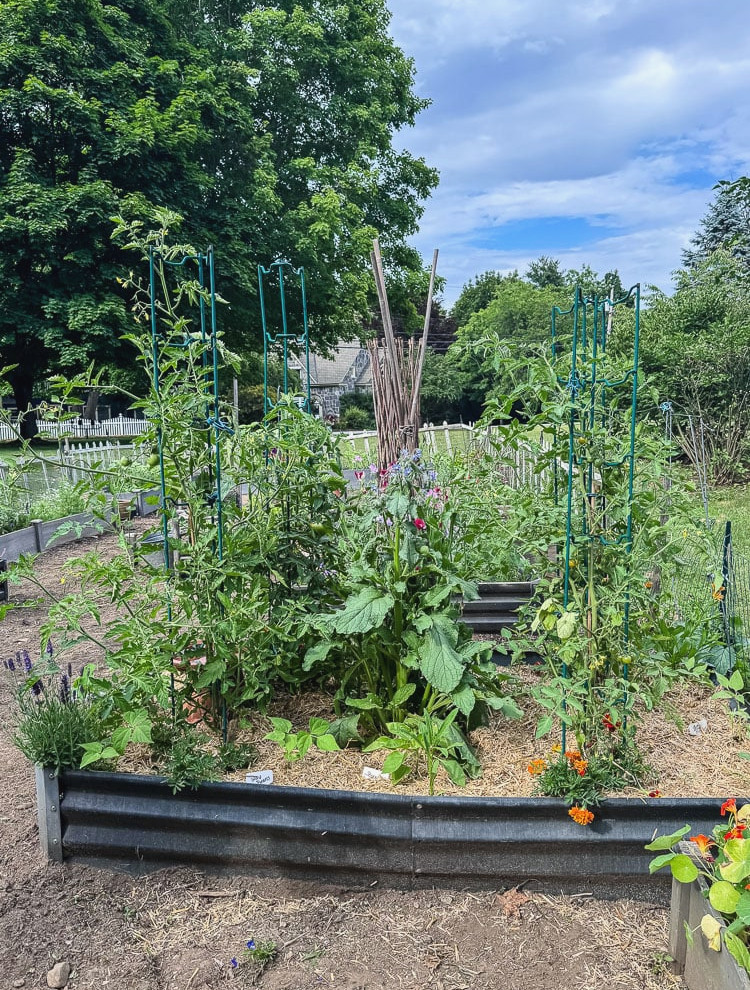
I’ve needed to reseed a few of the bush beans. Once again, for the second consecutive year, quite a few failed to sprout, which can happen. Beans are planted in several beds, including beside the tomatoes, where they serve as companion plants too. Since beans add nitrogen to the soil, something tomatoes appreciate, they make a beneficial combination.
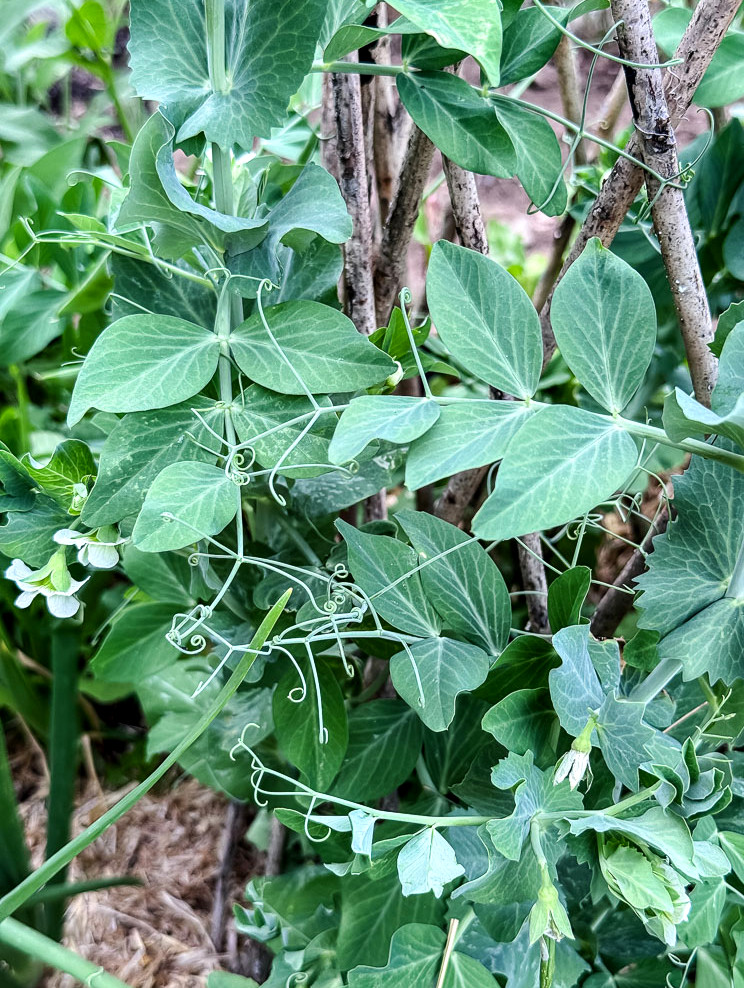
The snow peas and sugar snap peas are finally ready for picking after an exceptionally slow-feeling spring. They have certainly been worth waiting for. I’ve simply given them time.
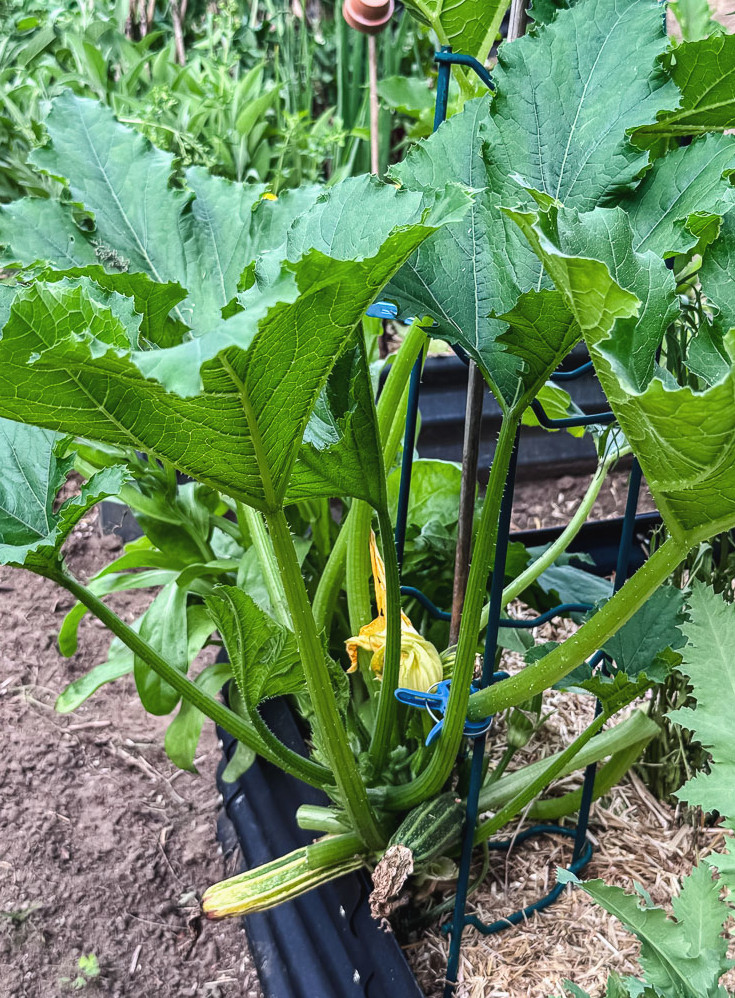
I’m watching the summer squash foliage carefully for insect eggs. There haven’t been any problems so far, but I’m routinely examining the undersides of the leaves. Catching squash vine borers and squash bugs early can make a tremendous difference.
A Cucumber Update
If you’ve ever discovered a cucumber that slipped onto the ground beneath a leaf, only to find it yellow and oversized, then growing vertically may transform your gardening routine. I guide all my cucumbers upward along trellises in the raised beds, and the improvement is substantial. This approach conserves room, keeps the fruit away from the soil, and simplifies harvesting because the cucumbers are much easier to spot.
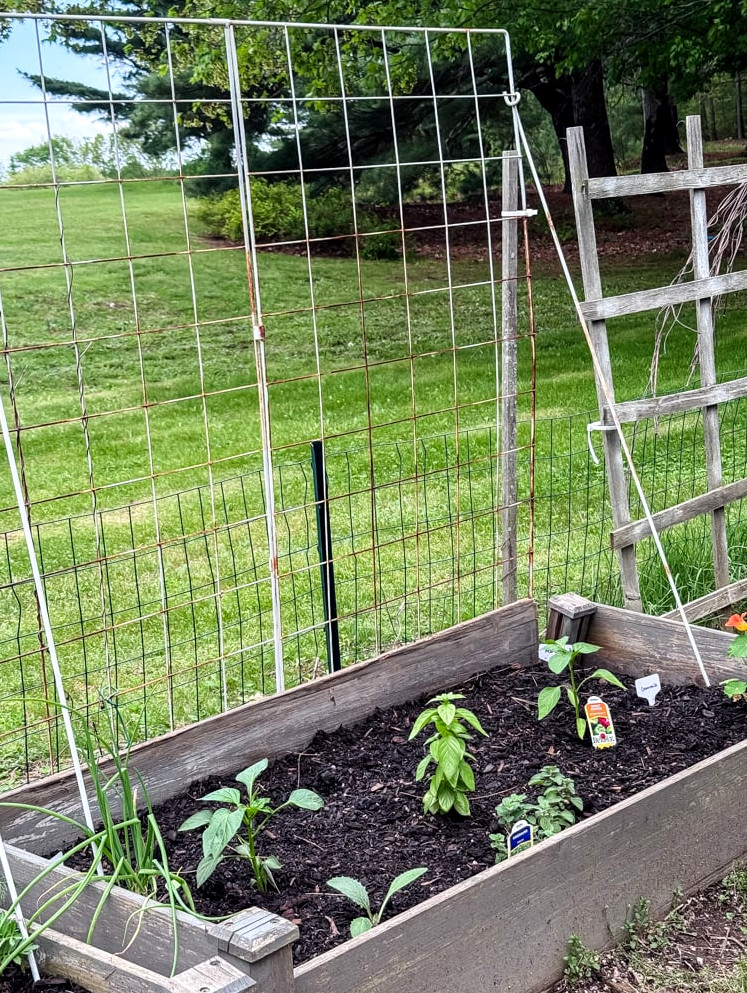
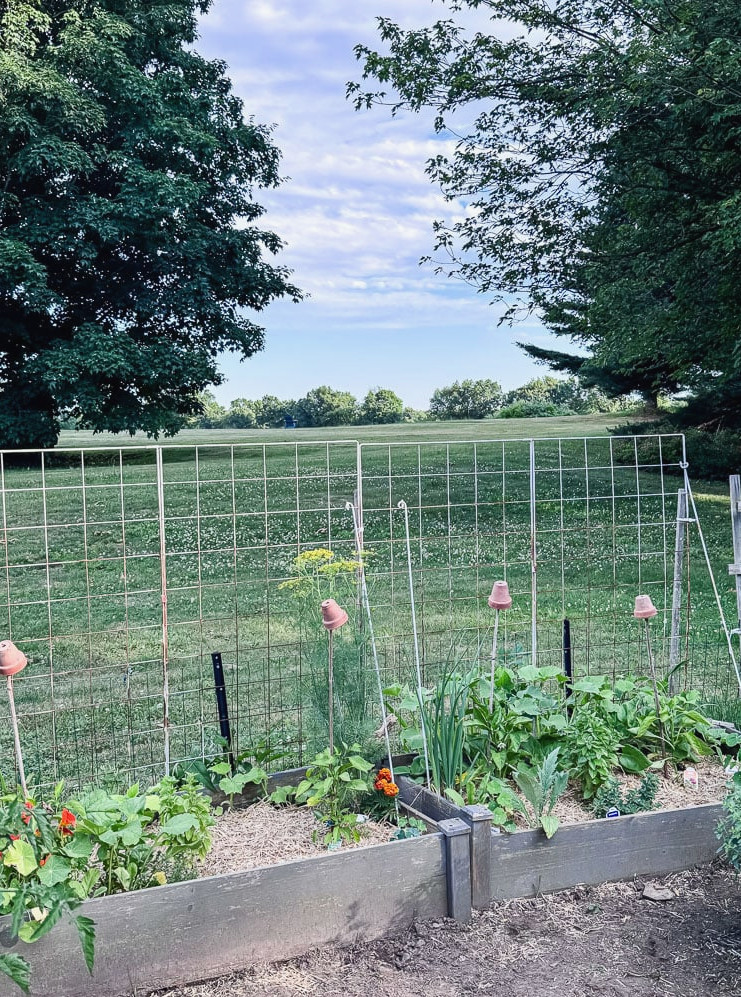
This shows the change from early June to today, since the growth during the last few weeks has been remarkable. It’s one of those techniques that may sound like additional work, but the results are well worth it.work but genuinely simplifies the entire growing season.
June vegetable garden checklist
Growing Zucchini & Summer Squash Vertically
This year, I’m experimenting with something different, and I’m genuinely thrilled with the results so far: training zucchini and summer squash upward in the raised beds. Because squash plants are famous for taking over, guiding them vertically rather than allowing them to spread has made the beds far easier to manage.
I’m placing vegetable supports in the beds and tying the higher stems and leaves to them as the plants develop. To increase circulation around the plant base, I’ve also been taking off the lower leaves. Better airflow can help ward off powdery mildew, a common squash problem. So far, it’s proving effective! Plenty of squash is already forming, which shows the plants are thriving.
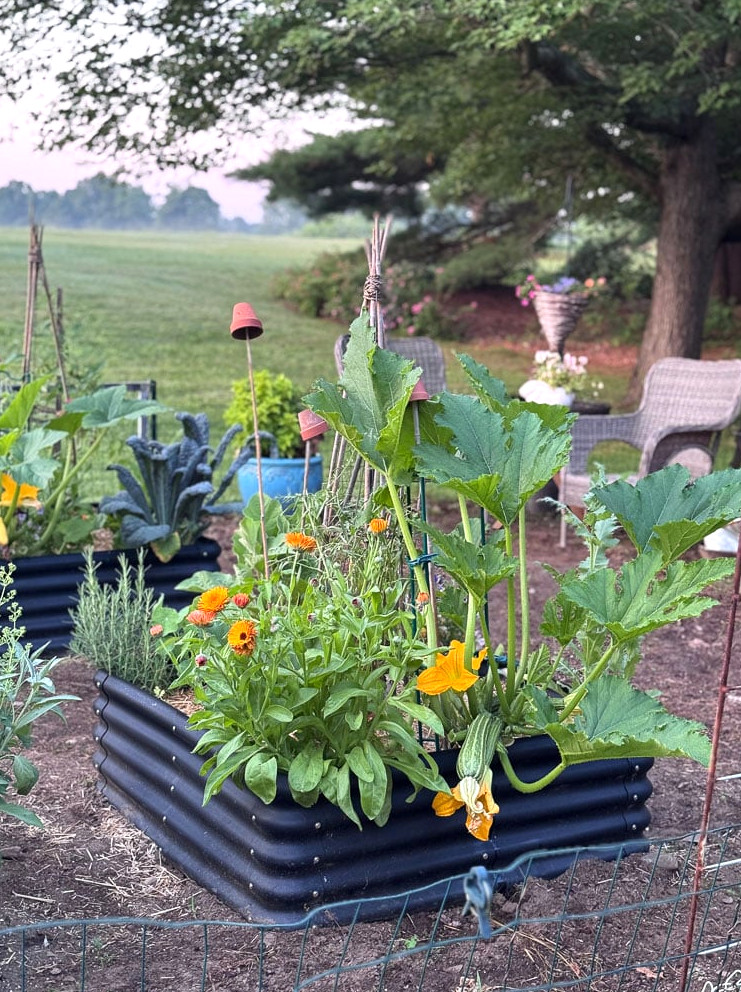
If squash has ever overwhelmed your whole garden, growing it vertically is certainly worth a try.
Vertical squash checklist
June In The Garden: Closing Thoughts
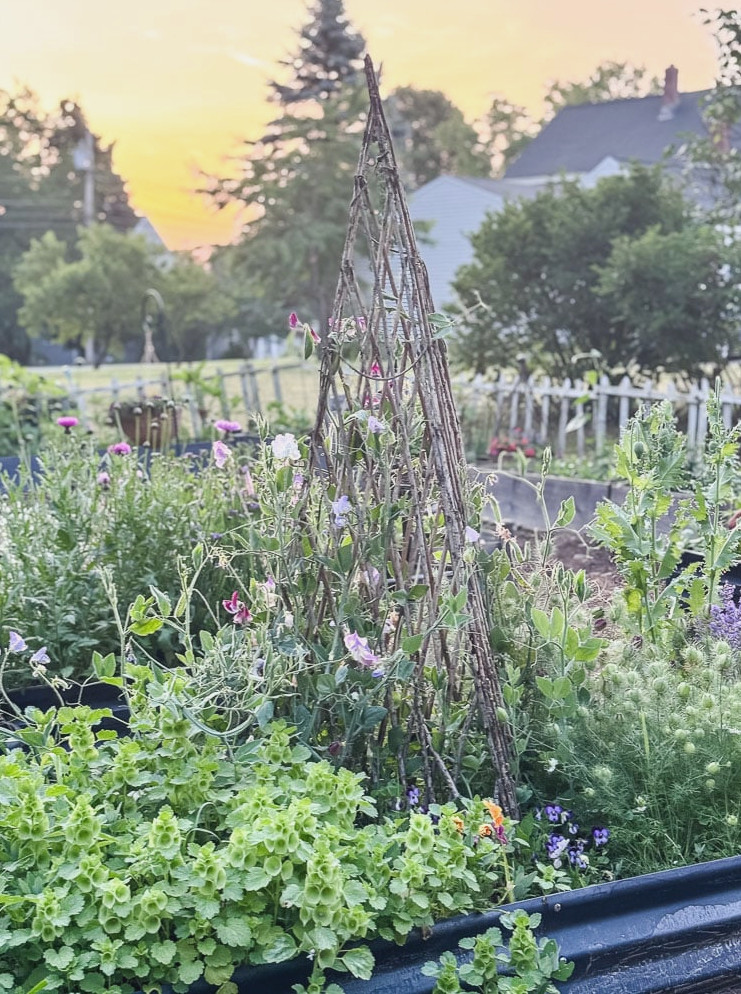
June marks the point when the garden begins to reward you. After so much preparation, planting, and patience, everything is finally growing, flowering, and yielding crops—and no matter how long you’ve gardened, that feeling never becomes routine.
This month, I’m reminding myself to inspect the squash leaves, continue picking the sweet peas, and stay calm when plans go awry (I’m looking at you, bolted lettuce). There is always another lesson waiting in the garden.
I’ll return with the July checklist, which, for a New England garden, focuses mostly on managing the harvest and keeping ahead of the hot weather.
xo, Jennifer