
This fun science activity combines oil and water to make fireworks inside a jar! Children will enjoy discovering density and seeing why oil and water stay separate in this simple experiment!
RELATED: Fireworks Painted with Salt
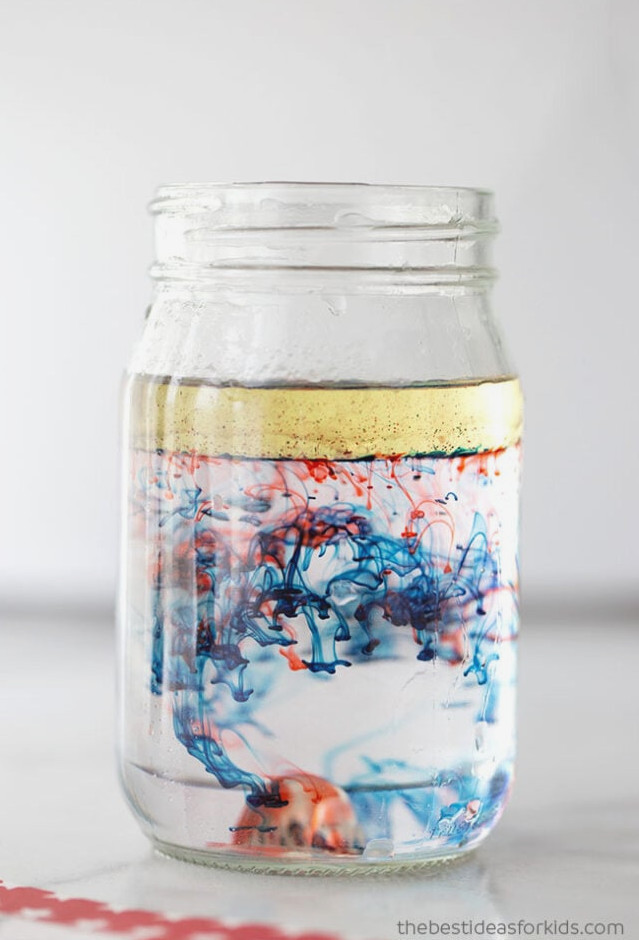
Jar Fireworks Science Experiment
Using oil and water, this jar fireworks activity demonstrates the concept of density. It is also an entertaining project for the 4th of July, Memorial Day, or New Year’s Eve!
What Does Density Mean?
Density refers to the quantity of mass contained within a specific volume. Imagine two items that are equal in size. The heavier one has greater density, while the lighter one has lower density.
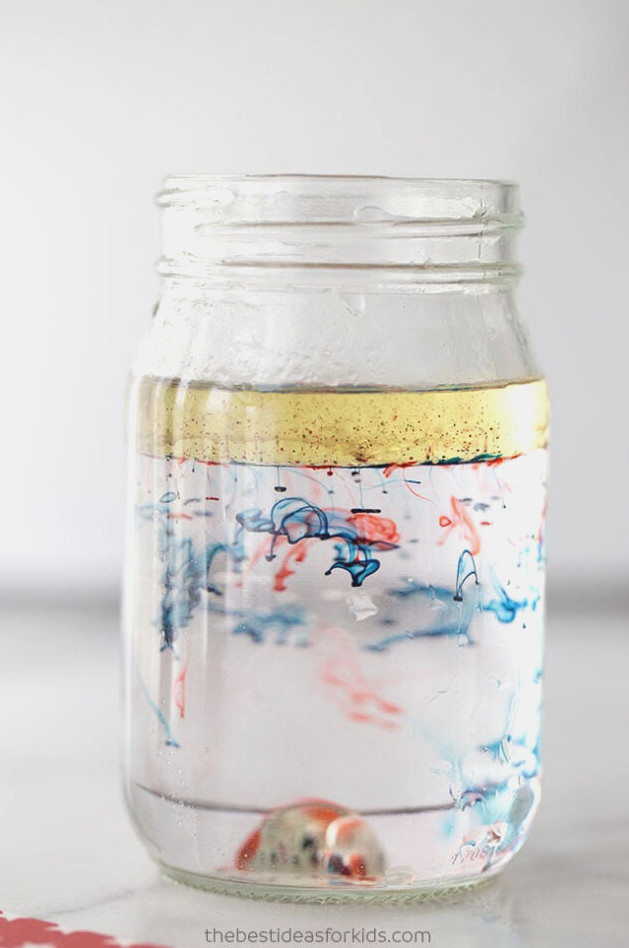
During this activity, you will notice that oil has a lower density than water, which allows it to remain floating above the water.
How It Works
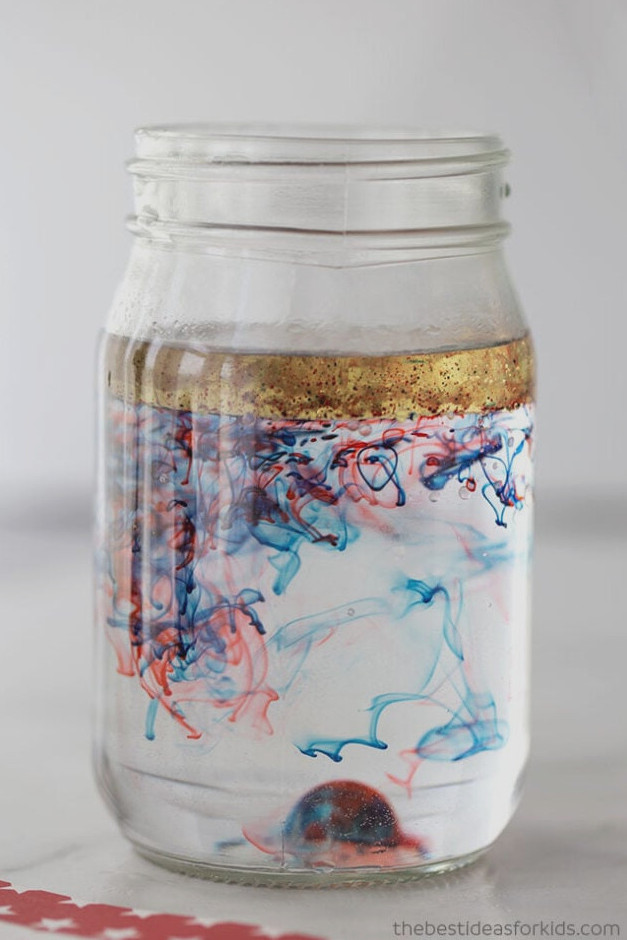
Oil and water remain separate rather than blending together. Because oil is less dense, it stays above the water. Food coloring is made with water, so it combines with the water. It will not blend into the oil when added to it. After the oil is poured into the water, the colored droplets move downward because they are heavier than the oil. When they enter the water, they begin dissolving and create the appearance of tiny bursts, or fireworks.
View the Video Guide!
Materials Required
- Vegetable Oil – we chose canola oil
- Food Coloring – we used red and blue. Choose standard, water-based food coloring for this activity
How to Make Fireworks in a Jar
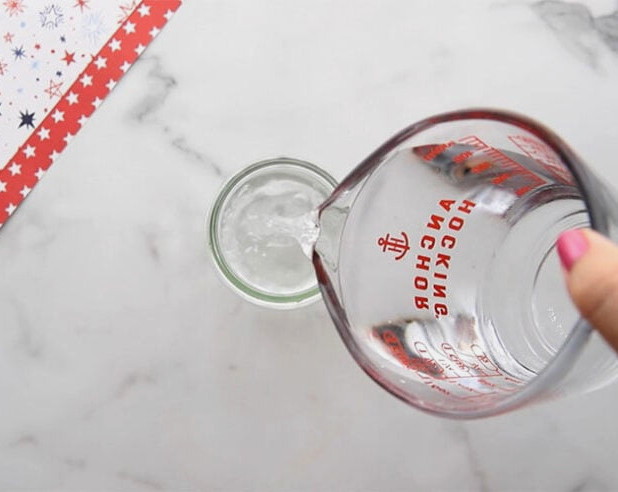
1. Pour water into your jar or vase until it is 3/4 full.
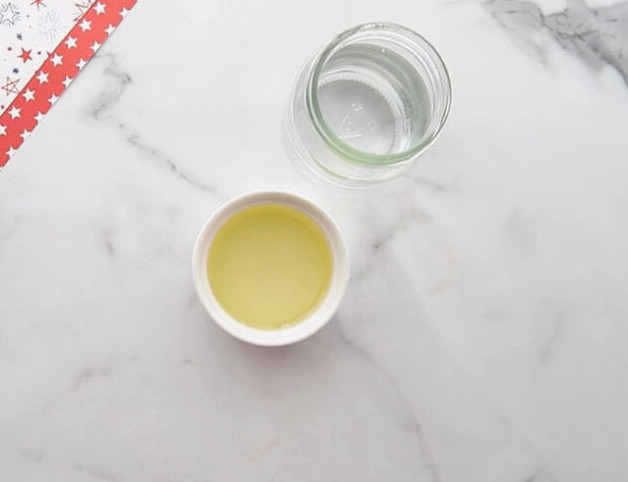
2. Pour some oil into a bowl.
Only a small amount of oil is required– approximately 4 tablespoons will create a thin coating. Adding a bit more oil can help children notice the density difference more clearly.
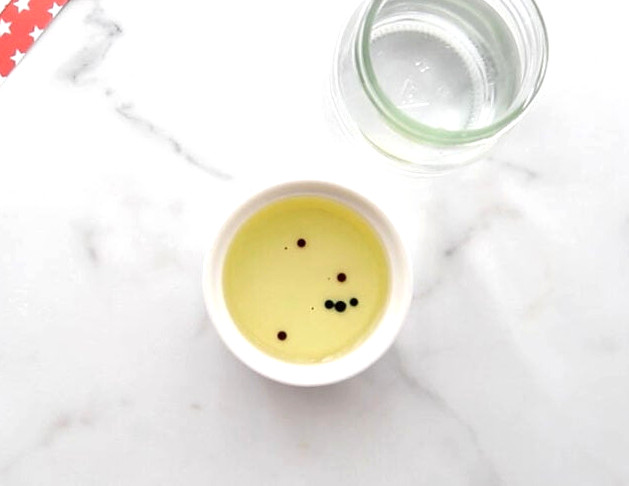
3. Place 3-4 drops of red and blue food coloring into the oil.
Any colors will work, though we suggest using no more than 3 because they blend quickly and may make the falling droplets more difficult to observe.
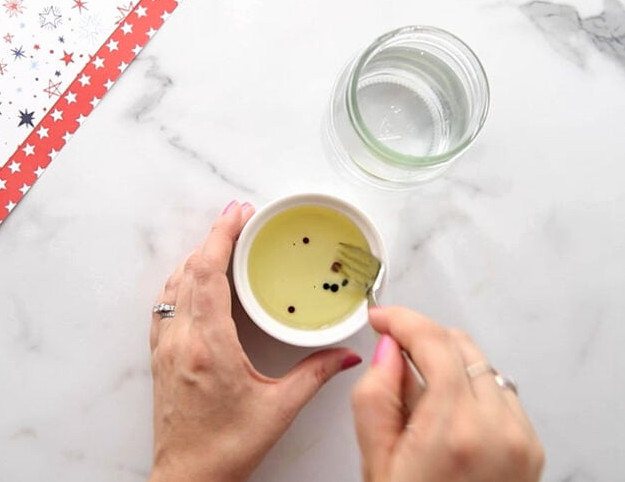
4. Stir the food coloring through the oil with a whisk.
At this point, you can show that the oil and water are already clearly unable to combine. Whisk the mixture and pour the oil into the jar promptly, before the food coloring sinks to the bottom of the bowl, or it may fail to create droplets in the water.
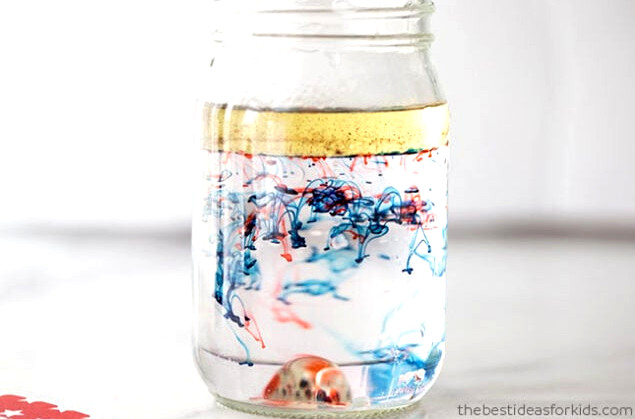
5. Pour the oil mixture into the water.
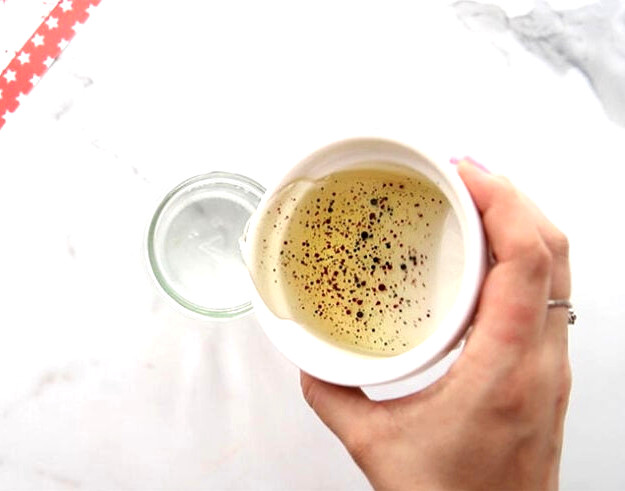
Now pause and watch the tiny droplets descend from the oil, creating the “fireworks.”
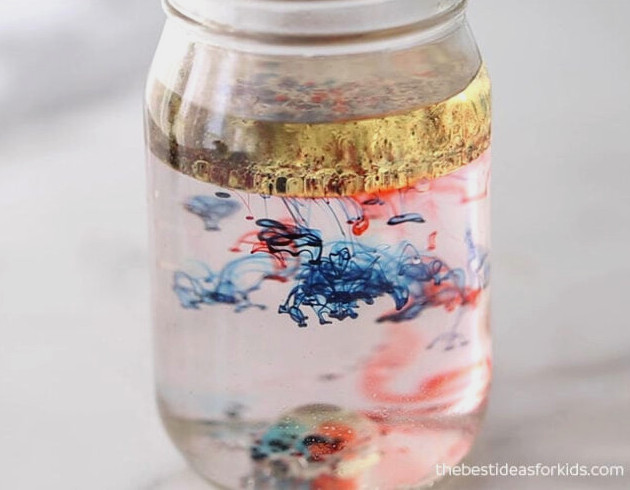
We enjoy how effortless this science activity is, and children will have fun watching or creating their own jar fireworks as well!
Discover more of our favorite science activities: