
Searching for a simple science activity with ingredients from your kitchen? Give this enjoyable lemon volcano experiment a try with the kids! All you need is a lemon, baking soda and food coloring!
RELATED: Baking Soda Volcano
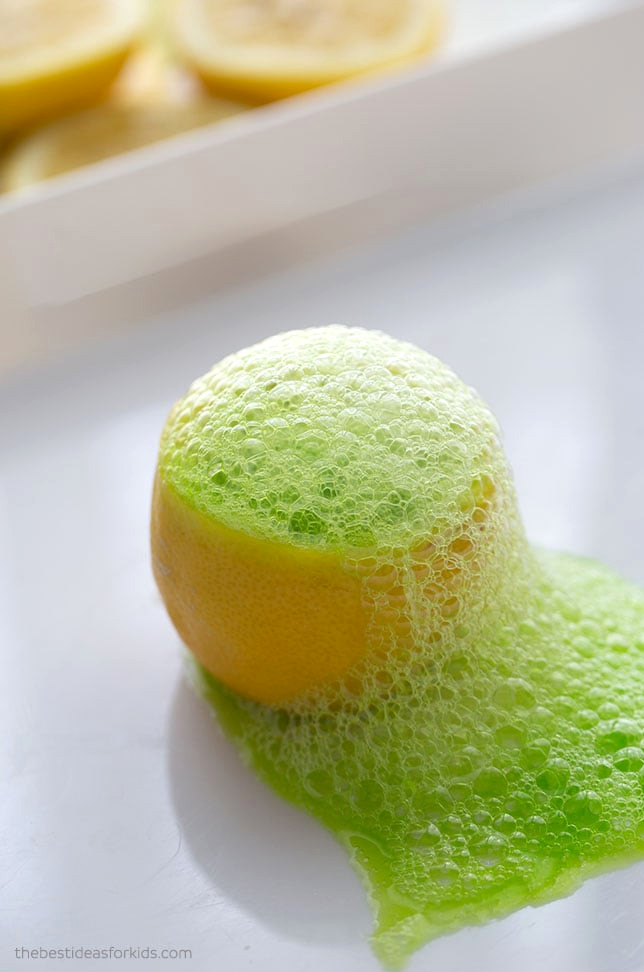
Try this lemon volcano experiment for a simple kitchen science activity!
Children will enjoy discovering the science behind base-and-acid reactions. Vinegar isn’t necessary for this activity, since the citric acid found in the lemon serves as the acid!
For another entertaining science activity, give this oil and water experiment a try.
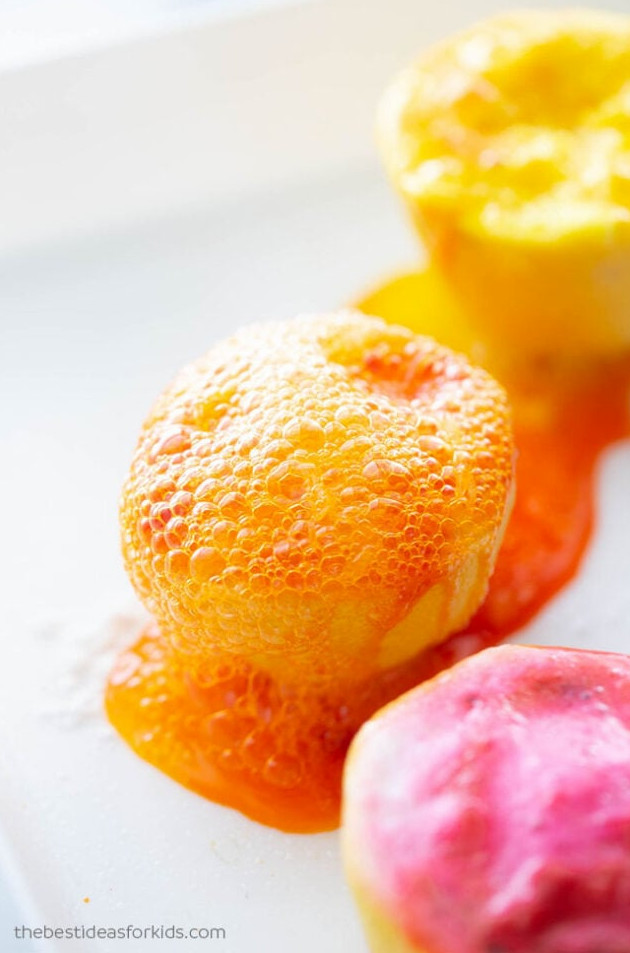
Don’t have a lemon available? Check out our baking soda volcano experiment, which uses vinegar instead.
The Science
What occurs when lemon and baking soda are combined?
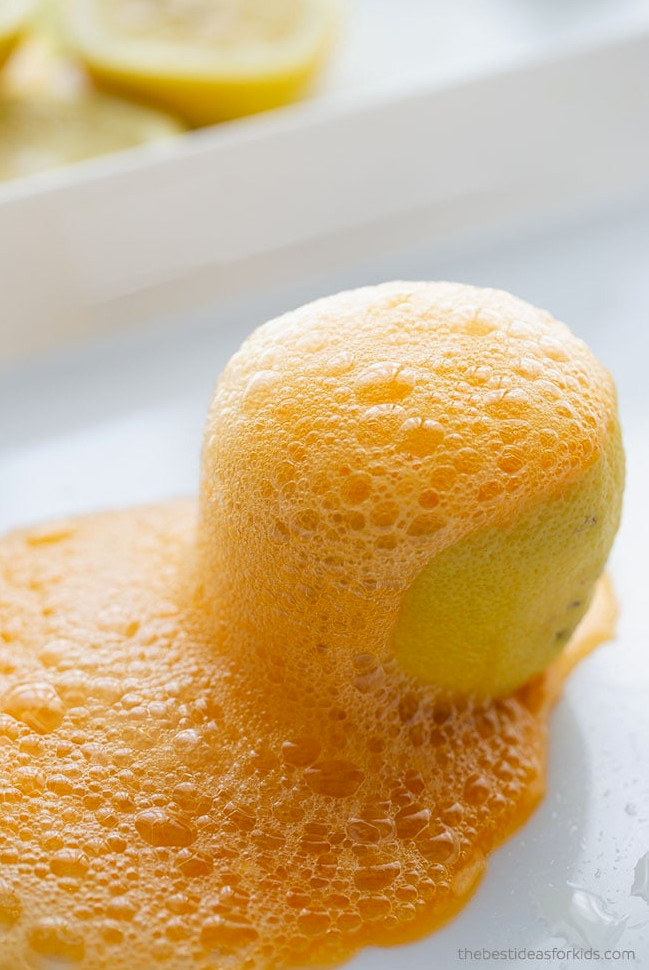
You can observe the fizzing and foam, but what produces this reaction? Baking soda (sodium bicarbonate) is a base, while lemon (citric acid) is an acid, so the result is an acid/base reaction. At first, the reaction forms carbonic acid, which is unstable and separates into carbon dioxide (CO2) and water. This process creates the fizz and bubbles as the gas escapes from the liquid.
What is Citric Acid?
Lemons naturally contain citric acid. It is also found in limes, oranges, pineapples and various other fruits. This substance is a widely used food and beverage additive that helps prevent spoilage. It is also included in certain foods and drinks to provide a tangy flavor.
Supplies Needed
- Baking Soda – for activities, we prefer this large 5 lb bag because it offers better value
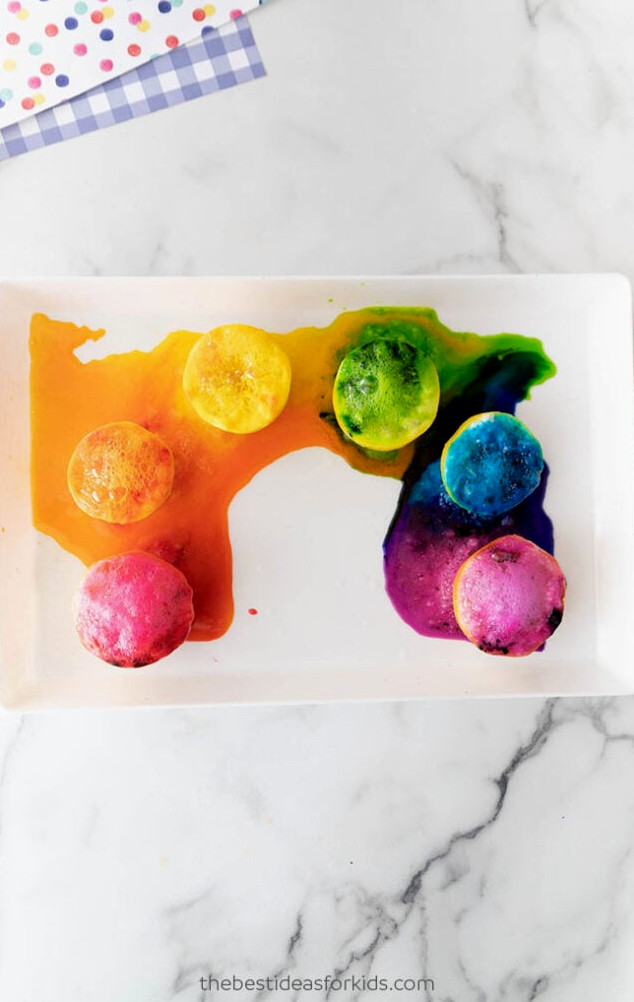
- Lemons (use 1/2 lemon per color – to create all 6 colors, you’ll need 3 lemons)
- Concentrated Food Coloring – we chose orange, green and blue, though you can select whichever shades you prefer. We enjoy using this liquid food coloring gel because it is concentrated and produces especially bright colors.
- Dish Soap – any variety should be suitable
- A Popsicle Stick or Spoon
- A Tray – these plastic white serving trays are useful for messy activities or sensory play
Watch the Video Tutorial
How to Make a Lemon Volcano
1. Slice the lemons.
First, remove a small piece from the bottom of each lemon so it can remain upright. Note: An adult should handle the cutting step of this activity.
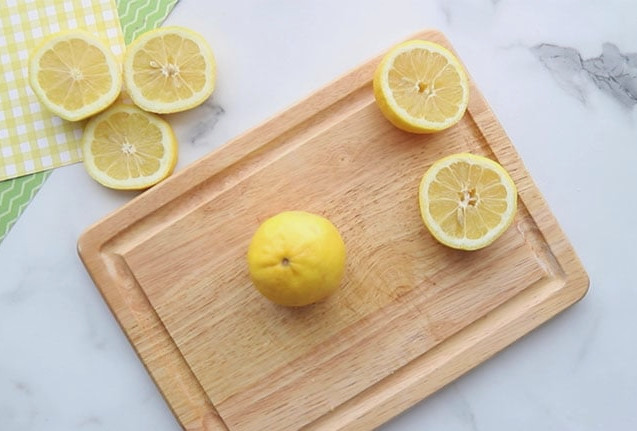
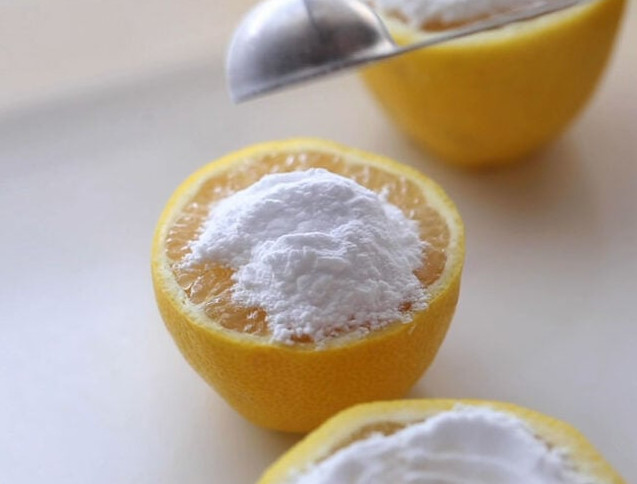
2. Sprinkle baking soda onto each lemon.
Exact measuring isn’t needed, but about 1/2 tablespoon of baking soda placed on each lemon works nicely.
Another Method
You can also remove the juice from inside the lemon and transfer it to a squeeze bottle. Next, place the baking soda inside the hollow lemons and let the children squeeze the lemon juice over it.
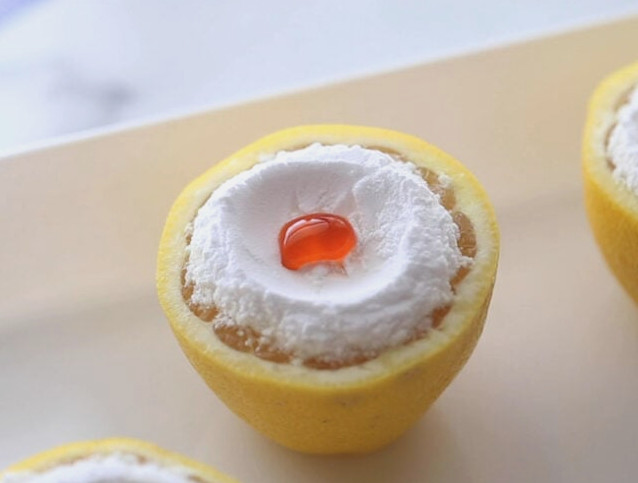
3. Place several drops of food coloring on top.
To keep the coloring from running down the lemon’s side, create a little indentation in the baking soda and place the coloring there.
4. Add a drop of dish soap to the top for extra fizz.
This step is optional, though it creates a foamier volcano.
5. Stir everything together with a popsicle stick.
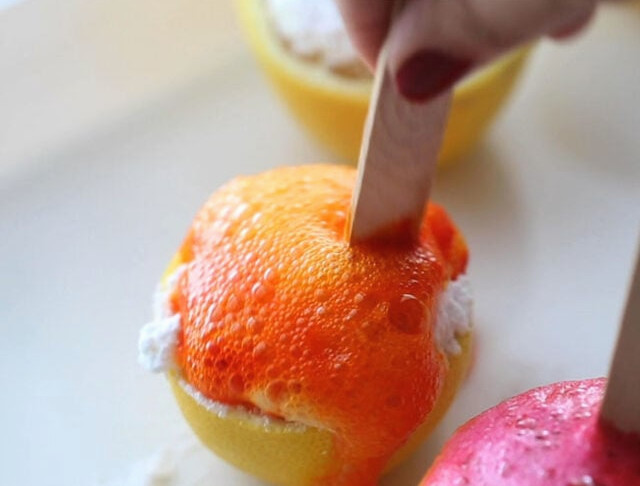
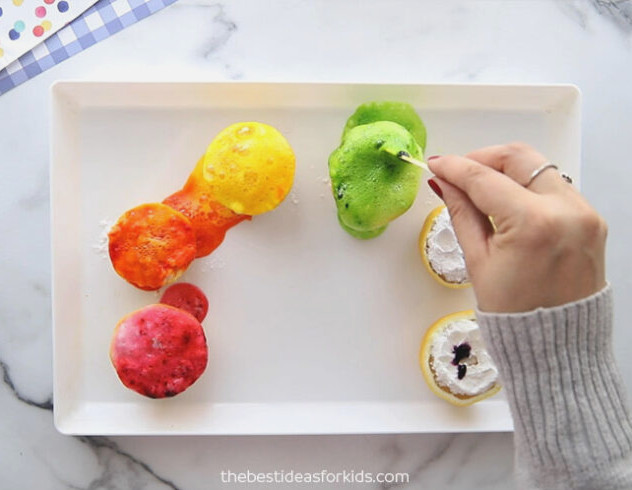
Note: Food coloring may stain skin, so children can wear gloves or use long popsicle sticks to avoid contact with it.
Children will enjoy combining the baking soda and lemon to form these tiny science-based volcanoes.
This activity offers a delightful way to observe the reaction between baking soda and lemon juice!
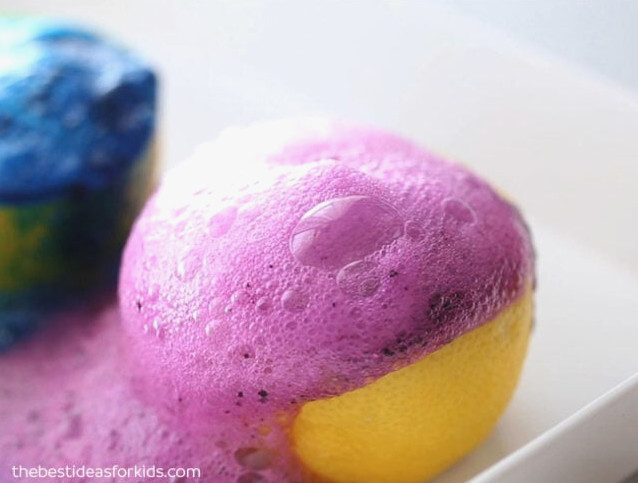
To keep the volcanoes erupting, squeeze juice from additional lemons and use a dropper or squeeze bottle to apply more lemon juice to them.
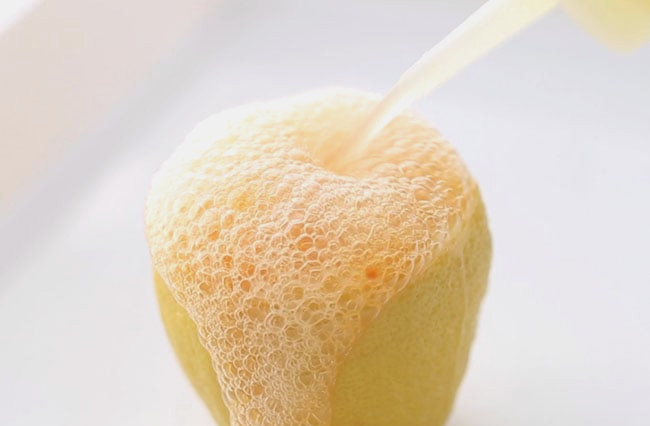
To try a lemon-free version and explore color blending – take a look at our standard baking soda volcano experiment!
Additional Science Experiments: