The Beauty of Slow Living in a Hectic World
There’s a distinct sort of exhaustion that arrives after spending too much time scrolling.
You know the feeling. You open Instagram intending to waste five minutes and somehow resurface half an hour later certain that your living room is a mess, your garden is falling behind, and everyone else has already begun decorating for a season that hasn’t even arrived. By February, the internet is urging you to think about summer. By July, it’s promoting autumn blankets.
I’ve experienced it too. For a time, I went along with it.
But somewhere between tending my garden and developing my thrift-store habit, I found something that felt much more like me, slower, more deliberate, and a little more connected to what’s truly unfolding beyond my window. Are the dahlias flowering? Bring some indoors. It’s November in New Hampshire, and everything is dull and bare? Light a candle and embrace the season.
Slow living is hardly a brand-new idea, and I won’t act as though I created it. Still, I believe it deserves discussion within a home and garden blog, because this space can so easily turn into another invitation for more. More projects. More purchases. More spaces to update.
So instead, let’s consider less. Thoughtful less. The sort of home that carries a narrative, rather than one filled with items that arrived in an Amazon package.
Hi, I’m Jennifer. For me, home is a continuing expression of intentional living. As the New England seasons unfold, I search for ways to make our spaces not simply lovely, but genuinely comforting and restorative. I’m delighted you’re here to discover it with me.
Section 1: Thoughtful Decorating & Collecting
Does Your Home Share a Story?
Step into a home decorated gradually, and you’ll sense the difference, even if you can’t quite put it into words right away.
Maybe it’s the lamp discovered at a thrift store two towns away, the one you nearly walked past twice before finally carrying it home. Perhaps it’s the framed botanical artwork you created from something grown yourself. Or the quilt draped across the chair that once belonged to someone’s grandmother, found for $20 at a church sale and more valuable than anything displayed in a catalog.
Now enter a room put together in one afternoon using a mood board and a shopping cart filled with spontaneous Amazon purchases. It’s acceptable. It may even look attractive. But it doesn’t have anything to express.
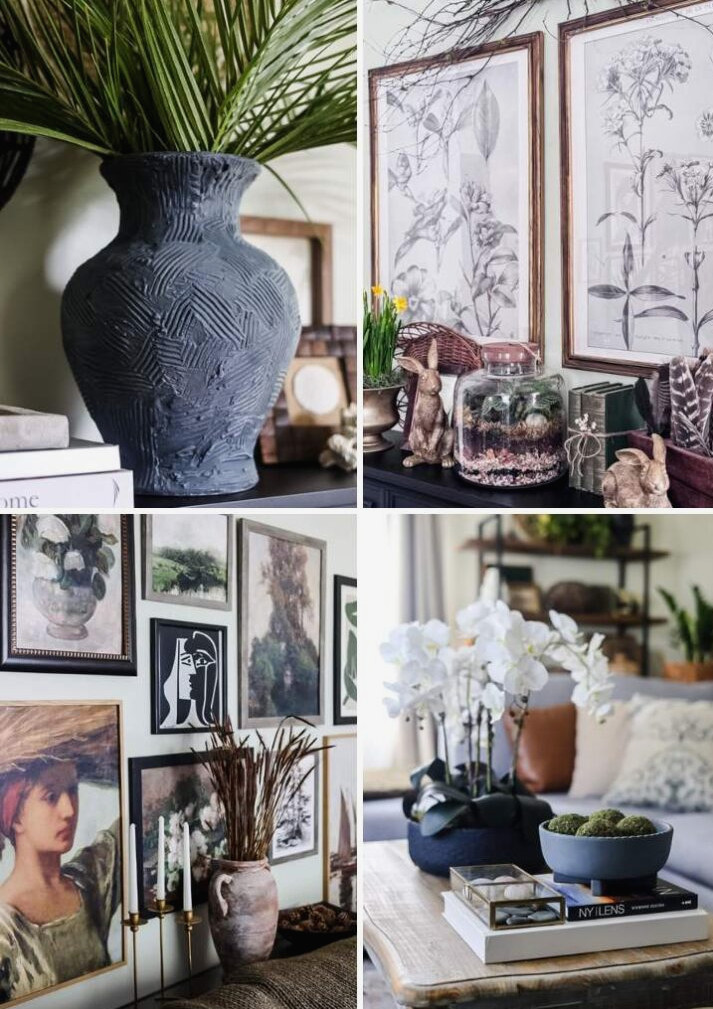
Slow decorating stands opposite fast-fashion home styling, and it’s far more attainable than it may seem. You don’t need a generous budget or a qualification in design. What it mainly calls for is patience, which, honestly, is the most difficult part. We’ve been trained to crave a completed room immediately.
Yet this is what years of thrifting, handcrafting, and gathering things from the garden have taught me: a room built gradually, one piece and one season at a time, becomes a space you’ll genuinely enjoy inhabiting. Not merely photographing. Actually living in.
A few principles have influenced the way I approach this:
•Purchase fewer things, but choose well. “Better” doesn’t have to mean costly. It means considered. It means asking why before buying, rather than only wondering where will this go.
•Allow spaces to remain incomplete. A bare wall isn’t an issue that needs fixing. It leaves room for the perfect piece whenever you come across it.
•Display what you’ve cultivated. A glass vessel filled with zinnias from your garden costs nothing, yet it can transform a room more powerfully than another decorative cushion ever could.
•Search secondhand before shopping new. The discovery is part of the narrative. And the narrative is the entire purpose.
Section 2: Seasonal Patterns & Traditions
Let Your Home Move with the Calendar – Nature’s Calendar
Here’s one truth the home-decor industry would rather I not mention: you don’t have to purchase anything new to give your home a seasonal atmosphere.
I know. What a revelation.
Slow living is rooted in the belief that you already have everything necessary to recognize the changing year; you simply need to notice it. And if you tend a garden, even a modest one, you truly have an abundance of possibilities.
In my home, the seasons don’t shift when Target creates a fresh display at the end of an aisle. They turn when the first tulips emerge from the chilly soil in April, when the dahlias reach their peak in late August, and when seed heads dry along the stalks and begin clattering in the October breeze. That’s the calendar that guides my decorating.
And it changes from one year to the next, which is really the heart of it.
Some of my favorite seasonal traditions are almost wonderfully simple:
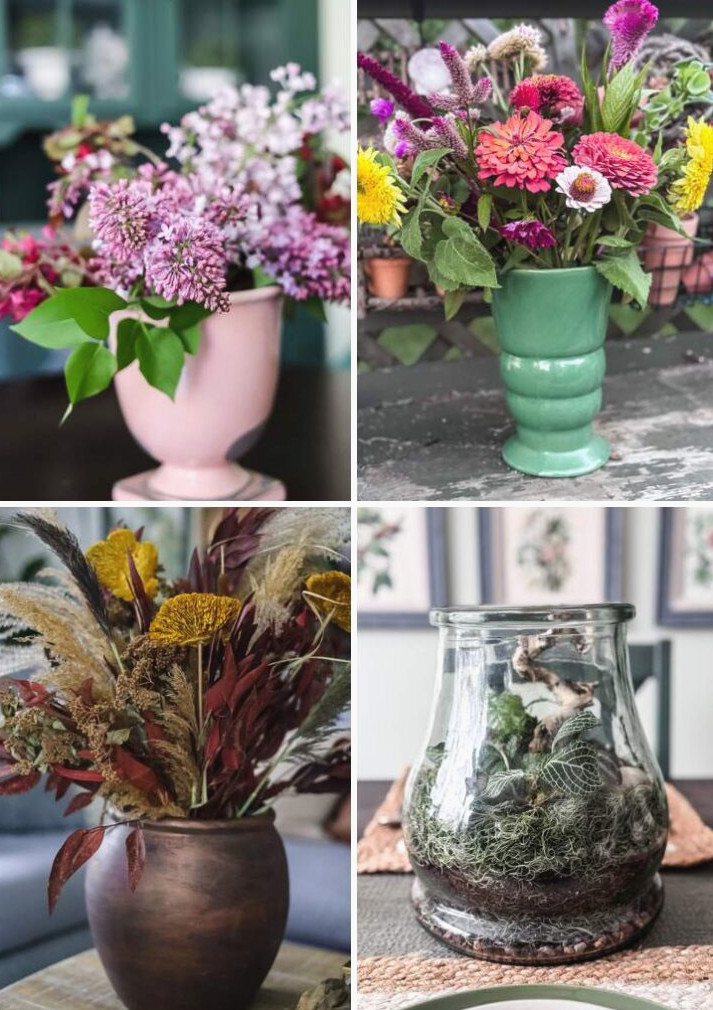
•Spring: The earliest blossoms make their way indoors before they’ve completely opened. I cut forsythia stems to encourage them to bloom & adore keeping lilacs in a vase on the table. That’s it.
•Summer: There are flowers everywhere, all the time, filling every vessel I have. From July until the first frost, the garden practically styles the house itself.
•Fall: I preserve whatever is still standing: seed heads, grasses, and the final strawflowers. The garden moves from fresh growth to keepsakes, and the house changes with it.
•Winter: Honestly, this is my favorite season for taking life slowly. I keep forced bulbs on the windowsill, work on a terrarium, and pile books I’ve been wanting to read on the coffee table as a quiet promise. The home becomes calmer, and I do too.
None of this requires much money. In most cases, it requires none at all. And I promise, it feels far more significant than a seasonal throw pillow.
Here’s the simple change I’d encourage: before opening your shopping cart, glance outside. What is unfolding out there today? How might you bring a small piece of that indoors?
Fine Art Printables
29 Complimentary Downloads
available exclusively to email subscribers
Section 3: The Practice of “Enough”
Permission to Stop
I’d like to share something that feels a little risky to say on a home decor blog:
Your room may already be finished.
Take a moment to let that sink in.
We live within a content ecosystem built to convince you that your home is perpetually one purchase short of feeling right. A fresh lamp. A more attractive rug. An accent wall. The algorithm presents a perfectly styled space, and some quiet part of your mind labels your own living room as “needs work.”
But is that actually true? Does it really need changing?
I’ve found myself scrolling along, completely happy with my home just minutes before, then suddenly compiling a mental inventory of everything that ought to be updated. That isn’t inspiration. It’s dissatisfaction created on purpose, and the home decor industry depends on it.
Slow living firmly resists that message.
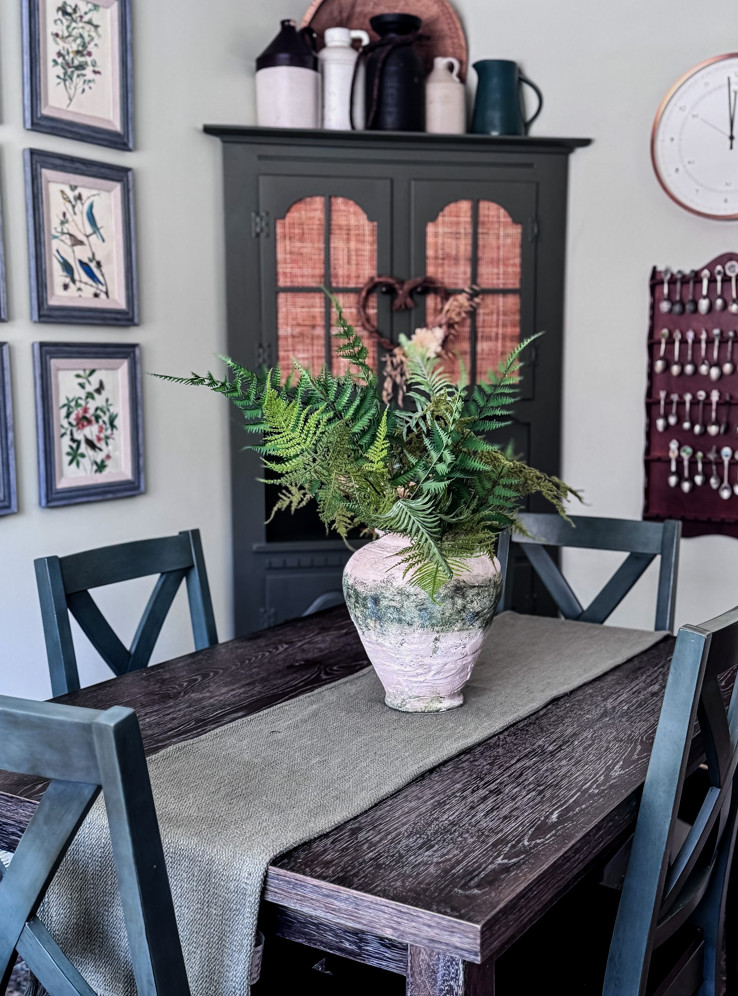
The art of “enough” doesn’t mean abandoning your space or losing interest in it. It means looking around a room and honestly thinking, “aahh, this feels good. I enjoy being here”. Then you remain in that feeling for a while. No repairing, updating, or redesigning.
To be truthful, this is something I’ve needed to learn. Because I create things and write about creating things, I constantly feel pushed toward a fresh project, another before-and-after, or a new transformation. Yet some of the spaces I love most at home have stayed unchanged for years. They continue to feel just right.
A few practices that have helped me recognize the “enough” point:
•Step away from the trend cycle altogether. Truly. Mute “trending,” “aesthetic,” and “2026 home decor,” then notice how much more content you become with what you already own.
•Take an unhurried walk through your home. Look with curiosity rather than criticism. Which things do you genuinely treasure? What brightens you as you pass by? Begin with those pieces.
•Spend more time sitting in your rooms. Put your phone aside and simply sit. Pay attention to what functions well and what feels comfortable. You may discover that far more is already working than you realized.
The most thoughtfully assembled home I’ve ever visited belonged to a woman in her seventies who hadn’t purchased anything new for her living room in fifteen years. Every object carried a memory. Nothing coordinated flawlessly. Yet the entire space felt unmistakably like her. I return to the memory of that room often.
That is the aim. Not a showroom or a mood board, but a room so unmistakably yours that a visitor could enter and understand something genuine about you.
Section 4: Handmade & Heartmade
What Making Things Really Means
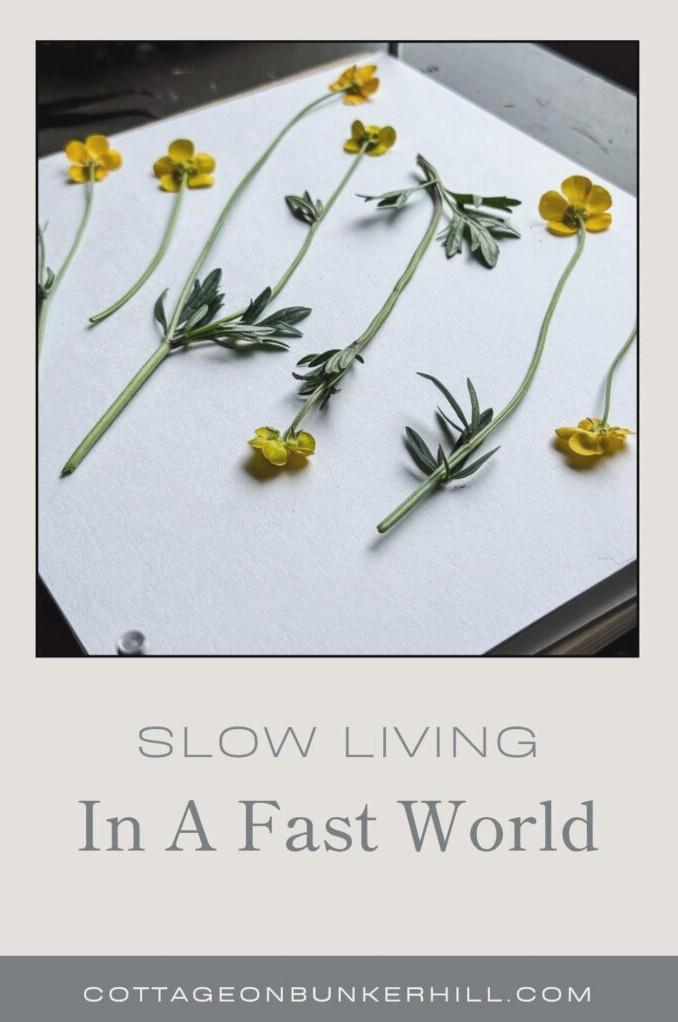
On the shelf beside me sits a pressed flower that I grew, gathered, pressed, and framed on my own. It cost virtually nothing. It is also a simple handmade detail that I truly adore!
Not because it is especially flawless—it isn’t. I love it because whenever I see it, I know precisely where it began. I remember planting the zinnias and what the garden looked like that summer. That flower carries an entire story, and now that story has a place in my home.
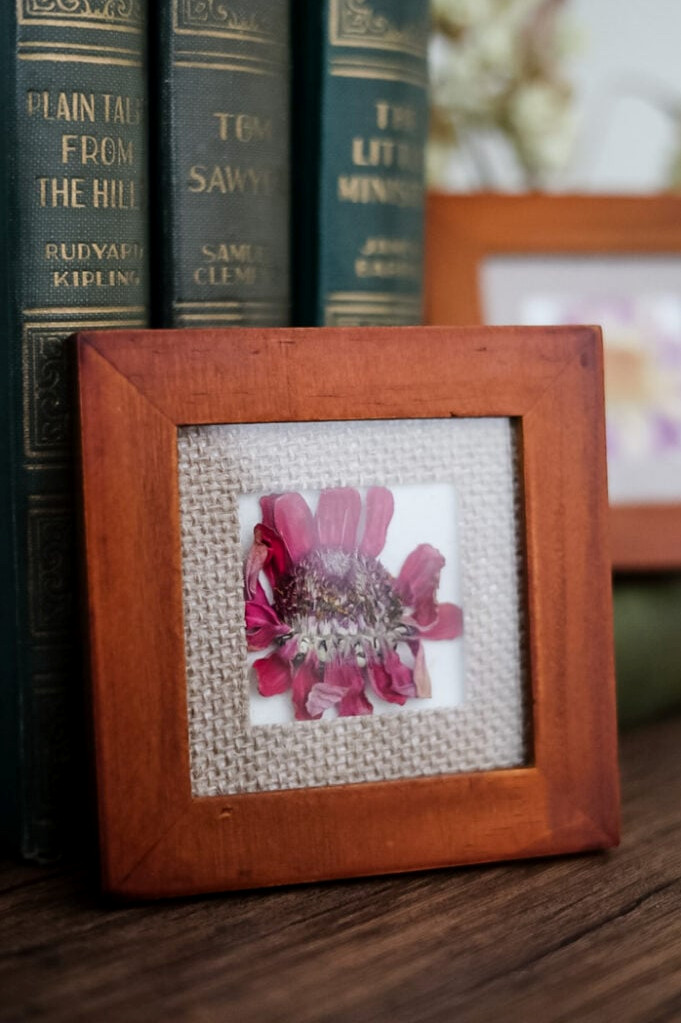
That is the gift of handmade objects—something store-bought pieces almost never provide.
Slow living holds a sincere, profound respect for things made by hand, not because handmade items are always more beautiful or superior, but because the process of creating something changesyour connection to it. In that moment, you aren’t merely consuming. You’re making. And there’s a quiet sense of fulfillment in that which is genuinely difficult to discover elsewhere.
I’ll be honest: I arrived at this little by little. At first, I made things mainly because I needed a creative escape and because I wanted items I couldn’t afford to purchase. Pottery Barn offered lovely pieces. My budget, however, didn’t align with Pottery Barn’s idea of how my home should look. So I learned as I went. I repurposed thrifted treasures. I created wreaths. I taught myself about clay. I discovered how to use what the garden provided.
And at some point, creating became the real purpose- not simply owning.
The thing I appreciate most about a handmade home is its naturally unhurried pace. A pressed flower cannot be hurried. You can’t race through the creation of a dried wreath. Each project requires the time it requires, and that rhythm is genuinely good for you in a way that is difficult to understand until you’ve felt it yourself.
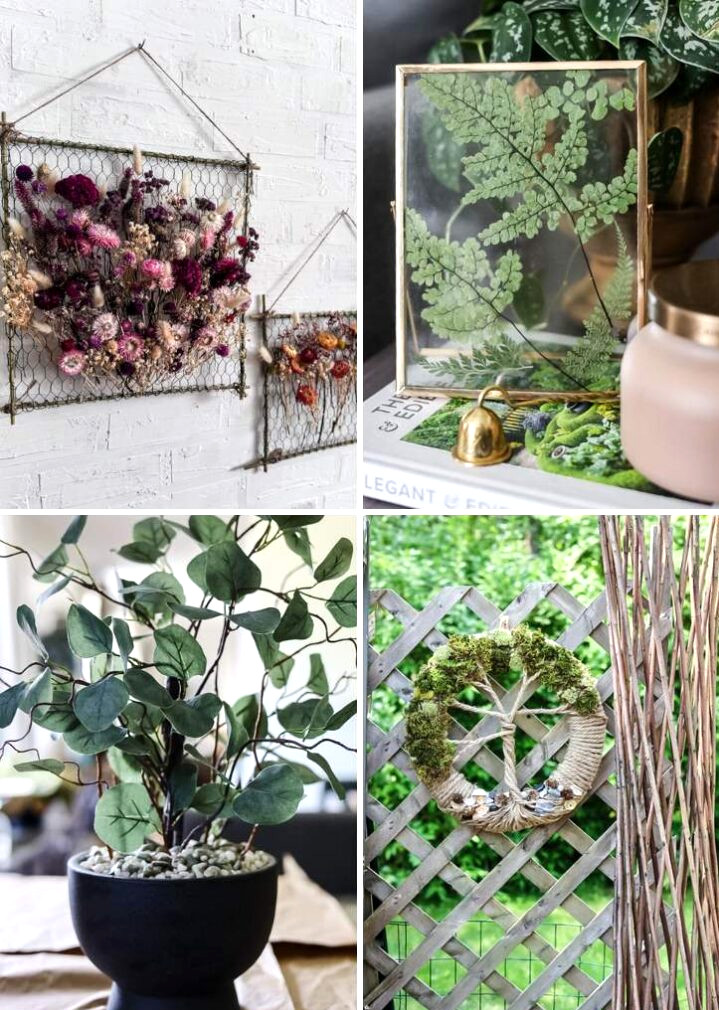
A few points worth mentioning:
•Imperfection is the purpose. A clay magnet that’s a little uneven, or a wreath lacking perfect symmetry, represents character rather than failure. These details show that human hands created it.
•You don’t need to be “crafty.” I completely reject this label. Creating things is an ability you develop, not a personality quality you’re born possessing. Begin with something easy. Keep it small. Use something you grew.
•The process itself is the reward. I realize that may sound like a line from a motivational poster, but I mean it in a very practical sense. The hour spent pressing flowers or putting together a wreath is an hour when you were attentive, offline, and producing something tangible. Its value exists entirely apart from the completed item.
•Allow yourself to learn at a gentle pace. I’ve been practicing paper flowers for quite some time. I’m still not very skilled at them. And I’m perfectly comfortable with that. Learning is one part of living.
Your home doesn’t have to resemble a craft fair. Still, one or two pieces you personally created, thoughtfully and by hand, can ground a room in a way that store-bought objects never quite can.
A Personal Note
There’s something I’ve had to accept, and I imagine some of you who create too, whether for a blog, social media, or simply the people around you, may understand: I make things I never show anyone.
Not everything. Not even the majority. But a few things.
There are projects in my home at this very moment that were never recorded, photographed, or turned into a tutorial. They exist only because I felt like making them. The process was satisfying, the result still brings me joy, and that, as it turns out, is entirely enough.
It took me more time than I’d care to admit to understand that. When your work involves developing projects, filming them, photographing them, and presenting them to the world, you can begin to feel that anything undocumented is somehow… incomplete. As though it didn’t matter. As though creating only has meaning when another person can witness it.
That isn’t true, by the way. It’s a very modern, very online misconception.
Some of the most rewarding things I’ve ever created were made solely for me. No camera. No instructions. No before-and-after reveal. Just me, making something because I wanted to. I believe preserving a small part of that, by keeping one little area of your creative life private, is among the most truly radical forms of slow living.
Section 5: Establishing Tech-Free Places & Moments
Set the Phone Aside. Honestly.
I’m saying this as someone who makes a living online.
We often discuss slow living in broad terms: a deliberate home, handmade objects, seasonal traditions, yet all of it can quickly lose its meaning when you’re practicing it while glancing at your phone. You can’t be fully present in your home while also being somewhere completely different, which is essentially what scrolling means. Another place. Another person’s home. Another person’s carefully arranged golden-hour selfie.
I’m not trying to preach about screen habits. I own a phone. I rely on it constantly for my work. I’m not living in a woodland cabin, making candles from scratch and churning butter. But I have discovered, in a very real and practical way, that keeping particular times and areas free from the screen’s demands improves the quality of everything around them.
For me, that means reading real books. Physical books you can hold, without notifications. And I don’t choose just any titles; I read about subjects I’m hoping to understand. At the moment, my pile contains every book I could locate on terrariums, succulents, pressed flowers, and floral crafts. Slowly and imperfectly, I’m teaching myself at the speed of someone who reads rather than watches tutorials at 1.5x speed.
It takes longer. But it’s also far better.
There’s a quality to learning through reading that feels profoundly connected to slow living. You must remain with the material, reflect on it, and revisit it. There’s no skipping ahead to the best section. The entire experience is the best section.
Some simple ways to create tech-free time and areas that have genuinely worked for me:
•Make one room or area a phone-free zone. For me, that’s wherever I’m reading or tending to the garden. The ringer stays off. Surprisingly, nothing terrible has ever happened because of it.
•Swap scrolling for learning. Rather than spending thirty minutes on Instagram before sleep, devote that time to a book about something that has sparked your interest. Terrariums. Botanical drawing. The story of cottage gardens. Anything that captures your attention.
•Keep your hands occupied. Flower pressing, shaping clay, and putting together a vase arrangement are all activities that naturally don’t work with screens. Once your hands are engaged with something tangible, the phone’s pull nearly disappears.
•Allow yourself an unhurried morning, even from time to time. Coffee, no phone, only the window and whatever is unfolding in the garden or along the street. Just twenty minutes can restore something in your nervous system that even a hundred motivational reels can’t reach.
The technology-free spaces in my life aren’t about rejecting technology. They’re about valuing attention. Valuing presence. Valuing truly being in the room I worked so hard to make feel like home.
That’s really the entire idea.
Slow Down. You’re Already Home!
Here’s what no one tells you about slow living: it isn’t an accomplishment you eventually reach. There’s no endpoint and no flawlessly arranged Instagram grid announcing that you’ve made it. It’s simply a collection of small, peaceful decisions repeated again and again.
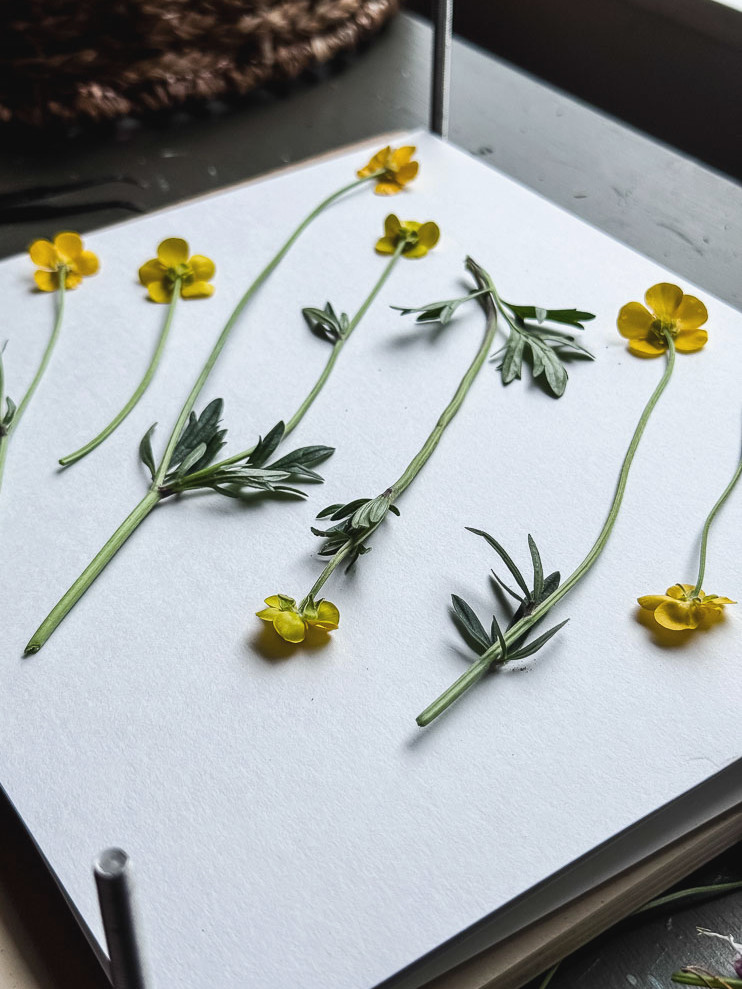
Pick the thrifted lamp with a meaningful story instead of the quickly delivered substitute. Take time to fill your flower press. Create what you feel like creating, even if especially if you never show it to another person. Allow the room to remain finished for a little while. Leave the phone in another room and open the book.
None of this is extravagant. None of it is likely to become viral. Yet gathered across weeks, months, and years, these decisions create a home that feels truly, profoundly like you. Not like a mood board. Not like a passing trend. Like the real life you are living at this very moment, in this season, in this place.
I live in New Hampshire. My garden lets me know when one season gives way to another. My thrift store treasures reveal what I’m naturally drawn toward. My handmade projects show me what I’ve been curious enough to explore. My home is made up of all those pieces: imperfect, changing, and entirely mine.
Yours can be as well.
It doesn’t call for a larger budget, a sharper eye, or extra time. Mostly, it asks you to slow down enough to notice what you already own, what is already blooming, and what is already beautiful.
Your home is already beginning to share a story.
Give it a little space to discover the words.
xo, Jennifer
If this spoke to you, here are a few more posts with the same feeling:
Enjoy projects like this?Don’t miss out! Join my newsletter family for more warm, budget-friendly DIY ideas sent straight to your inbox. You’ll receive exclusive advice, early access to tutorials, and all the inspiration you need to make your home feel handcrafted and full of heart.