On the calmer fringes of Ahmedabad, where the city gradually eases its rhythm and the surroundings unfold into green expanses, this decade-old bungalow reflects a contemporary Indian interior grounded in memory, comfort, and familiarity. Instead of giving the residence an entirely new identity, the renovation carefully brought back its inherent spirit. Created for a middle-aged Maharashtrian couple and their two sons, the home has always represented far more than a dwelling. It is a place where music accompanies the mornings, rituals inform daily routines, and familiarity matters more than display. Their intention was never to build something unfamiliar, but to shape a home that continued to express their identity. The greenery outside tempers the light and atmosphere, while indoors, the same quietness remains, letting the house reveal itself gradually instead of all at once.
This Ahmedabad Bungalow Reflects Contemporary Indian Interiors Shaped by Memory | UrbanNest Design Studio
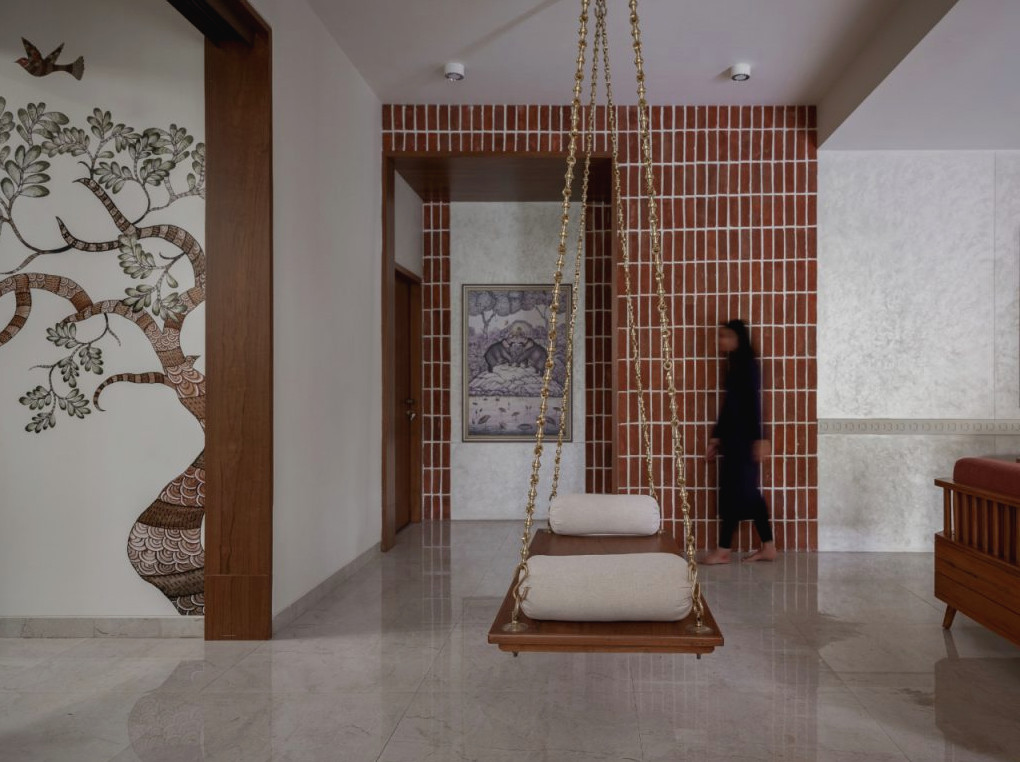

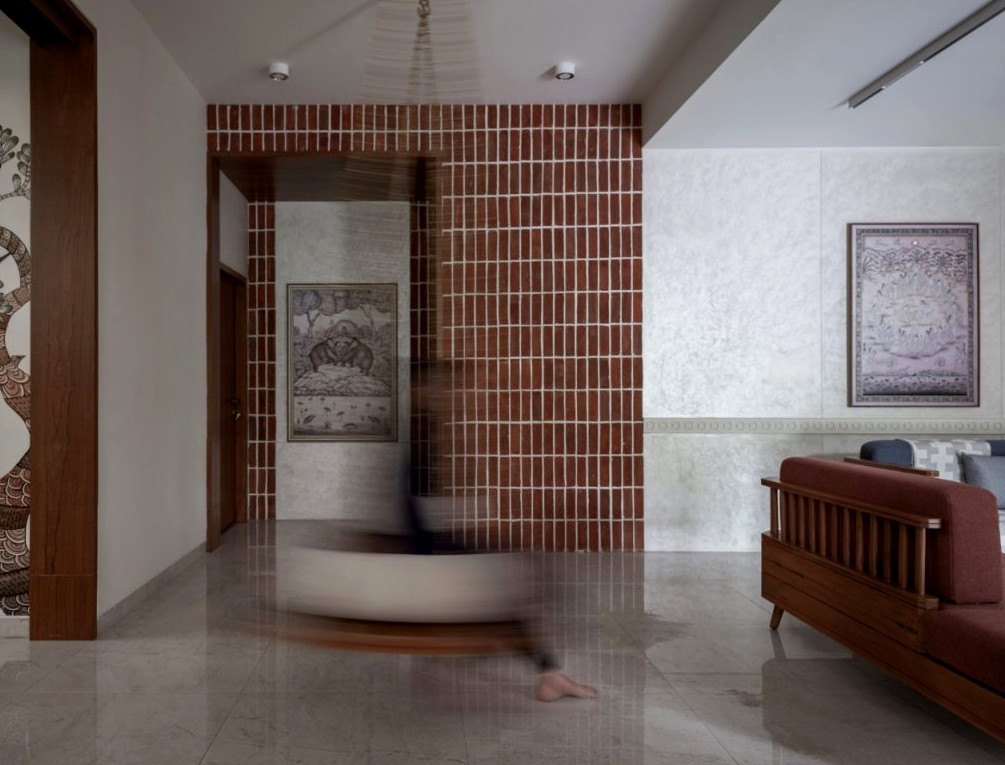
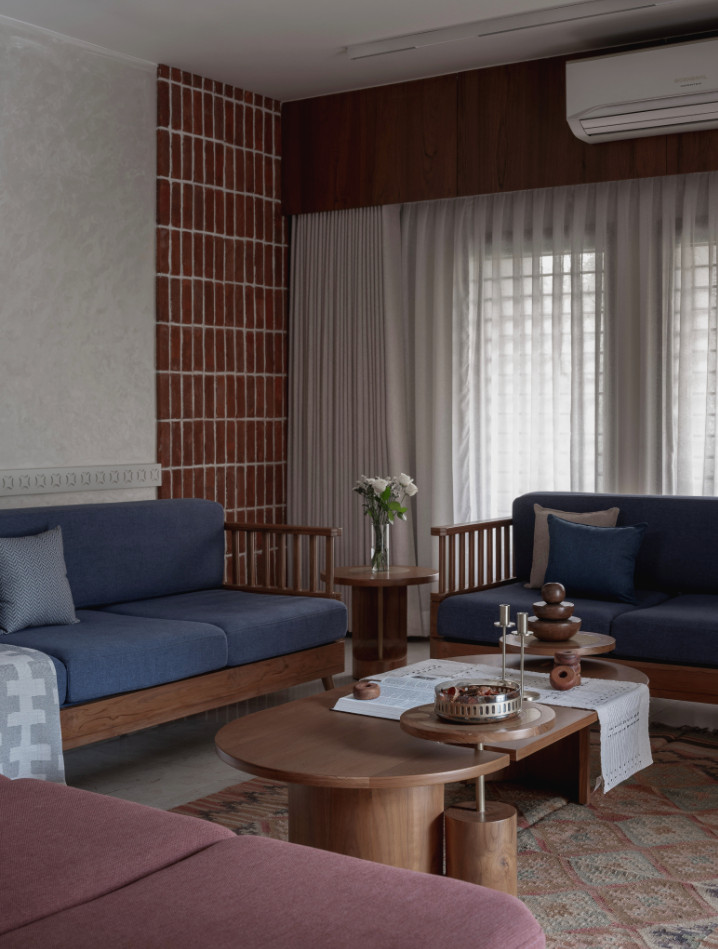
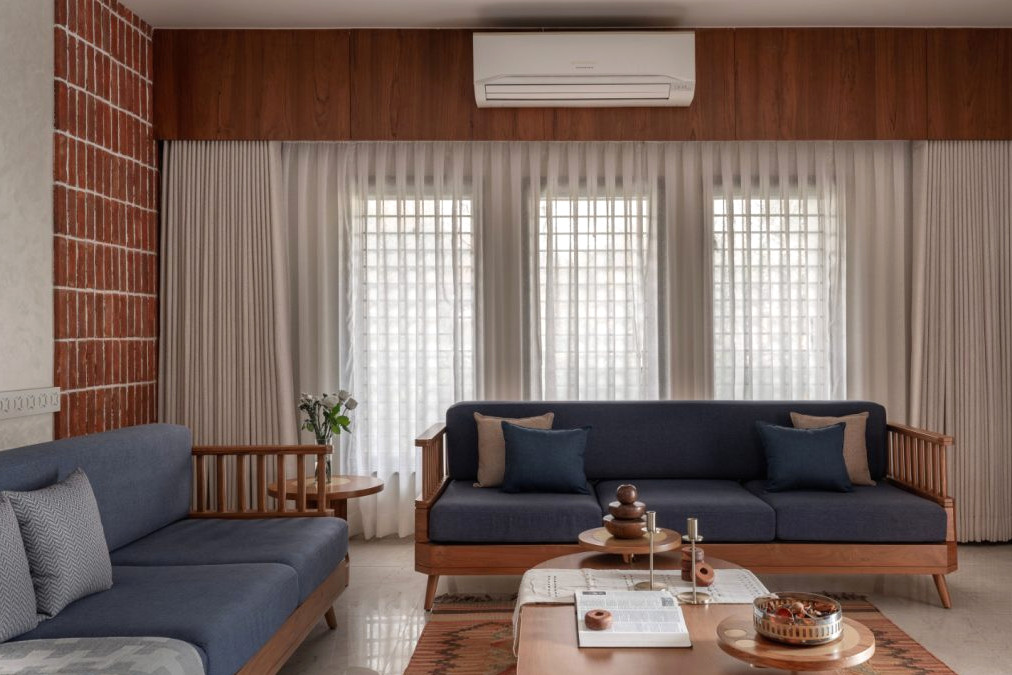
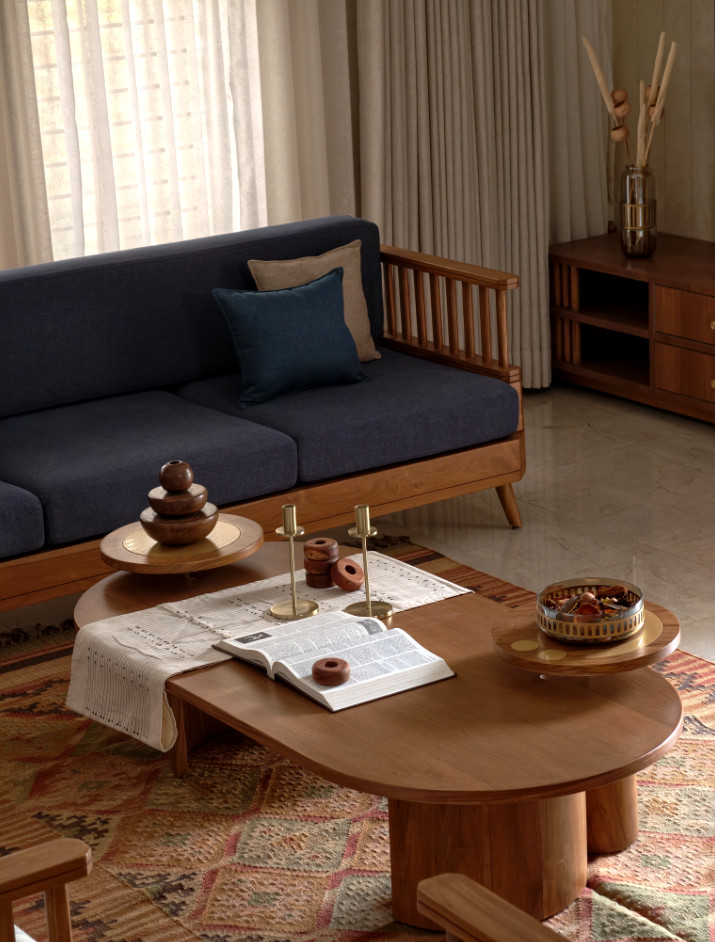
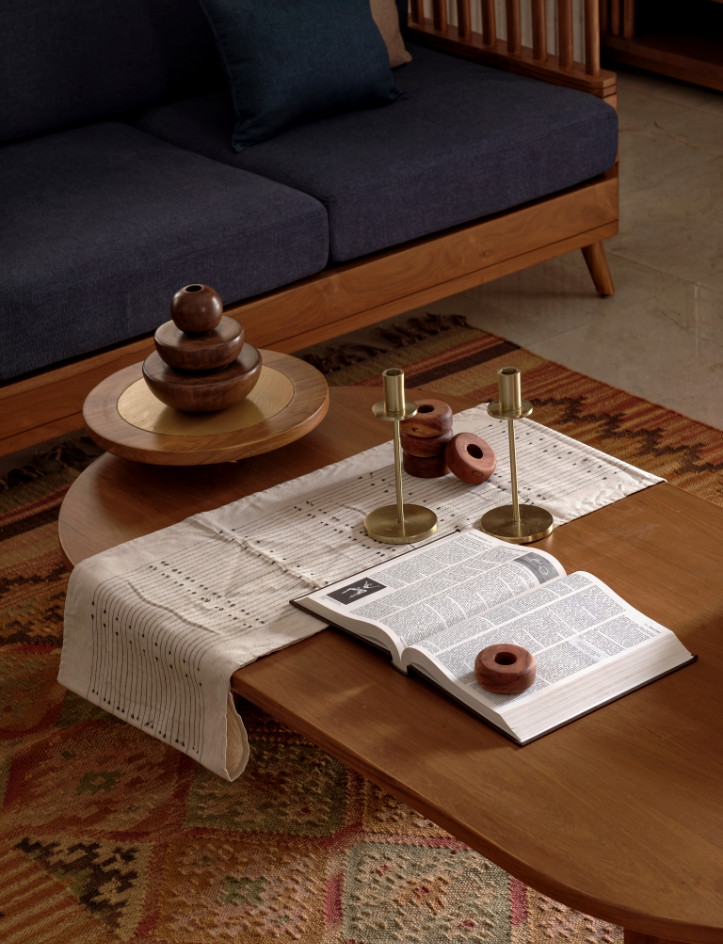
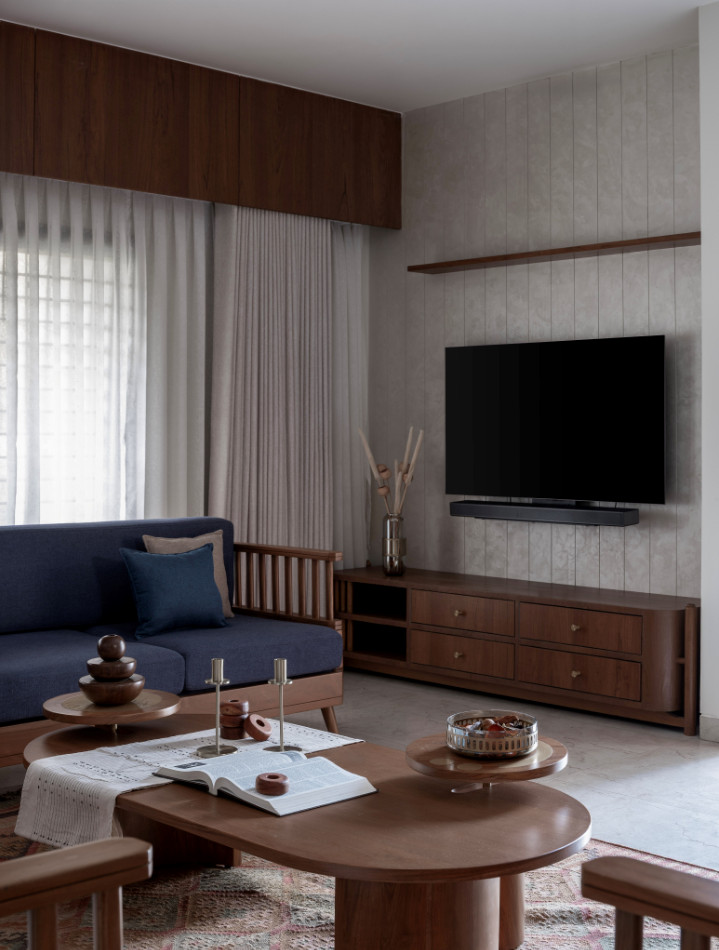
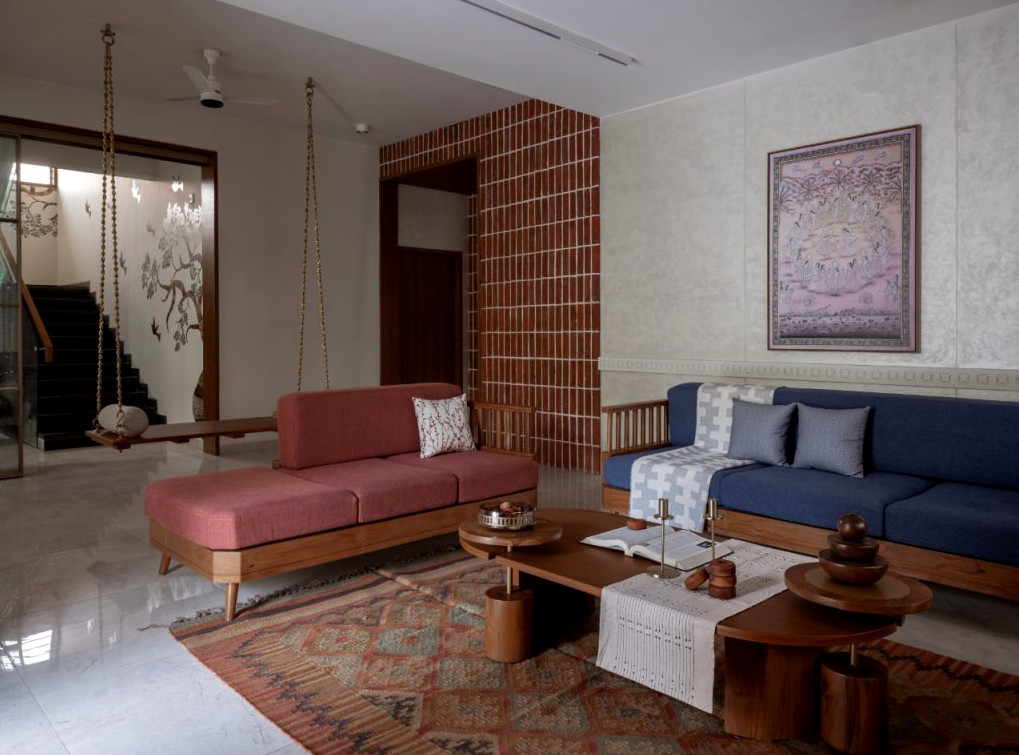
The living area appears to have belonged there forever, formed through everyday living rather than deliberate styling. Rich teak finishes lend the room a sense of character, with their grain reflecting the light in a way that feels known, almost nostalgic. The furnishings make no attempt to dominate; they settle naturally into the setting, their silhouettes recalling handmade artistry, turned timber, and objects shaped by years instead of freshly produced. This sense of recognition brings a quiet reassurance.
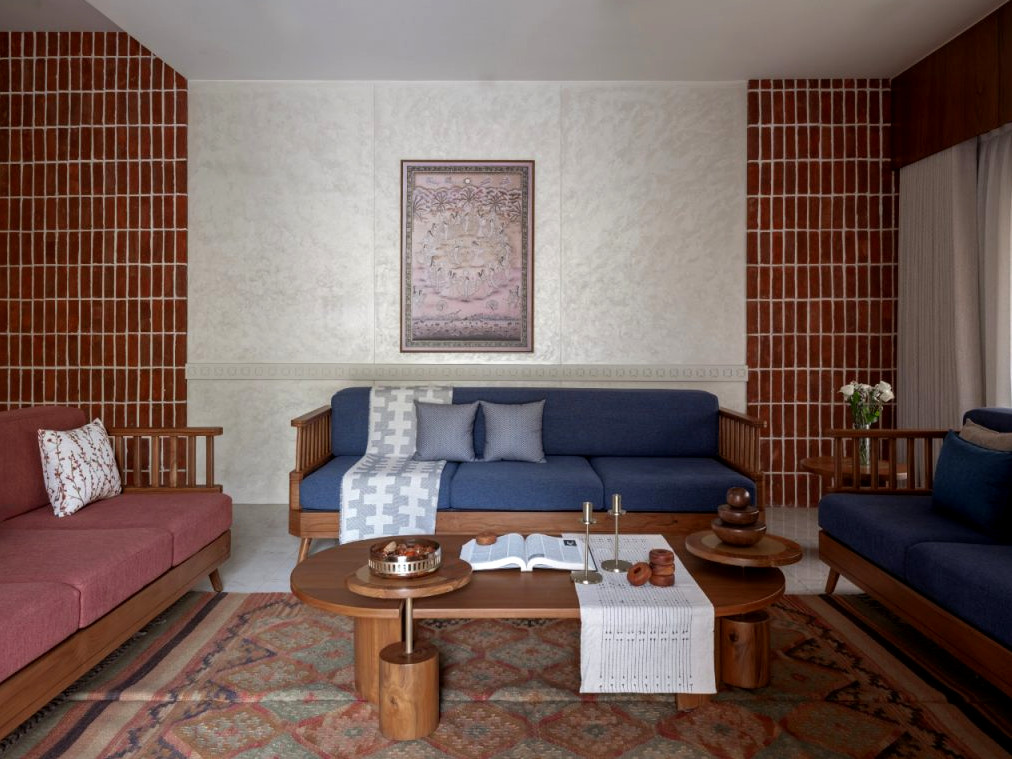

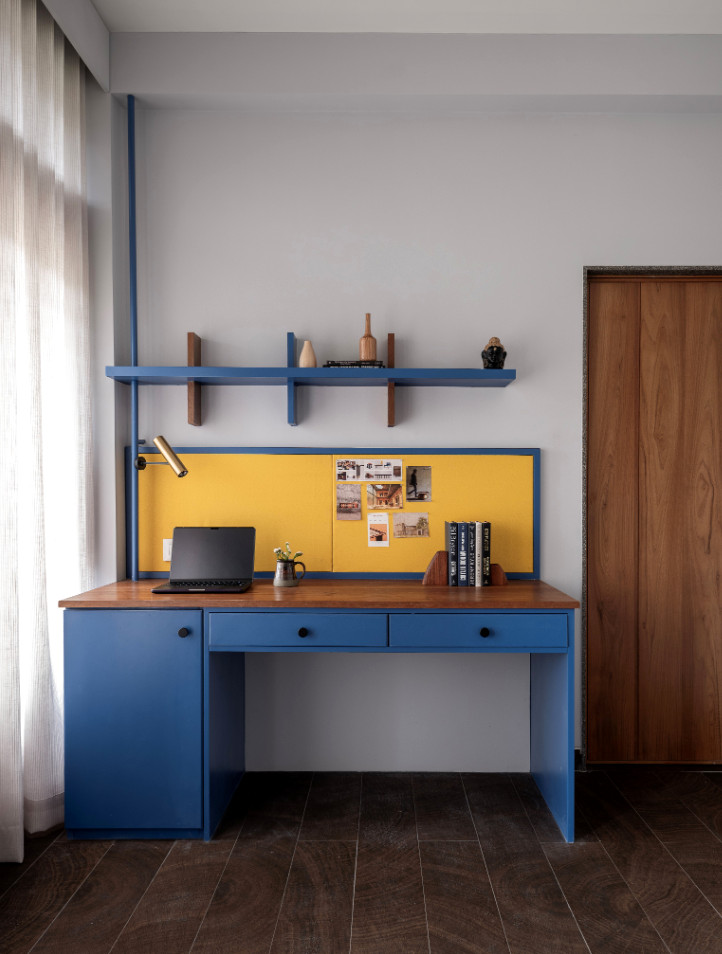
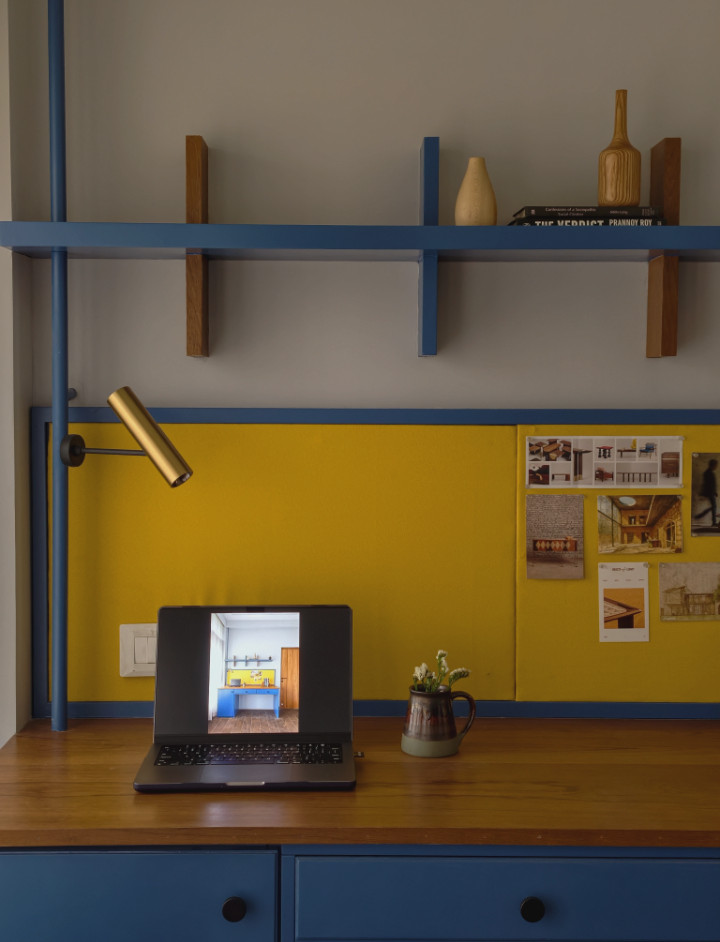
A rich indigo tone rests quietly across the room, taking in the light and lending the setting a composed sense of depth. Rather than demanding notice, it gently gathers attention. Paired with timber’s warmth and terracotta’s subdued character, it establishes a harmony that seems natural instead of deliberately arranged.
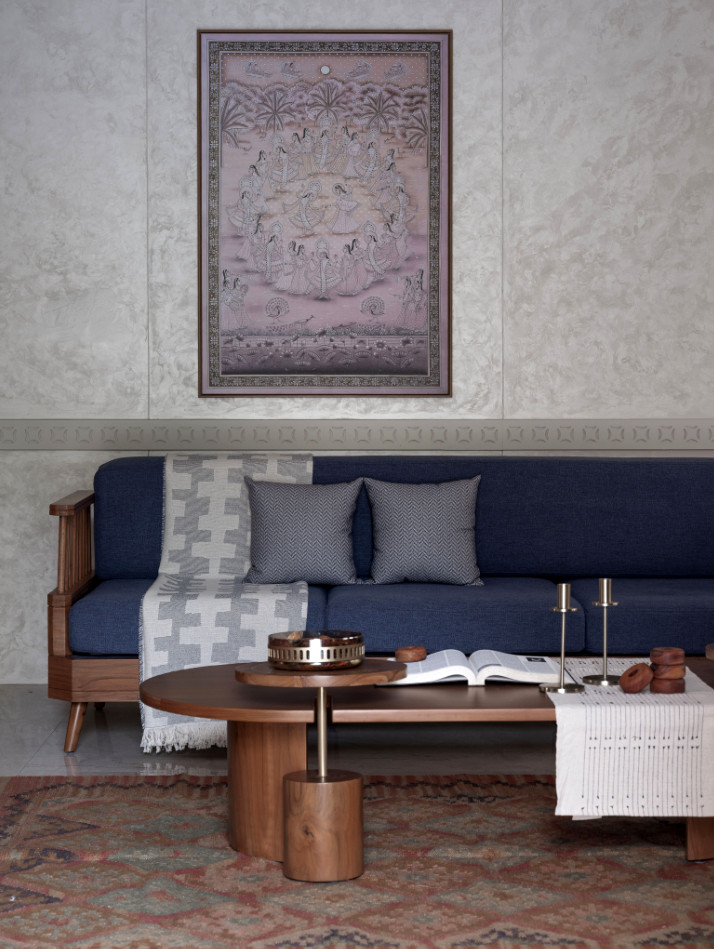
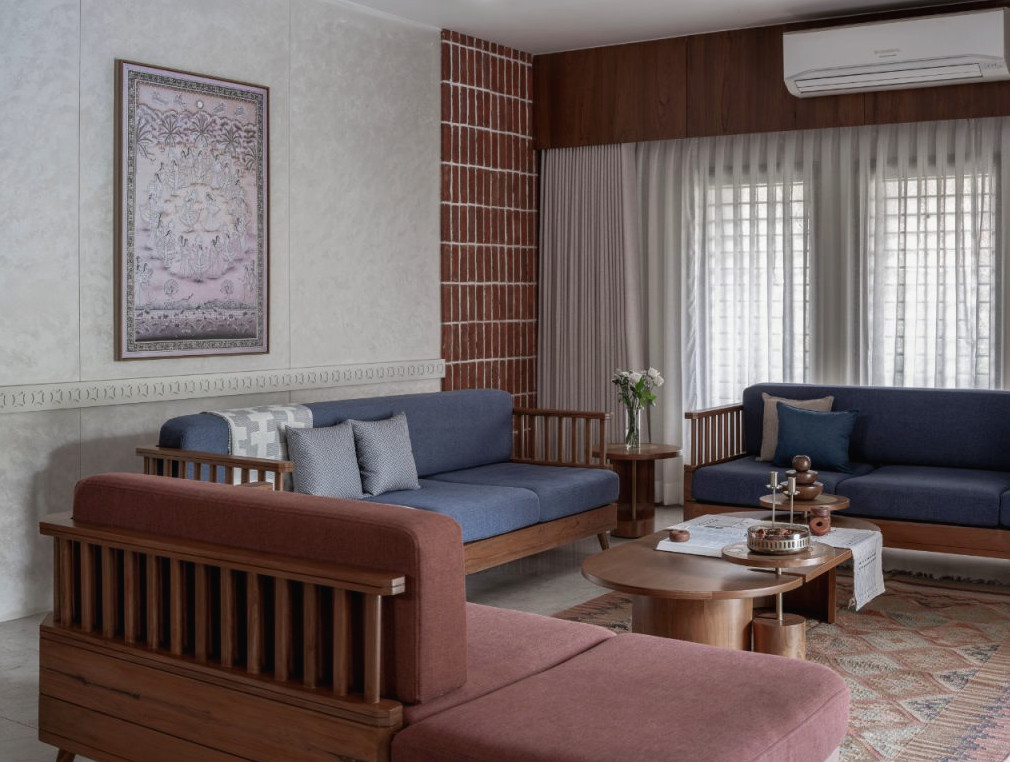
An artwork depicting Krishna’s Raas Leela brings a soft sense of motion to the otherwise tranquil setting. The figures appear suspended between movement and stillness, expressing a rhythm that is at once devotional and profoundly human. Its presence may not be immediately apparent, yet it gradually captures attention. Close by, a second piece portrays Krishna alongside elephants, subtly continuing the story, as if these narratives had always belonged within the home.
A swing rests nearby, held by brass-toned chains and creating a recognisable moment of pause within the room. It makes no claim for attention; instead, it quietly welcomes it. Its presence evokes homes where life moved at an unhurried pace, where taking a seat meant lingering, and where rooms were designed for living in rather than simply moving through.
From this point, the residence appears to come to a standstill; The temple extends upward into a double height volume, but its scale never becomes imposing. Instead, it remains serene. Positioned at the far end, the carved wooden shrine feels almost secluded, giving the surrounding area room to breathe. Images of cows and trees cover the walls, motifs deeply rooted in cultural recollection; not merely symbols, but elements that feel experienced and familiar.
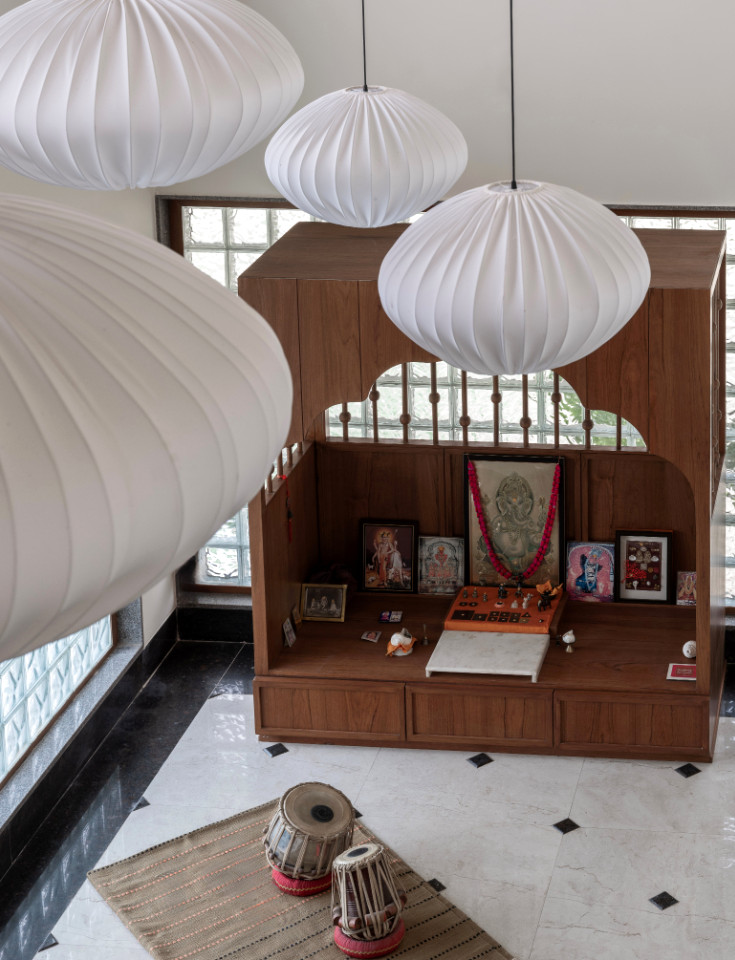
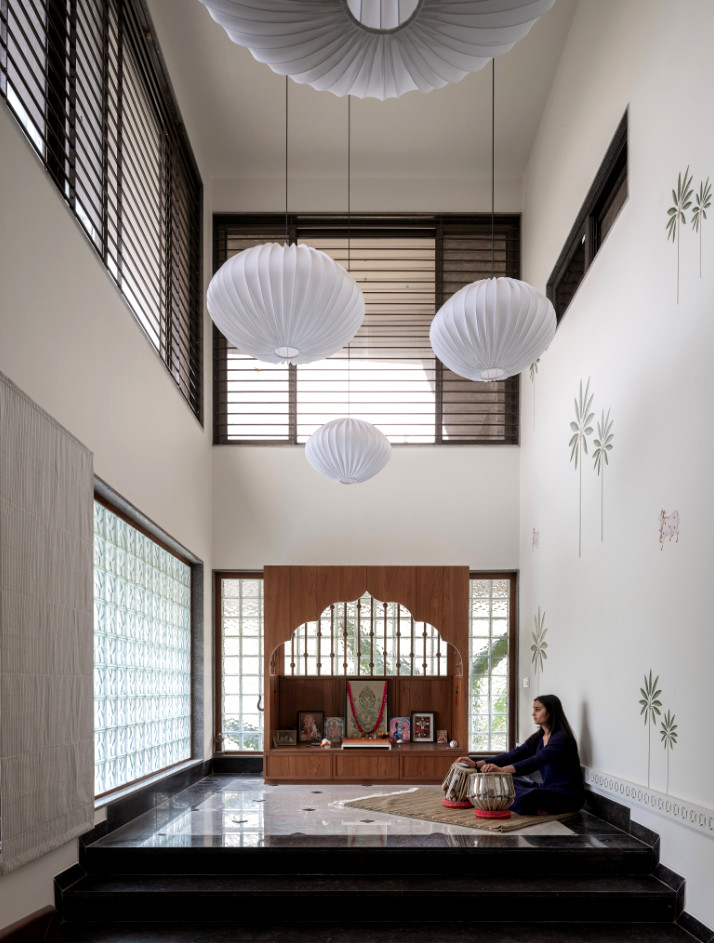
Through the glass blocks, daylight enters in a softened, scattered form, as though its intensity has been eased before reaching the interior. Nothing feels severe here; instead, a mild glow shifts gently as the hours pass. Lanterns hang above within the tall volume, appearing nearly weightless. After dusk, they emit a delicate radiance, turning the room inward and almost contemplative. In this setting, the home feels most attuned to cycles, ritual, and something that reaches beyond the boundaries of design.
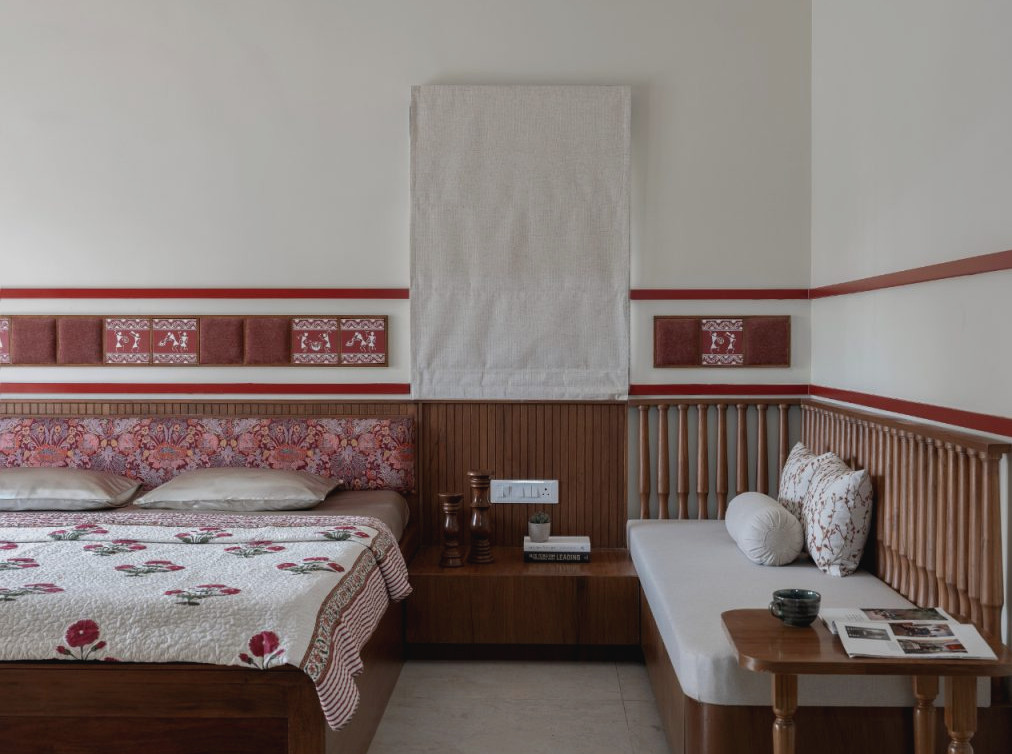

Deeper inside, the residence takes on a more intimate character. The primary bedroom carries an even quieter mood. Terracotta and maroon shades envelop the space, functioning not simply as colour but as an expression of warmth. The room feels
sheltered, secure, as if it has folded inward. Layers of surfaces overlap softly, textiles blur the edges, and the light stays muted.
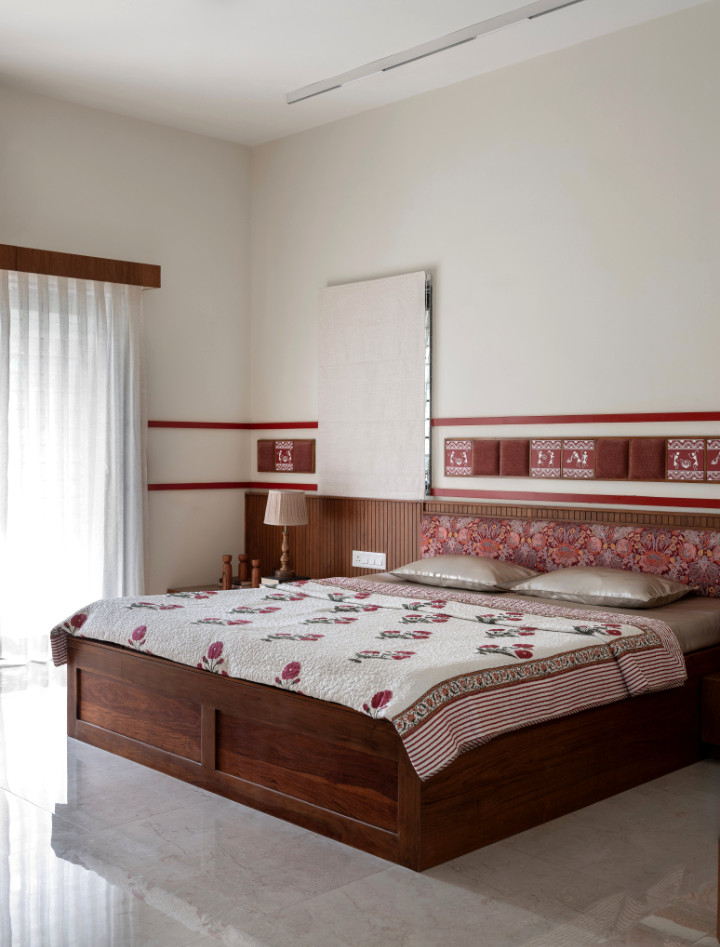
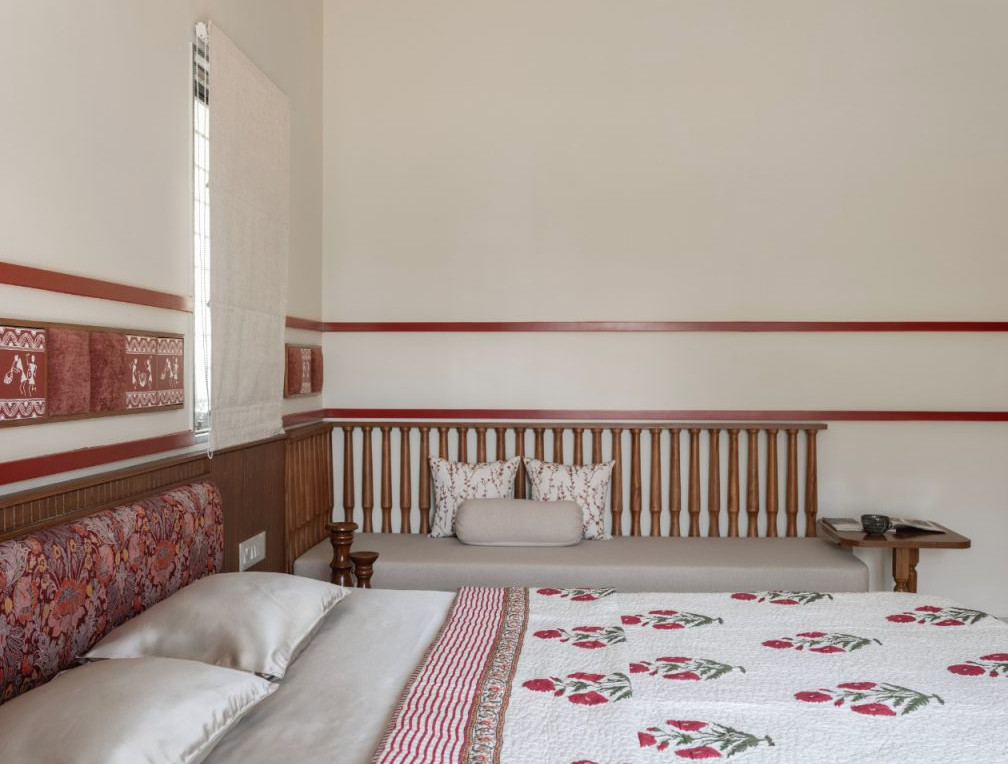
A Worli art composition stretches across fabric and canvas above the bed. Rather than simply hanging on the wall, it merges with the room’s textured, tactile surface, almost woven into the space itself. A quiet sense of intimacy settles here, making the outside world feel remote while turning the room into somewhere to withdraw.
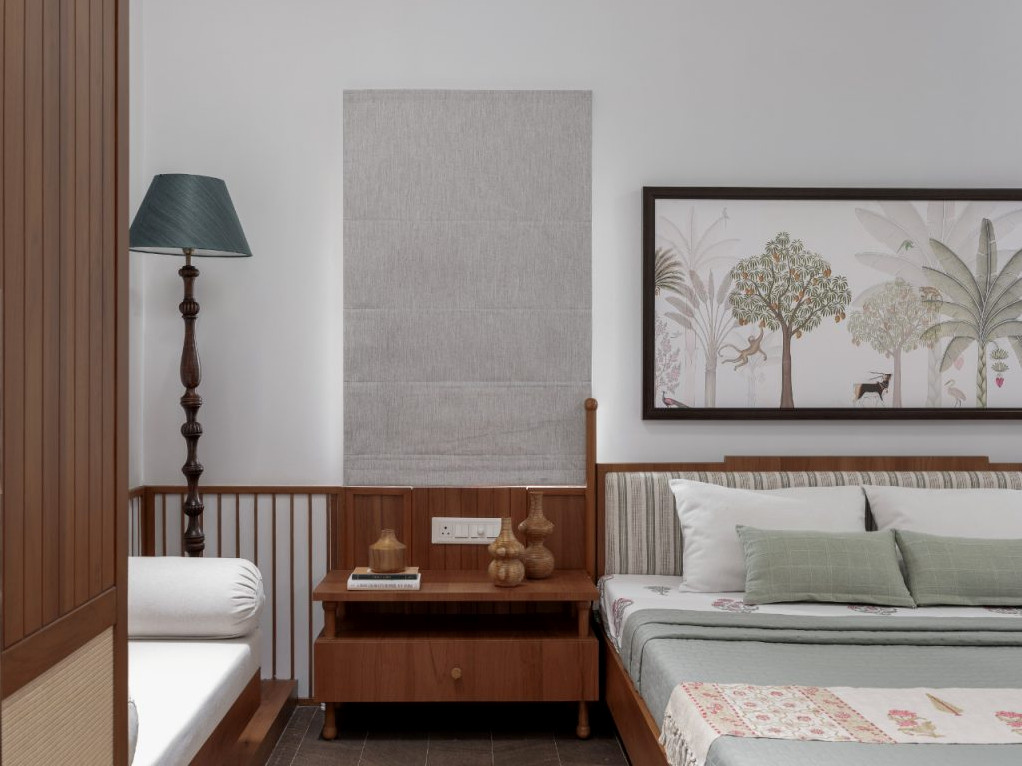
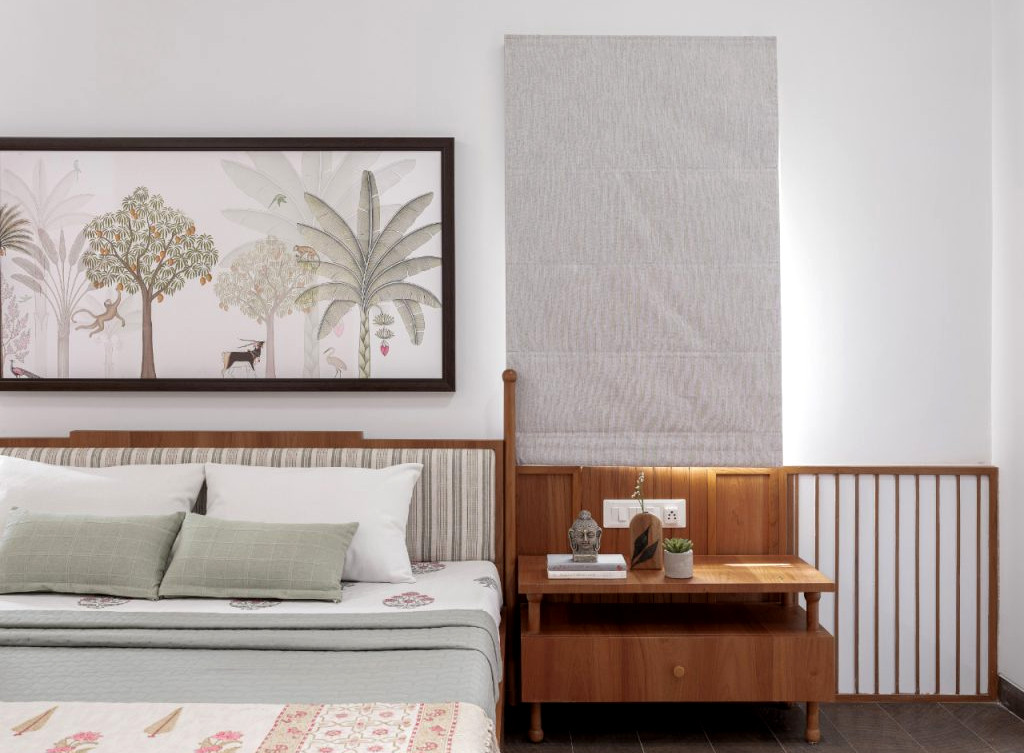
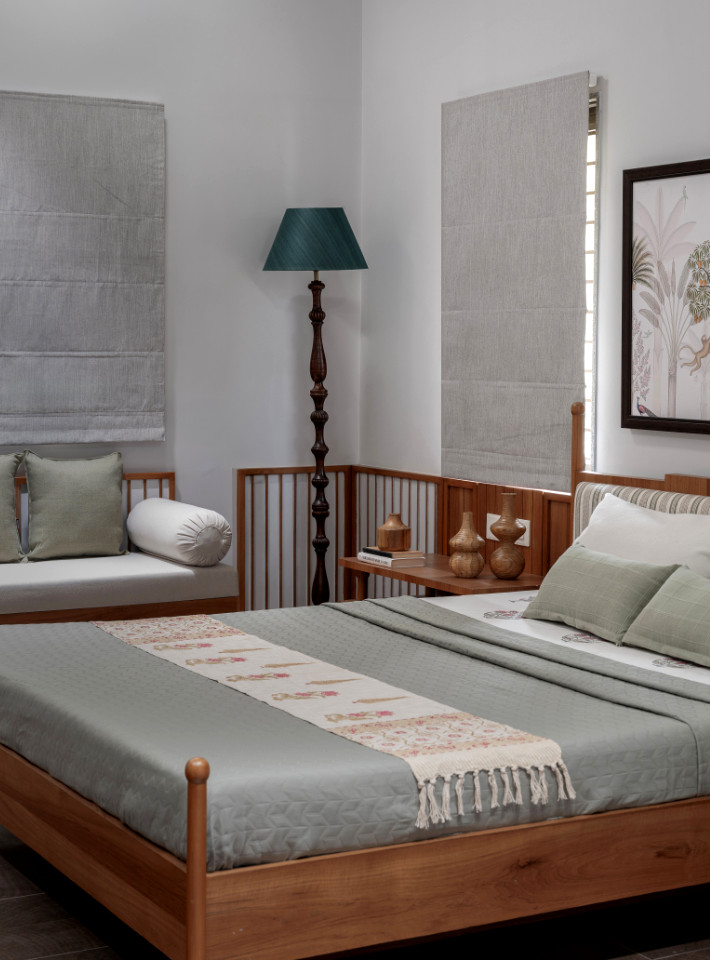
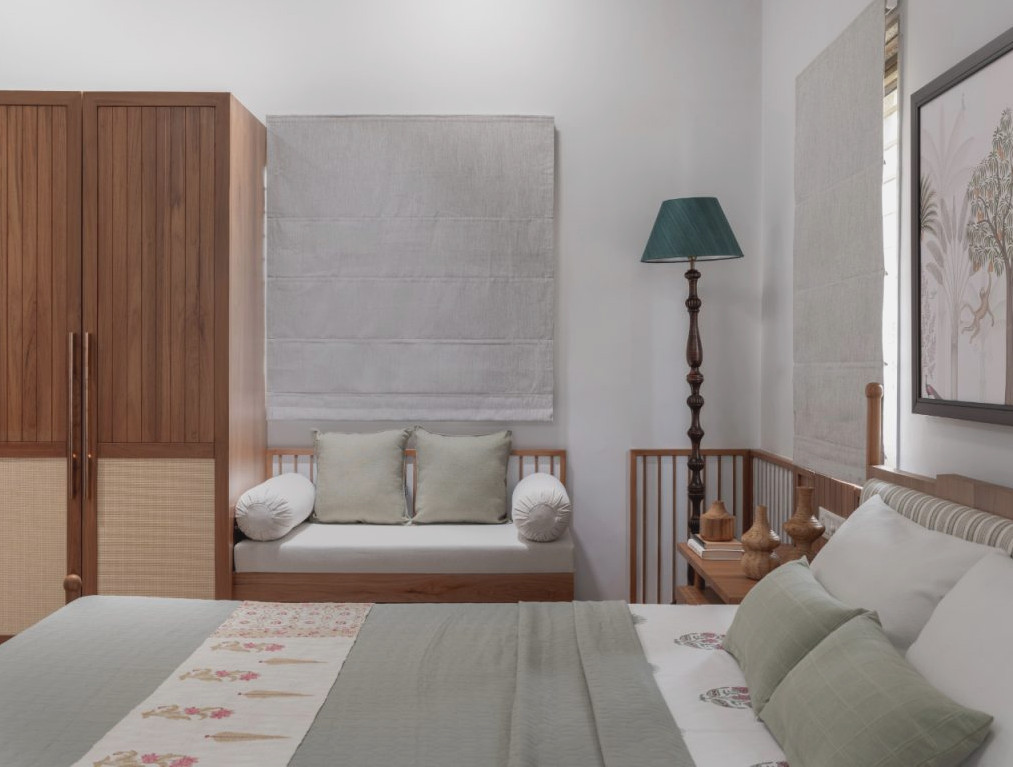
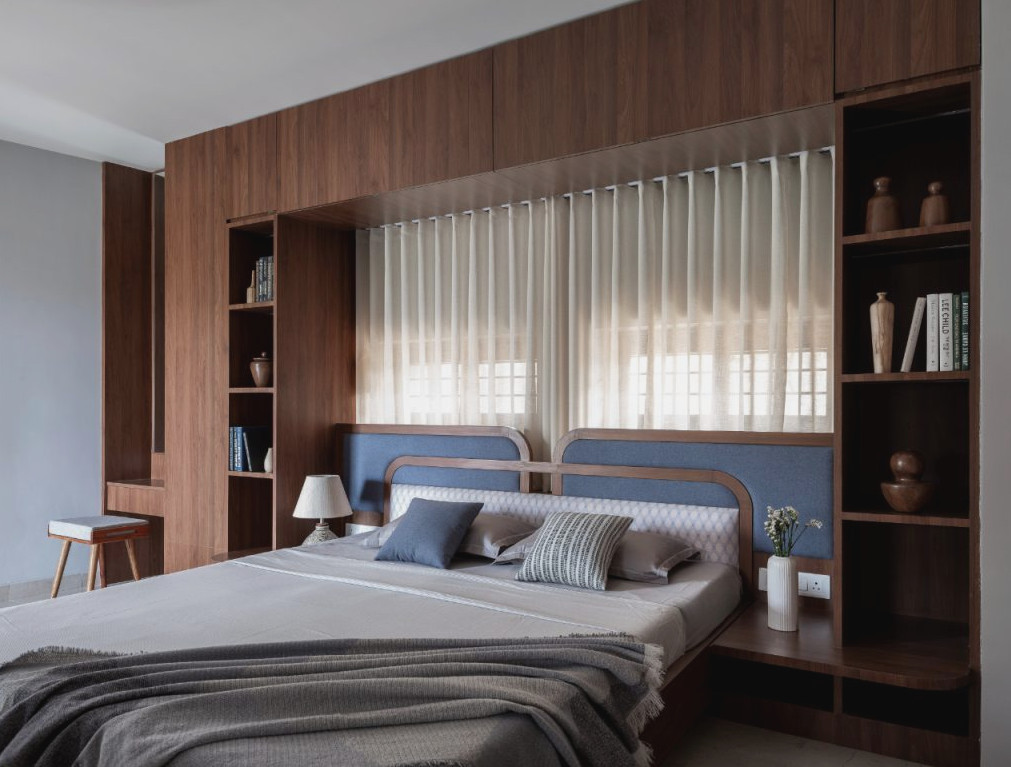
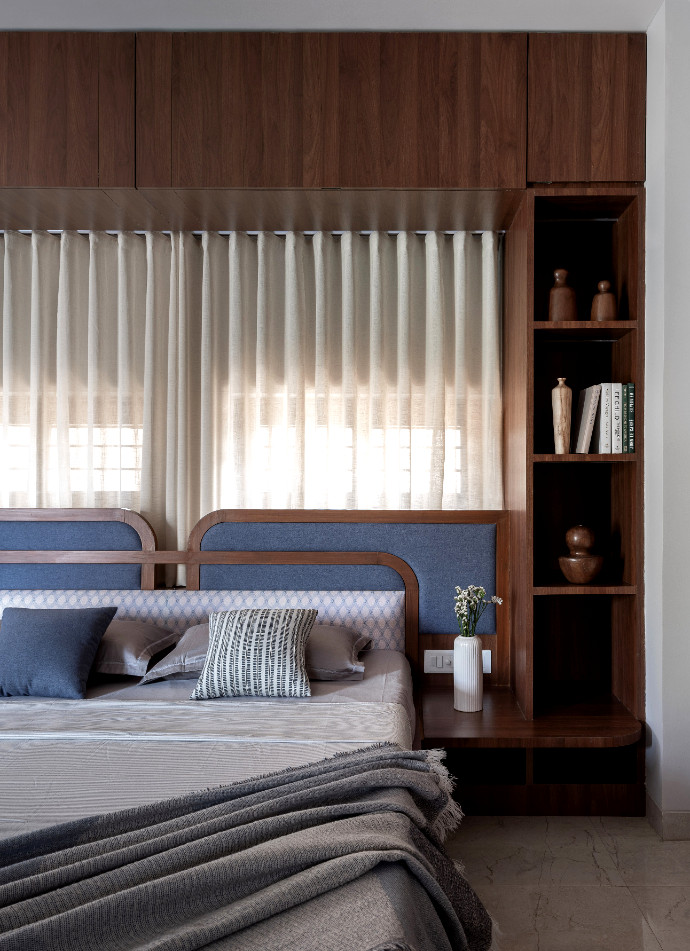
The sons’ bedrooms gently alter the mood while preserving the home’s overall flow. In one, indigo appears again, richer and more encompassing. It brings a calm, grounded feeling that still retains a youthful character. Books, belongings, and pieces of everyday life fill the shelves; nothing seems arranged for display, and everything feels used and loved. Light drifts across the surfaces with a gentle touch, never harsh, always diffused, as if it belongs there too. In the other room, the mood becomes a little more relaxed. Images of grazing cows cover the walls, resembling memories more than straightforward illustrations. They bring a sense of quiet familiarity, like an outdoor landscape drawn inside. Open & flexible, the room accommodates both repose and activity without being limited by either.
Nothing throughout the house appears forced. Materials make no declaration; they simply settle into place.Wood lends warmth, textiles soften the surroundings, and details emerge gradually for those who notice them. The experience of the house carries no sense of haste. Perhaps that is what lingers with you longest.
This home does not seek attention. Instead, it invites you to remain. Each room holds its moments with care, never attempting to present them in a frame. The house does not reproduce memory; it carries memory onward with understated honesty. In that way, it becomes something uncommon—a place that feels less designed than profoundly understood. In Ahmedabad, as the city keeps spreading outward, this home chooses an inward direction. Not in rejection of the world, but in a movement closer to itself.